Contact Us

Use the form on the right to contact us. We should get back to you within 24 hours. If not, it means we are out chasing birds with dogs, shotguns and Canons. In that case we will get back to you as soon as we've finished the roasted Teal and Bordeaux . 


Form Block
This form needs a storage option. Double-click here to edit this form, and tell us where to save form submissions in the Storage tab. Learn more
         

123 Street Avenue, City Town, 99999

(123) 555-6789

email@address.com


You can set your address, phone number, email and site description in the settings tab.
Link to read me page with more information.

Pointing Dog Blog

The world of pointing dogs in words and images, moving and still.

We have a WINNER!!

Craig Koshyk

Thanks to everyone who sent in their guess for the mystery Breed of the Week! Souris has chosen the winner from among all the entrants who correctly identified the...

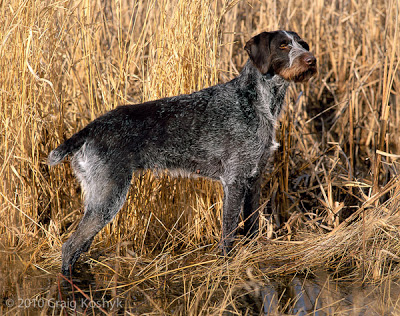
DEUTSCH DRAHTHAAR!!!


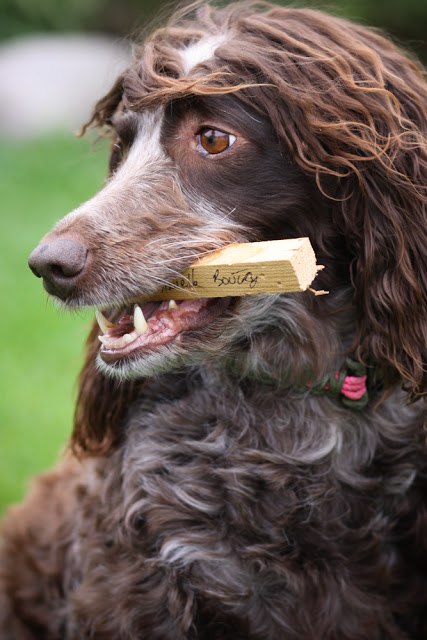
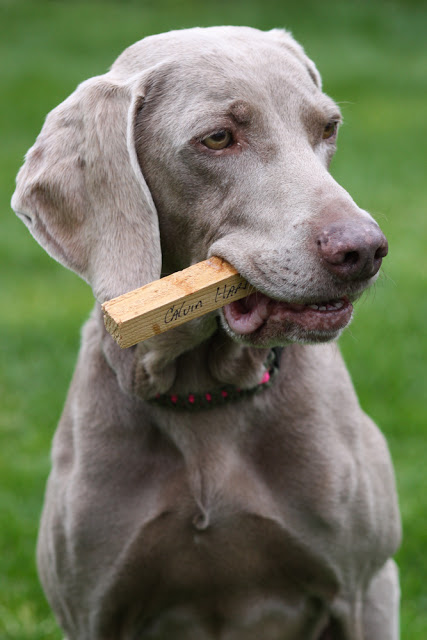
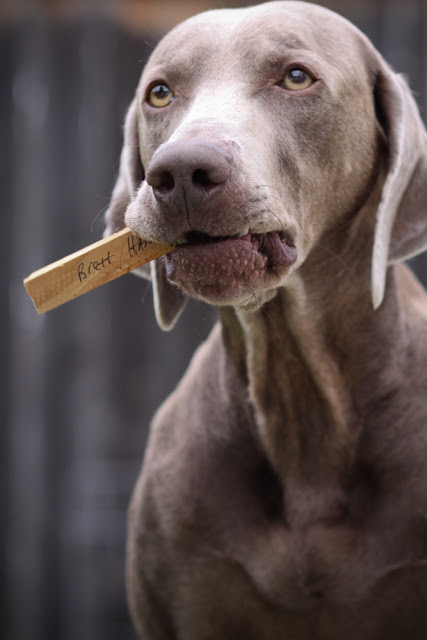
Here is how the winner was determined: I wrote the names of all the qualifying contestants onto small individual wooden blocks. I then sprinkled the blocks out across the lawn and sent each of my three dogs to choose a block, one at a time. As mentioned in the contest details, the winner would be the THIRD block retrieved.
 
FIRST BLOCK
3 year old Henri the Weimaraner was sent for block # 1 and chose....
Brett Harrington! Congratulations Brett, you've won a consolation prize: a signed 9x12 inch original photographic print of your continental pointing breed of choice! Just drop me a line with the breed you'd like to see. 


SECOND BLOCK
Uma the Pont-Audemer Spaniel was sent for block number 2 and chose...
 
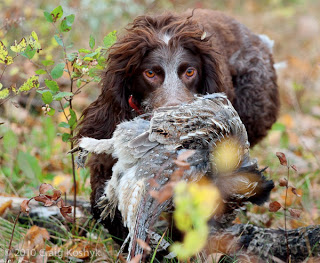
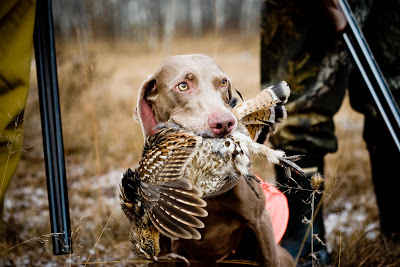
Danielle Boutry! You've won a consolation prize: a signed 20x24 inch original photographic print of the image to the right: Uma retrieving a ruffed grouse! (Félicitations Danielle, tu as gagné un prix de consolation: un tirage photographique (60x50 cm) de l'image a droit: Uma avec une gélinotte huppée!)


THIRD BLOCK....THE WINNER
Souris our wise old lady Weimaraner was sent for block number 3 and chose...
CALVIN HARPE!
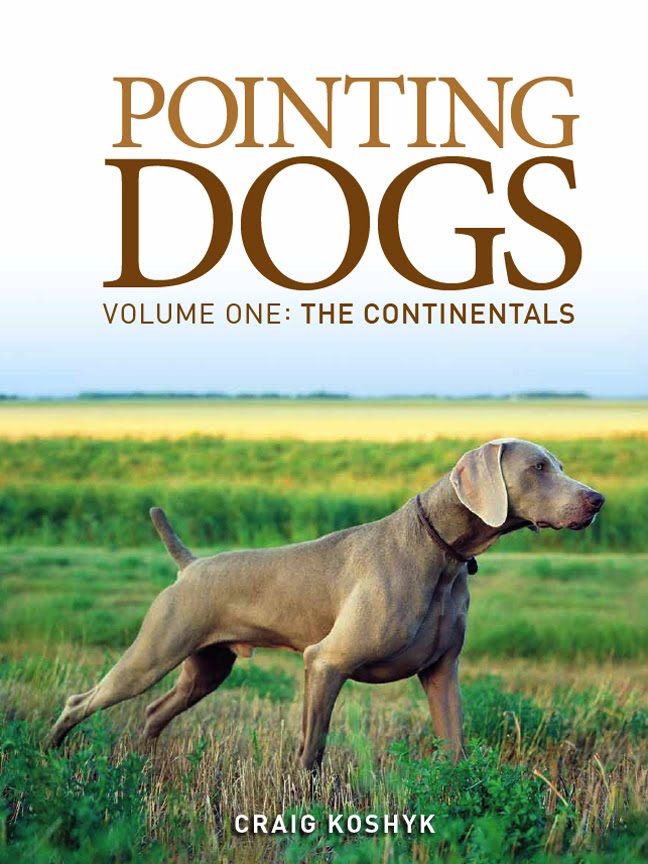
Congratulations Calvin, you've won a signed copy of Pointing Dogs, Volume One: The Continentals! Just drop me a line with your mailing address and I will sign it, wrap it up and trust it to the friendly hands of the USPS! 

And thanks again to everyone who entered the contest! Stay tuned for our Breed of the Week feature on the Deutsch Drahthaar (aka German Wirehaired Pointer) to be posted tomorrow.


WIN A BOOK!!!

Craig Koshyk


OK folks, put on your thinking caps. I will be asking a trivia question about the next breed to be featured as the Breed of the Week. If you answer it correctly, you could win a copy of Pointing Dogs, Volume One: The Continentals!

GUESS THE BREED:
Over the last four weeks, I've featured four different breeds; three are from Germany and one is (sort of) French. In the early 1900s a group of forward-thinking - some called them radical or even heretical - hunters in Germany combined all four breeds in an effort to come up with something greater than the sum of its parts.
That they succeeded is clear. The breed is now the number one pointing breed in Germany and very popular with hunters around the world. 
What is the German name of the breed?
Send your answer and your name to dogwillingpublications@gmail.com The name of each person who correctly guesses the breed will be written onto a block of wood. Then the blocks will be spread around the yard and my dog Souris will be sent to retrieve them in any order she chooses. The name on the THIRD dummy she brings back will be our winner!!

The contest closes at midnight tonight (North American central time), June 20, 2011. Souris will perform the wood-block-fetch-draw tomorrow at 9 am. The winner will be announced on this blog shortly thereafter.

Souris fetching a ruffed grouse. Photo: Dustin Leader

Lemons into Lemonade

Craig Koshyk


Canada Post is on strike. 

So what does that mean to a book seller who relies entirely on the good men and women at the post office to deliver the mail? It could mean "I'm screwed". Or it could mean that I should just walk around all day mumbling "Whiskey Tango Foxtrot?!!" waiting for the strike to end in a week or three.

Or I could follow the old addage: "When life gives you lemons, you make lemonade"

And that is exactly what I did yesterday. I hopped in my Honda Civic lemonade-maker and headed south. An hour later, I was in Pembina, North Dakota chatting with a happy-to-be-of-service US postal worker.

I've always known that US postal rates are lower than Canadian rates, but I was shocked to see by how much! When the friendly postman weighed one of my books and told me what it would cost for domestic and international shipping, my first thought was Whiskey Tango Foxtrot!!!

Not only are US rates cheaper...as in WAY cheaper... but the service is faster. In North America it is a day or three faster than Canada Post and for international service it is like comparing a rocket to a freaking donkey cart! Instead of 4 to 8 weeks for a book to ship to Europe, they usually get there in less than 10 days for the same price! 

So right there and then I made two decisions. 

1. I'm lowered my shipping charges on all North American orders. In fact, if you order two books to the same address in the US or Canada, the shipping charges are ZERO! For international orders, shipping fees will remain the same for now but all books will be sent by airmail instead of by surface mail, no more slow boat to China. 

2. I'm dumping Canada Post. Management and union haven't been able to work out a deal even though they have been at the bargaining table for nearly a year. Next week the government will step in to force them back to work. But it won't matter to me. I will be heading south every week with a trunk load of books to ship via USPS. And I am going to send a nice box of lemons to the fine folks at Canada Post. But I am pretty sure they will never make lemonade out of them since the fruit will probably just rot in a warehouse somewhere waiting for the next strike to come and go. 

Check out the Dog Willing website for new pricing and the special Buy 2 Ship 4 Free deal.  

Breed of the Week: The German Shorthaired Pointer

Craig Koshyk


One hundred and fifty years ago the people of Germany struggled to create a united nation out of a patchwork of tiny kingdoms, city-states and fiefdoms. Around the same time, German hunters struggled to create their own national breed of short-haired pointing dog. Eventually, both goals were realized. Today, Germany is a rich and united republic and the German Shorthaired Pointer sits in triumph as the most successful Continental pointing breed in the world. 

I’ve seen GSPs in Saskatchewan and Slovakia, Arizona and Austria and a dozen other places in between. I’ve seen the wide variety of types within the breed, from traditional utility dogs in Germany, to “little white rockets” in Canada and the US. But when it came time to write my own views on the breed, one very special dog—from right here in Manitoba—came to mind.  

His name was Willy. He was prairie-bred and built like a pickup truck. In his prime, he was one of the best sharptail and pheasant dogs I’d ever seen. But as he got older, the many miles of northern prairie he’d covered began to catch up with him. At 14, he was nearly deaf and blind, but he was still able to hobble around his owner’s yard where members of our small pointing dog club would occasionally meet for informal training sessions.

One day, as we were working young dogs on planted pigeons, Willy lay on the grass snoring under the warm summer sun. Out in the field, about 50 yards away, a pup was on point. A handler walked up, flushed the planted bird, and fired a blank. At the sound of the gun, Willy woke with a start. He struggled to his shaky legs and made a wobbly beeline to the field. It took him a while to cover the 50 yards, but once he was there, he made a short cast to the left, another to the right, and found the scent cone. Then, like an ultra-slow motion scene right out of The Matrix, he eased into a picture-perfect point.

I have no idea how many hundreds, or even thousands, of points Willy had made during his lifetime, but standing there that day, I knew I was seeing his last. As his owner took him by the collar and gently led him away, a fist-sized lump formed in my throat. By summer’s end, Willy had passed away. A proper gravestone now marks his final resting place near the training field. To me, and I suspect to many others who had the pleasure of hunting with him, Willy embodied the very essence of his breed: a handsome hunting dog, a brave, loyal companion as honest and strong as the day is long.


Read more about the breed, and all the other pointing breeds from Continental Europe, in my book Pointing Dogs, Volume One: The Continentals
http://www.dogwilling.ca/index.cfm


Breed of the Week: The Wirehaired Pointing Griffon

Craig Koshyk

One of the most interesting - and frustrating - challenges I faced when writing my book was trying to come up with an reasonably accurate profile of the Wirehaired Pointing Griffon. Despite the fact that the sporting literature from the late 19th century contains a wealth of information on the breed and that a good number of books have been written about it since then, I had a hard time coming up with a coherent summary of the breed's development and its current situation.


What I discovered was that the Wirehaired Pointing Griffon was created mainly in Germany by a Dutchman working under the patronage of an Anglophile German prince. Today, there is still a remnant population in Germany and even a small club for the breed there. But France has the largest population of Griffons and the largest and most influential Griffon club. It is also considered by the FCI to be the parent country of the breed. The first Griffon to make its way to North America was imported in 1887 and listed as "Russian Setter" by the AKC*. More were brought over after the turn of the century and the breed eventually attracted a small but devoted following among North American hunters, particularly in Québec and the American mid-west.  *I explain why in the Griffon chapter and describe the Russian Setter in the chapter on extinct breeds.

Today, it is not difficult to find a well-bred, hard-hunting Griffon in Europe or North America - if you do your homework.  But, as I found out when I wrote the chapter on the breed, any homework on the Griffon involves familiarizing yourself with the various types within the breed, the myriad of clubs representing it, and the sometimes quite different breeding directions followed by individual breeders.

Unlike some other breeds which benefit from having a strong, centralized organization designed to ensure the breed's overall quality, the Wirehaired Pointing Griffon is represented by many different clubs around the world. And in some of the breed's strongholds there are actually two competing clubs. In France for example, the parent club there is now under attack from disaffected former members who have formed their own club for what they call "authentic" Griffons. You can read more about the French brouhaha here.

In the US, there are also two clubs. The oldest of the two, the WPGCA, decided in the 1980s to allow cross breeding of Griffons to a closely related breed, the Cesky Fousek. Members who disagreed with the program left the club and formed a new one, the AWPGA. Both clubs still exist and, despite a bit of mudslinging that occasionally flares up on bulletin boards and discussion groups, they seem to have settled into a sort of détente in recent years. But even in the UK, where the breed has only been on the scene since about 2000, there now appears to be two clubs! The Korthals Griffon Club of Great Britain and the Working Korthals Griffon Club. (note: since this article was written, the website for Working Korthals Griffon Club is no longer online, nor can I find anything about it via Google search).

So no wonder it took me such a long time to write the Griffon chapter! Not only did I have to translate  references from German, French, Dutch and English sources but I had to cut through the spin each one put on their version of the events that lead to the creation of the breed and how it should look and perform today. Heck, even the name of the breed took me an entire page to explain!: 
The word griffon (or griffin) can be traced back to the Greek and Latin roots meaning “hook” or “claw” or even “hawk” ( i.e.: a bird with claws). Long ago, it was the name of a mythical beast with the head of an eagle and the body of a lion—with clawed feet, of course.
Eventually the word “griffon” became associated with many of the rough-coated dog breeds found throughout Europe. That is why the word “pointing” is in the name of the Korthals Griffon. It is there to indicate that, unlike the Blue Gascony Griffon, a type of running hound, or the Belgian Griffon, a companion breed, the Wirehaired Pointing Griffon is a pointing breed. The name also refers to the wire-haired coat. This is to differentiate it from other griffons with non-wiry coats, such as the French Woolly-haired Pointing Griffon developed by Emmanuel Boulet and the Brabançon Griffon that has a smooth coat.
So, the Wirehaired Pointing Griffon is the name of a pointing breed with a wire-haired coat that is part of the overall family of griffon-type dogs. Simple enough, right? Not quite. We need to keep in mind that the term “wirehaired pointing griffon” only came into widespread use after the turn of the 20th century. Depending on the source, rough-haired dogs were called everything from Polish and Hungarian Water Dogs, to Pudels, Budels and Hessian Rough-Beards. In fact when the first Wirehaired Pointing Griffon was imported to the US in 1887, it was listed as a “Russian Setter”.
Even Korthals himself did not use the name Griffon until the 1880s. He originally called his dogs Smousbarts  and when he moved to Germany he used the German term Drahthaarige Vorstehhunde, which means wire-haired pointing dogs. Eventually, he and members of the newly formed international breed club settled on the term Griffon. Elsewhere in Europe, other breeds of pointing dogs were developed from the same griffon type ancestors. The Spinone, Cesky Fousek, Slovak Pointer, Wirehaired Vizsla, Stichelhaar, German Wirehaired Pointer and Pudelpointer are all “griffons” in the broadest sense of the word. And since they all point and have wire-haired coats, are “wire-haired pointing griffons”.
It was therefore logical, and even necessary, to put and end to the confusion that resulted from the fact that all griffons with a wire coat of various kinds had the same name expressed in different ways in French or German. By adding the word “Korthals” to the name of the breed, French Griffon supporters proclaimed themselves the heirs and upholders of the works of the great breeder. - Jean Castaing, Les Chiens d'Arret
So, today in France and Québec, breeders and owners call the breed Griffon Korthals. In conversation they shorten it to just “Korthals”. But the situation in other countries is not as cut and dry. The FCI website shows that the international organization can’t quite figure out where to put the word “Korthals” in the English translation of the name. On the website’s nomenclature page, Korthals is in the middle of the name: French Wire-Haired Korthals Pointing Griffon. But in the English translation of the standard published by the FCI, Korthals is at the end: Wirehaired Pointing Griffon Korthals.
Americans solve the problem by simply dropping the word Korthals from the name. They refer to the breed as the Wirehaired Pointing Griffon, and shorten it to “Griff” in conversation. In the UK, it is the word “Wirehaired” that is dropped. British breeders and owners call their dogs Korthals Griffons. And in the German standard, the word Griffon is dropped! The name on the German translation of the FCI standard is Französischer Rauhhaariger Korthals Vorstehhund (French Rough-haired Korthals Pointing Dog)—yet the name of the German club representing the breed is Griffon-Club.
The bottom line is that when it comes to confusing breed names, the Wirehaired Pointing Griffon (Korthals) may be top dog, but that does not mean that a good Griff cannot be an outstanding gundog; many of them are, no matter what they are called.


Read more about the breed, and all the other pointing breeds from Continental Europe, in my book Pointing Dogs, Volume One: The Continentals
http://www.dogwilling.ca/index.cfm

Breed of the Week: The Wirehaired Pointing Griffon

Craig Koshyk

One of the most interesting - and frustrating - challenges I faced when writing my book was trying to come up with an reasonably accurate profile of the Wirehaired Pointing Griffon. Despite the fact that the sporting literature from the late 19th century contains a wealth of information on the breed and that a good number of books have been written about it since then, I had a hard time coming up with a coherent summary of the breed's development and its current situation.


What I discovered was that the Wirehaired Pointing Griffon was created mainly in Germany by a Dutchman working under the patronage of an Anglophile German prince. Today, there is still a remnant population in Germany and even a small club for the breed there. But France has the largest population of Griffons and the largest and most influential Griffon club. It is also considered by the FCI to be the parent country of the breed. The first Griffon to make its way to North America was imported in 1887 and listed as "Russian Setter" by the AKC*. More were brought over after the turn of the century and the breed eventually attracted a small but devoted following among North American hunters, particularly in Québec and the American mid-west.  *I explain why in the Griffon chapter and describe the Russian Setter in the chapter on extinct breeds.

Today, it is not difficult to find a well-bred, hard-hunting Griffon in Europe or North America - if you do your homework.  But, as I found out when I wrote the chapter on the breed, any homework on the Griffon involves familiarizing yourself with the various types within the breed, the myriad of clubs representing it, and the sometimes quite different breeding directions followed by individual breeders.

Unlike some other breeds which benefit from having a strong, centralized organization designed to ensure the breed's overall quality, the Wirehaired Pointing Griffon is represented by many different clubs around the world. And in some of the breed's strongholds there are actually two competing clubs. In France for example, the parent club there is now under attack from disaffected former members who have formed their own club for what they call "authentic" Griffons. You can read more about the French brouhaha here.

In the US, there are also two clubs. The oldest of the two, the WPGCA, decided in the 1980s to allow cross breeding of Griffons to a closely related breed, the Cesky Fousek. Members who disagreed with the program left the club and formed a new one, the AWPGA. Both clubs still exist and, despite a bit of mudslinging that occasionally flares up on bulletin boards and discussion groups, they seem to have settled into a sort of détente in recent years. But even in the UK, where the breed has only been on the scene since about 2000, there now appears to be two clubs! The Korthals Griffon Club of Great Britain and the Working Korthals Griffon Club. (note: since this article was written, the website for Working Korthals Griffon Club is no longer online, nor can I find anything about it via Google search).

So no wonder it took me such a long time to write the Griffon chapter! Not only did I have to translate  references from German, French, Dutch and English sources but I had to cut through the spin each one put on their version of the events that lead to the creation of the breed and how it should look and perform today. Heck, even the name of the breed took me an entire page to explain!: 
The word griffon (or griffin) can be traced back to the Greek and Latin roots meaning “hook” or “claw” or even “hawk” ( i.e.: a bird with claws). Long ago, it was the name of a mythical beast with the head of an eagle and the body of a lion—with clawed feet, of course.
Eventually the word “griffon” became associated with many of the rough-coated dog breeds found throughout Europe. That is why the word “pointing” is in the name of the Korthals Griffon. It is there to indicate that, unlike the Blue Gascony Griffon, a type of running hound, or the Belgian Griffon, a companion breed, the Wirehaired Pointing Griffon is a pointing breed. The name also refers to the wire-haired coat. This is to differentiate it from other griffons with non-wiry coats, such as the French Woolly-haired Pointing Griffon developed by Emmanuel Boulet and the Brabançon Griffon that has a smooth coat.
So, the Wirehaired Pointing Griffon is the name of a pointing breed with a wire-haired coat that is part of the overall family of griffon-type dogs. Simple enough, right? Not quite. We need to keep in mind that the term “wirehaired pointing griffon” only came into widespread use after the turn of the 20th century. Depending on the source, rough-haired dogs were called everything from Polish and Hungarian Water Dogs, to Pudels, Budels and Hessian Rough-Beards. In fact when the first Wirehaired Pointing Griffon was imported to the US in 1887, it was listed as a “Russian Setter”.
Even Korthals himself did not use the name Griffon until the 1880s. He originally called his dogs Smousbarts  and when he moved to Germany he used the German term Drahthaarige Vorstehhunde, which means wire-haired pointing dogs. Eventually, he and members of the newly formed international breed club settled on the term Griffon. Elsewhere in Europe, other breeds of pointing dogs were developed from the same griffon type ancestors. The Spinone, Cesky Fousek, Slovak Pointer, Wirehaired Vizsla, Stichelhaar, German Wirehaired Pointer and Pudelpointer are all “griffons” in the broadest sense of the word. And since they all point and have wire-haired coats, are “wire-haired pointing griffons”.
It was therefore logical, and even necessary, to put and end to the confusion that resulted from the fact that all griffons with a wire coat of various kinds had the same name expressed in different ways in French or German. By adding the word “Korthals” to the name of the breed, French Griffon supporters proclaimed themselves the heirs and upholders of the works of the great breeder. - Jean Castaing, Les Chiens d'Arret
So, today in France and Québec, breeders and owners call the breed Griffon Korthals. In conversation they shorten it to just “Korthals”. But the situation in other countries is not as cut and dry. The FCI website shows that the international organization can’t quite figure out where to put the word “Korthals” in the English translation of the name. On the website’s nomenclature page, Korthals is in the middle of the name: French Wire-Haired Korthals Pointing Griffon. But in the English translation of the standard published by the FCI, Korthals is at the end: Wirehaired Pointing Griffon Korthals.
Americans solve the problem by simply dropping the word Korthals from the name. They refer to the breed as the Wirehaired Pointing Griffon, and shorten it to “Griff” in conversation. In the UK, it is the word “Wirehaired” that is dropped. British breeders and owners call their dogs Korthals Griffons. And in the German standard, the word Griffon is dropped! The name on the German translation of the FCI standard is Französischer Rauhhaariger Korthals Vorstehhund (French Rough-haired Korthals Pointing Dog)—yet the name of the German club representing the breed is Griffon-Club.
The bottom line is that when it comes to confusing breed names, the Wirehaired Pointing Griffon (Korthals) may be top dog, but that does not mean that a good Griff cannot be an outstanding gundog; many of them are, no matter what they are called.


Read more about the breed, and all the other pointing breeds from Continental Europe, in my book Pointing Dogs, Volume One: The Continentals
http://www.dogwilling.ca/index.cfm