Contact Us

Use the form on the right to contact us. We should get back to you within 24 hours. If not, it means we are out chasing birds with dogs, shotguns and Canons. In that case we will get back to you as soon as we've finished the roasted Teal and Bordeaux . 


Form Block
This form needs a storage option. Double-click here to edit this form, and tell us where to save form submissions in the Storage tab. Learn more
         

123 Street Avenue, City Town, 99999

(123) 555-6789

email@address.com


You can set your address, phone number, email and site description in the settings tab.
Link to read me page with more information.

Pointing Dog Blog

The world of pointing dogs in words and images, moving and still.

On-line Time Machine

Craig Koshyk

Just about every month, I stumble upon yet another gold mine of on-line archives providing (usually) free access to thousands of old magazines, books, and film footage.  Last week, I came across some truly fascinating clips of pointing dogs.

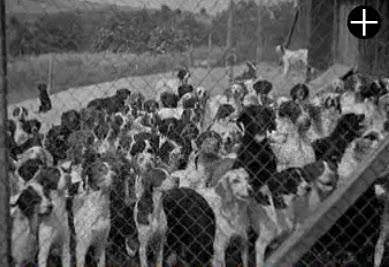
Here is a short film from Scotland that shows just how big some
of the Pointer and Setter kennels had become by the 1930s.


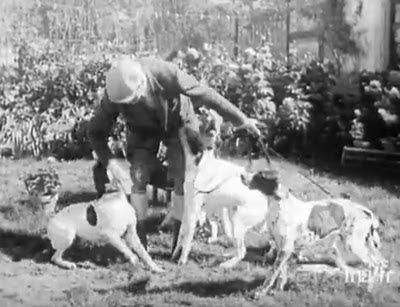
And here is a short documentary from France that shows a fascinating mix of breeds, from Pointers and Setters to Britannies, Braques and Korhtals Griffons.


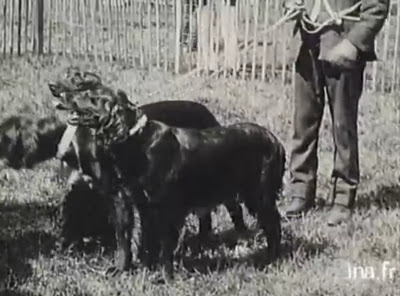
In this short clip, we see some of the last remaining specimens
 of the Griffon Boulet, a pointing breed that is now extinct.
I wrote about the Griffon Boulet previously here.

And finally, here is a piece about Pointers and Setters 
being trained and running in trials on the Canadian prairies.

Breed of the Week: The Small Munsterlander

Craig Koshyk


Among the most memorable conversations I’ve had with breeders were with the men and women who had dedicated much of their lives to the revival of a breed of gundog. And while the twists and turns are unique to each, there are certain elements common to them all: an extinct breed, a search to find any remaining stock, a declaration of rediscovery, initial resistance by the establishment and, eventually, acceptance of a re-established breed.

When I first began my research, I thought that all the various breed revivals had taken place fairly recently, in the last half of the 20th century. However, it turns out that there was a man who revived a breed nearly a century ago. His name was Edmund Löns and the breed he rediscovered was a small, long-haired hunting dog that used to be common in much of northwestern Europe. Löns named it the Heidewachtel (Heath Quail Dog). Today, it is known as the Small Munsterlander. It is among the most popular gundog breeds in Germany and is quickly gaining popularity around the world.

HISTORY
The story of The Small Munsterlander begins, as it does for most of the long-haired pointing breeds, with hunting dogs that had been in northwestern Europe for centuries. They went by a variety of names and came in a variety of sizes and colors. They were generally used to track, flush and retrieve small game. On the moors and in the marshes of the region known as Münsterland, they were called a Spion, Spannjer or Wachtelhund* (*There is a breed known officially as the Deutsch Wachtelhund. It is not a pointing dog but has a common ancestry with the long-haired pointing breeds, and some may actually point from time to time. However, it has been selectively bred to track, flush and retrieve and is also known for giving voice on trail.)

According to Edmund Löns, who wrote a book about the breed in 1912, they were owned by local farmers and peat diggers, men who saw hunting as a way of putting meat on the table and money in their pockets. To them, the real value of a dog was in the work after the shot, since any game not recovered was one less dish on the table or, worse, less money in their pocket.

This kind of hunting survived until the early 1800s. By mid-century, an emerging middle class, and a shift in the attitude and practises of hunters, had all but wiped out the commercial hunter. New breeds of dogs and styles of hunting emerged. Setter and Pointers were imported from England and various épagneul breeds from France.

As hunters mixed these breeds with local dogs, new varieties began to emerge. Eventually, the larger ones evolved into what would form the basis of the German Longhaired Pointer and the Large Munsterlander breeds in Germany, and the Drentsche Patrijshond and Stabyhoun breeds in the Netherlands. The smaller varieties, on the other hand, never really caught on.  By the end of the 19th century, very few of the little Spionnen remained. In fact, most people considered them extinct. Then, in 1906, in what can only be described as a one in a million chance, they were rediscovered.

Well-known poet Hermann Löns was an avid sportsman with a keen interest in dogs. Sometime around 1900, he developed an interest
 in a tracking breed known as the Roten Hannoverschen Heidebracke (Red Hanoverian Heath Hound), which was also thought to be near extinction. Hermann wanted to find out if there were any still alive in Germany, so he published an appeal in a popular sporting magazine asking for anyone with information on the breed to contact him. The appeal must have produced a few leads, for it is said that Hermann and his brother Edmund traveled throughout Lower Saxony (northwestern Germany) in their search. What they found, however, was not the Roten Hannoverschen Heidebracke. It was something else altogether. It was the Spion; the small long-haired pointing dog considered by many to have gone extinct many years before.

It turns out that the Spion had somehow managed to survive on a few isolated farms in the Westphalia region, where they were kept as tightly line-bred families. One of the breeders was a man by the name of Heitmann. According to Edmund Löns, Heitmann had been breeding his line of Spions since 1877 and had even used German Longhaired Pointers from time to time, keeping only those pups that had Spion traits. In 1911, Löns found another line of dogs with the same characteristics in the area of Dorsten, a town in Westphalia. The Dorsten dogs actually traced back to the same sources as the Heitmann dogs, but had not been crossed with them for many years. So Löns and Heitmann used them to strengthen the Heitmann line, and vise versa.

Although there were differences in the two lines—the Dorsten dogs tended to be somewhat larger—both lines produced dogs with white coats and brown patches or plates. The roan color seen in the breed today came somewhat later. It was the result of early crosses to German Longhaired Pointers and, as we shall see, Brittanies.

SELECTION AND BREEDING
Some sources claim that the Small Munsterlander has been a pure breed for over 500 years. The evidence clearly indicates otherwise; it has only been recognized since the early 1900s, and has, until fairly recently, received infusions of blood from other breeds.

As early as 1904, there was speculation that the Small Munsterlander was actually a local variety of the Brittany or, at the very least, a descendant of French dogs brought to Westphalia in the early 1800s by the soldiers of Napoleon’s army. Since Edmund Löns had served in the German army in France during the First World War, it was also suspected that he had bred French dogs into his lines. But Löns always maintained that the Small Munsterlander was a pure breed and that it had been around for centuries. However, in a recently revised and expanded edition of Der Heidewachtel, kleiner Munsterlander Vorstehhund oder Spion, a book that Löns wrote in 1922, Elizabeth Brand-Böhmer, a close friend of Löns, describes his attempts to develop the brown roan coat in the Small Munsterlander.

It seems that Löns had tried crossing to German Longhaired Pointers, reasoning that they were from the same basic root stock. But he was never really satisfied with the cross which he found produced dogs that were too large and slow. Then one day in 1918, he saw a small, brown roan dog on a ragpicker’s cart near his home. Löns immediately recognized it as a Brittany and offered to purchase it on the spot. The owner refused, but Löns persisted. He even went so far as to secretly observe the ragpicker and his dog on the local heath. He saw that the dog would sit on the cart and then jump off to go hunting. Its quick pace, high nose and solid point impressed Löns enormously.

Somehow Löns eventually purchased the dog and even had it registered in the Small Munsterlander stud book. When he used it for breeding and produced brown roan pups, Löns told club members that the coat was due to a genetic mutation. Later he changed his story and claimed that it came from a cross to German Longhaired Pointers. Inevitably, Löns was criticized for his breeding practises, and there-after remained silent on the issue. He did however confess to at least one person, Elizabeth Brand-Böhmer. He told her the story of the ragpicker’s Brittany, but asked that she not reveal it until after his death—which she did in 2006, having kept the secret for nearly 40 years.

WHAT'S IN A NAME
Prior to the establishment of a unified breed club in the 1960s, the breed went by two names. To the club led by Löns, it was the Heidewachtel, literally “Heath-land Quail Dog”. To members of the other club it was the Kleiner Munsterländer Vorstehhund, the Small Munsterlander Pointing Dog. Other names sometimes used were Spion or Spannjer.

In Germany today, the official name of the breed is Kleiner Münsterländer. In English speaking countries, the breed is called the Small Munsterander, often abbreviated to SM. Interestingly, the breed is still called Heidewachtel in the Netherlands.


Read more about the breed, and all the other pointing breeds from Continental Europe, in my book Pointing Dogs, Volume One: The Continentals
http://www.dogwilling.ca/index.cfm
.


Update on the Curious Case of the "Whitemaraner"

Craig Koshyk

I've received a surprising number of emails and comments regarding the mystery of the "Whitemaraner". In fact, my blog post has had nearly 500 visitors in less than 24 hours. So I thought I would make another post with some new information I have gathered.

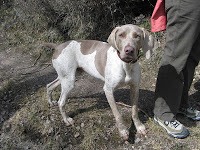
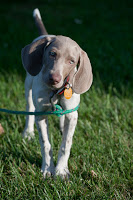
First of all, a couple of people have written to shed some light on the dog in the photo that appeared in the previous post. Apparently it is from a breeding of a Weimaraner and a GSP that has some Weim blood. So that would explain the grey color; both parents were able to transmit the dilution factor to the pup. And that seems to confirm the idea that you simply cannot get the dilute grey color in any first generation cross to a Weim. The recessive dilution factor has to be found on both sides of the pedigree.

US bred dog. Pedigree unknown.
But I also received reports from other folks telling me about white Weims in the US and in Germany. In the US, they are called "piebald" and there are reports of entire litters having the same sort of white and grey coat and even some grey "ticking" on the white background color. I am not sure what the Germans call them, but as indicated in the previous post, they would not be allowed to breed even when they come from pure grey parents.

And it turns out that DNA tests have been indeed indicated that some of the dogs in the US and in Germany are in fact from the all-grey purebred parents listed on the pedigree.

US bred dog from two
pure grey parents.
Of course, that does not eliminated the possibility of cross breeding further back in the family tree. It only proves that the parents are who the breeder says they are. Cross breeding may have happened further back, perhaps in the grandparents' generation or great grandparents' generation. And it could have happened even further back, so far back that it could be a case of atavism.

Atavism is a biological tendency for organisms to revert to an ancestral type or to suddenly manifest traits have not been seen in many generations. In humans there are cases of babies being born with vestigial tails or with larger than normal canine teeth. Horses can sometimes have extra toes and there have been cases of dolphins and whales with vestigial hind legs.

And there are a number of things that can cause atavism. Genetic mutations may trigger traits that have been dormant in the DNA for many generations, to suddenly re-appear. A significant change in the timeline of fetal development can also lead to atavistic traits; if the development period is cut short or goes on too long, atavism can occur.

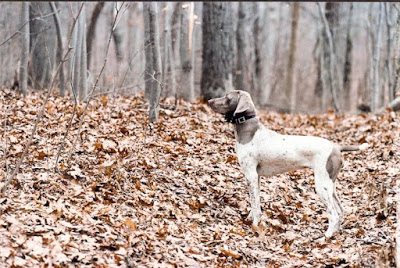
US bred "piebald" Weim.
This dog's parents are both AKC registered pure grey Weims.
No one knows the exact makeup of the Weimaraner. There are many theories about how it came to be and I explore some of them here and here. But no matter what the exact recipe was, I think everyone agrees that at some point in time, Pointers and Setters must have been included in the list of ingredients. So maybe the white comes from way back in the early days when the breed was first being created.

Same dog as in the photo above. From all reports, she is a fantastic
hunter and a real sweetheart.  Personally, I think she is a great looking dog!
So what exactly are we seeing when we see a white Weim?  Is it the result of some shady cross breedings in the recent past? Is it a fluke of nature; the result of a viral illness during gestation? Or is it a throwback to the very beginnings of the breed?

My guess is: "all of the above".  I believe that there has been some cross breeding done in the last 40 years and breeders certainly cross bred to create the breed in the late 1800s. But given the huge numbers of Weims born every year -- more than 20 thousand pups per year world wide -- the chances of other more 'fluke of nature' causes are probably high enough to explain at least some of the white Weims out there.

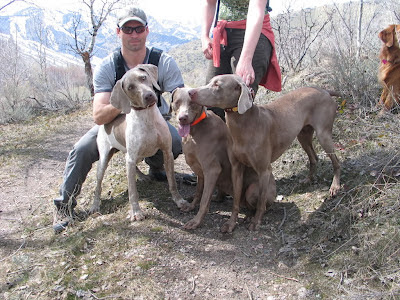
Another Weim in the US with a similar coat. Its pedigree is not known.
And it turns out that white coat issues don't just apply to Weims. In response to my last blog post, a friendly reader sent me a link to a very interesting and article about white in another self-colored gundog breed, the Vizsla.  It is called "Understanding White" and it was published in the Vizsla Canada Newsletter, Vol.7, No.4, September/October 2001. Here are a couple of passages that are about Viszlas but could just as easily be about Weimaraners:

When discussing white, it is important to keep in mind that the presence and extent of white markings are not entirely under genetic control. As early as 1957, referring to experiments done by Sewall Wright nearly four decades earlier, Clarence Little cautioned that: “an appreciable amount of variation in the extent of body-surface pigmentation is usually non-genetic in nature.” Without discounting the primary role of genes, it seems reasonable to think that various factors other than genetic can influence the distribution of pigmentation cells or perhaps, even interrupt it at times. We know that some factors may delay the normal pigmentation process as happened with the puppy mentioned earlier and there will no doubt be cases where the process is not only delayed but interrupted altogether. These factors could be anything from environmental to nutritional. 

Being aware of (this) might assist in avoiding hasty conclusions about the parentage of some Vizslas, often from field bred strains, that exhibit a considerable amount of white. In those cases, casual observers are sometimes quick to conclude that a dog is of impure breeding and whispered accusations of crossbreeding to Pointers follow suit. Such breedings, accidental or deliberate, may indeed have taken place but we should always keep in mind that dogs with considerable amounts of white might also be produced from the breeding of two purebred Vizslas.

Breeders whose primary selection criterion is field performance may not select against white... as rigorously as breeders whose primary focus is the show bench or may not select against it at all. If selection against (white) is not a priority with a particular breeder, it can be expected that this breeder may produce more dogs with white markings and with larger white markings than a breeder who makes selection against white markings a priority.  It would be my suggestion that not a few cases of rumoured crossbreeding simply involve a purebred Vizsla...


A Whitemaraner?

Craig Koshyk

I came across a very interesting photo today. It is of a really cool looking dog with a mainly white coat and a grey …as in Weimaraner grey… head. It also has a grey spot on its back near the tail.


I have seen Weims with a white "blaze" or spot on the chest and even one that had a couple of white toes, but this dog had far more white than grey in its coat.  I shared the photo on Facebook and remarked how cool it would be to hunt over him since he would be really easy to see and not blend into the forest like my all-grey dogs do.

I had no idea that this would be the start of a somewhat contentious debate (I was even 'de-friended' by one person who thought I was on a mission to destroy the purity of the breed!). In the comment section of the photo more than one person stated that the dog could not be a "pure" Weimaraner (others were less than polite, calling the dog a "mutt" and dropping  F bombs.)  And a few people wrote that the dog must be the result of a cross with a GSP or with a Pointer. And they may be correct. After all there is no genetic law that makes it impossible for dogs of different breeds to mate. All they need are testicles and ovaries.

But there are a couple of things that make me wonder if the dog might actually be as pure as any other all-grey Weim. First of all, the owner has stated that it is from two pure grey Weims. And apparently other similar dogs have had their DNA tested by Dr. Epplen at the University of Bochum and have been declared "100% pure".  I've heard from other folks that they have also seen this type of coat in litters of pure-bred all-grey Weims in the US. Here is a link to some photos and a discussion thread about one such dog.

The other thing that got me thinking was not really the white in the coat, but the grey. You see, the Weim coat is basically a brown (liver) colour that is "watered down" by a dilution factor that messes with the melanin in the hair shafts. The mechanism is a bit complicated but my friend Sheila Schmutz explains it very well here. What is important to remember is that the dilution factor is recessive. That means both parents must have the factor in order for their pups to express it. So if the Weims in the photos are in fact the results of cross breedings to GSPs or Pointers as has been suggested, then the Pointer or GSP parent must have had the dilution factor too.

Years ago, I actually saw some pups from a Weimaraner x Vizsla "oops" breeding. But they were all solid liver. None of them had any hint of grey... and that make sense. Only one parent (the Weim) would have had the dilution factor. The other (the Vizsla) did not have the dilution factor so the pups could never be grey.

Finally, there is the possibility of some kind of developmental problem occurring during the pup's gestation. Apparently, while pups are still in the womb, the migration of the pigments (melanocytes) that bring colour to the dog can sometimes be delayed or interrupted. Sheila Schmutz writes that:

Because melanocytes migrate down from the spinal column during embryogenesis not all animals complete this process by birth or thereafter. In dogs, it is therefore not uncommon to see white toes on an otherwise black or red dog. This is probably more a random event than the result of a specific allele. Another common "white spot" on dogs occurs on the chest. This must again be a site where melanocytoe migration occurs very late in fetal development and a cold or other developmental delay prevents the completion of melanocyte migration. It may be that the rate of melanocyte migration is itself inherited.

In some dogs… a white chest spot occurs. Some standards mention this as a fault. This is likely simply incomplete pigment migration in the particular individual, and not an inherited trait. Such small amounts of white on the chest or on the toes, do not seem to be caused by mutations…  More here.


In the most recent edition of the Weimaraner club of Germany's magazine Weimaraner Nachtrichten (Dec, 2011), there is an article written by  Dr. Ilka Schalwat. The title of the article is White markings in the Weimaraner Coat are multifactorial and not purely hereditary. Here are a few quotes (please excuse my less than ideal translation, my German really sucks....)

As breeders, we bear great responsibility for the quality of our breed, the Weimaraner. Our goal should be to follow the what the breed standard specifies. But we should also strive to meet the overall objectives of the Weimaraner Club which are: breeding to improve Weimaraner as a hunting dog, fight disease and ensure good health.

Several years ago with these objectives in mind I chose a promising athletic males from my A-litter. He was recognized as a top male that has been very successful especially for hunting wild boar. The VGP tested male had a small white patch on his chest, to which I never attributed any importance since he met the FCI standard. But during the physical breeding examination I learned for the first time that the size of the spot on the breast is a factor for breeding considerations. 

This experience was a surprise to me, and enough reason to make me concerned about the "inheritance" of white markings. The mother and the father of that dog were both without white markings, so I was quite astonished that the some puppies in my A-litter had white and some did not. At the recent dog show in 2011 I saw an entire litter from a well-known kennel, where all the litter mates had "too much"white. 

For many it was incomprehensible. This really very dramatic experience guided my thoughts while I was planning my C-litter. I asked myself: How can I as the breeder reduce the risk for white markings in the selection of breeding partners? By what breeding methods can I use to limit the risk? I studied all
the stud books of the last 10 years and compared them with the litter registration. I quickly realized that the white markings were clearly not just an issue from 100 years ago when it was a typical Weimaraner phenomenon, but it was still an issue today. 

Every year at least 25% of our puppies are noted to have white markings. In the last 10 years the rates have fluctuated, from 20 to 30%.... and I realized from the study of breeding books and notes that there is no indication for a possible mode of inheritance, no way to predict if a puppy will or will not have white markings. 

I consulted with, Prof. Dr.Jörg Epplen at the Ruhr University in Bochum, the well-known Weimaraner supporter who has written numerous articles on inheritance in our club magazine. His reply surprised me. 
"White spots are caused by many factors, not exactly hereditary, and certainly not by a single feature. They stem from delayed melanocyte migration "
Apparently, the formation of white spots is not yet fully elucidated. But leading scientists looking into the question believe the following: In the embryonic stage, melanocytes come from the neural crest (embryonic precursor structure to the spinal cord) then, along with the skin stem cells migrate. But a developmental delay due to infection or other problem, even if it is only for a few days during the pregnancy, can mean that the migration of melanocytes to the most remote places such as chest and paws do not make it in time.

Therefore, white markings may, in my opinion, be tolerated in the breed standard if the spot is not too large. And not all spots remain visible for a lifetime, because the pigmented hair can continue to proliferate as the dog matures.  Excluding a dog from breeding because of a little white blaze is therefore unnecessary… such exclusion does not contribute to the improvement the race. 

Even Dr. Werner Petri pointed out in his widely acclaimed textbook "Weimaraner Heute" suggests that not only at the beginning of Weimaraner breeding more than 100 years ago but even well into the last century, almost all Weimaraners had white markings (Petri Weimaraner Heute, 2003). 

Due to increased breeding regulation in recent years, with regard to size and location of what are truly incidental white markings, an unfortunate negative selection pressure for breeding Weimaraners without white has emerged and some people want a "reinterpretation" of the standard.  

But compared to hunting performance, health and good hips, white markings should only play a minor role. Everyone now wants to keep his kennel completely free of "white". And if you now have potential puppy buyers prevented from buying a puppy because of some white, it is a senseless waste of valuable genetic variability.


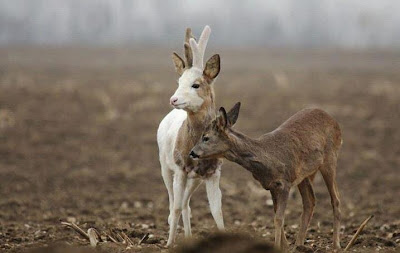
EDIT: It looks like a similar thing can happen to Deer too! (unless of course it is cross bred to a Pointer :)


I've received a surprising number of emails and comments regarding the mystery of the "Whitemaraner". In fact, my blog post has had nearly 500 visitors in less than 24 hours. So I thought I would make another post with some new information I have gathered. Read more here.


Website Update

Craig Koshyk


I've finally begun a much needed update of my photography website. Over the next little while, I will be adding more galleries, videos, info and cool links. Stay tuned!


Breed of the Week: Slovakian Rough-Haired Pointer

Craig Koshyk


Despite fanciful tales of medieval kings and claims of ancient lineage, the continental pointing dog breeds are relatively recent creations — most of them are less than 150 years old. some are even younger than that. One of the newest kids on the block is a grey wire-haired gundog from Slovakia. It is the culmination of an effort, begun in the early 1950s, to combine three well-regarded and established breeds in order to come up with something greater than the sum of its parts.

HISTORY
In the early 1950s, several unusual puppies appeared in litters of Cesky Fouseks whelped in Slovakia. They had the same rough-haired coat as their Fousek parents, but they were grey in color. The first was a single grey pup that popped up in a litter bred by László (Ladislav) Gresznarik in Šaľa, Slovakia. How and why a grey puppy ended up in a litter of Cesky Fouseks is, of course, open to speculation. But we do know that Gresznarik was instrumental in the development of the Wirehaired Vizsla and may have used Cesky Fouseks, German Wirehaired Pointers, and Weimaraners in some of his early efforts. The grey wire-haired coat probably occurred by chance when just the right combination of recessive genes happened to line up.
Gresznarik named the grey pup Bobi Selle. Koloman Slimák later used Bobi to breed to an Austrian-born Weimaraner bitch named Monika ad Haraska. A dog from that litter, Hlas z. Karpat, was eventually bred to another Austrian Weimaraner bitch from the Wastlhütte kennel.

Around the same time, two more grey rough-haired pups appeared in a litter of Fouseks whelped in the town of Pila. They were eventually crossed with the dogs bred by Slimák. Early on, an experimental stud book for the dogs was established by the Slovakian Hunters Union. At first, the dogs were registered as Hrubosrstý Weimarský Stavač (Wirehaired Weimaraners). At some point — it is not clear exactly when — the Slovakian Hunters Union asked the Weimaraner Club of Germany to recognise their dogs as such but according to Dr. Werner Petri, a former president of the German Weimaraner club, the request was refused in 1964. Other sources state that it wasn’t until 1975 that the official position of the German Weimaraner club was made public. Nonetheless, by the end of the 1970s it was clear that the breed would not be recognised as a variant of the Weimaraner, and that it needed a new name. So, efforts got underway in Slovakia to convince the FCI to recognize the breed as the Slovenský Hrubosrstý Stavač, the Slovakian Rough-Haired Pointer.

Unfortunately, for a variety of reasons, the first application submitted by the breed club was refused. Apparently the FCI requested that the club increase the breed’s population and widen its genetic base before reapplying. By the early 1980s, breeders in Slovakia had registered over 400 Slovakian Rough-Haired Pointers and developed three distinct lines. They had also established a commission with the expressed goal of gaining recognition for the breed. Finally, on the 6th of June, 1983 at the general meeting of the FCI held in Madrid, Spain, the Slovakian Rough-Haired Pointer, the most recently created breed in the extended family of Continental pointing dogs, was announced.

Since that time the SRHP has become a relatively popular gundog breed in Slovakia and has attracted interest in France, the Nether- lands and the UK. But the breed is still very much a work in progress. A number of important issues need to be addressed before it can be considered completely stabilised.

SELECTION AND BREEDING
The majority of Slovak Pointers are bred in Slovakia where approximately 30 to 50 pups are whelped annually. There are also breeders in the Czech Republic, the Netherlands, France and the UK.

Since its very beginning, breeders have sought to combine the qualities of the Weimaraner, the German Wirehaired Pointer and the Cesky Fousek in one breed. After nearly 60 years, they have succeeded in producing excellent all-around hunting dogs and a national pointing dog breed for Slovakia. But breeders are still trying to stabilise the quality and color of the coat and struggling with certain health issues. Performance aspects are also undergoing some modifications as some breeders work toward faster, wider-ranging dogs while trying to maintain the SRHP’s excellent reputation as a tracking and retrieving breed. The club has therefore kept an open mind in terms of allowing crosses to the original founding breeds and others. Michal Urban, secretary of the national breed club, explains:
It is only in Slovakia that we are allowed to breed to the original breeds. There are very strict rules in the program. We opened the register because we needed to create a wider base for the breed.We only keep the best working dogs with the appropriate look. We use mainly German Wire- haired Pointers and Weimaraners. We try to avoid too much Cesky Fousek because of problems with the coat (alopecia). We have also used German Shorthaired Pointers and Pudelpointers in the past. In 2005, we started to work out the new line for this breed as a combination of three foundation breeds, like it was at the beginning. All this work is strictly organized by our club in keeping with FCI regulations allowing these crossings to be done only in the country of origin. 
Nicolas Elder, a breeder in Ireland, adds:
Hunting in Continental Europe is far more structured and traditional than in the UK and Ireland. Each country would have a hunting union that would police and protect the hunting and, in some countries, ensure that there are dogs available. These unions would organise dog training, give out proficiency certificates, keep records of their pedigrees and generally ensure that all the working ability in the breeds were maintained. They were not restrained by kennel club rules and the desires of people showing the dogs. If a bit of hybrid vigor was needed to improve things, then crossbreeding was accepted.
WHAT'S IN A NAME
If there were a contest for the hardest breed name to pronounce, the Slovenský Hrubosrstý Stavac would probably win. Despite my Ukrainian heritage, I had a heck of a time learning to properly pronounce it. But when I was in Slovakia, I discovered that a shot of the local whiskey, Slivovica, loosened my tongue just enough to help me get around the rolled r’s. So, you may want to pour yourself a stiff drink first, and then say: Slo-VEn-skee H’roo BoSS risty STaV atch.

Slovenský means “Slovakian”. The literal translation of Hrubosrstý is “strong”, but in this context it means “wire-haired” and refers to the breed’s harsh coat. Stavac is the Slovak word for “pointing dog”. In some publications the word Ohar , the Czech word for “pointing dog”, appears in brackets after Stavac. Its inclusion in the breed name reflects the fact that, until 1992, the Czech Republic and Slovakia were one nation—Czechoslovakia—with two official languages. According to the FCI, the official name for the breed in English is Slovakian Wirehaired Pointing Dog. But breeders and owners in England and the US refer to it as the Slovakian Rough- Haired Pointer, abbreviated to SRHP.

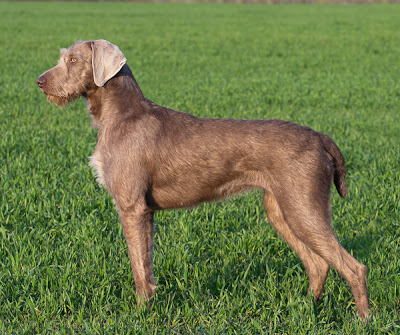
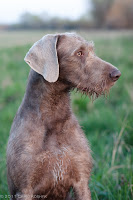
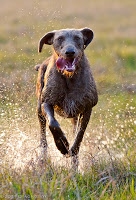
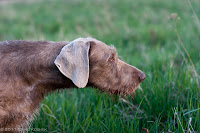
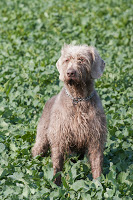
It is easy to why the original breeders of SRHPs wanted to call them Wirehaired Weimaraners. They do indeed look like Weimaraners with a wire-haired coat, beard and moustache. They are roughly the same size as Weimaraners, and they have the same powerful, athletic build. Slovak pups are also born with black stripes on their back and have blue eyes that eventually change to an amber color, just like Weims. The ideal Slovak coat consists of a short, fine undercoat covered by a flat-lying, harsh topcoat of approximately 4 cm in length. Facial furnishings include a well-developed moustache, beard and eyebrows. The hair on the ears is short and soft. The tail is usually cropped to half-length. As with all the wire-haired Continental breeds, the ideal coat can be difficult to achieve.

Since the Slovak Pointer is still more or less a work in progress, coat quality varies more than in older, more stabilised breeds such as the German Wire- haired Pointer. Slovak coats range from nearly smooth to very woolly. Colors range from a very light silver-grey to a darker grey-brown shade referred to as “sable”. In some litters, pups are born with mixed grey and liver roan coats with or without patches of solid liver on the flanks.


MY VIEW
When I first started to read up on the various breeds of versatile pointing dogs, I would occasionally come across references in books and magazines to a grey wire-haired gundog from Slovakia. The information provided was usually fairly vague however, and there were rarely any decent photographs to accompany the text. Even with the help of the Internet — still rather primitive back then — I had a hard time finding anything in-depth. Eventually, I managed to contact a Vizsla breeder in the Netherlands who had a pair of Slovak Pointers. She graciously sent me photographs of her dogs and provided me with some good background information on the breed.

Years later, I saw my first Slovak Pointers in the flesh. But they were not in Slovakia. They were in France at the home of the president of the French Slovak Pointer club, Annie Pescher. When I saw them, my first thought was “That’s a Weimaraner with a wirehaired coat”. Unfortunately we were unable to arrange a photo session in the field, but Anne and her husband did provide me with a great deal of information on the breed’s character and hunting abilities. My first opportunity to see Slovaks in the field came three years later when my wife and I travelled to Slovakia. There we met Michal Urban, a breeder of SRHPs and the secretary of the national breed club. Michal welcomed us into his home and provided us with an excellent opportunity to get to know his dogs and the breed.

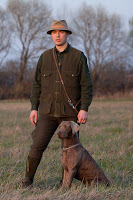
For our first photo session, Michal took us to an area of open fields bordered by some fairly tight cover. One of his dogs was due to have puppies any day, so he brought Cema, a 14-month-old female still in training. As we made our way out into the field, I realised that despite all I had read about the breed and the conversations I’d had with breeders in the Netherlands and France, I was still not quite sure what to expect. Even Hana, our Czech interpreter familiar with most of the European gundog breeds, had never seen a Slovak hunt. She, too, was quite curious to see how the young dog would do. Cema was certainly good looking. Graceful and athletically built, she had a coat that fit the standard to a tee. It was harsh, flat-lying and silver-grey. As she and Michal walked in the field, she remained perfectly at heel with a relaxed, carefree attitude. I asked Michal to pause about half way across so I could take a few photos. I distinctly remember snapping away, marvelling at just how relaxed the two of them were. I’m used to seeing dogs straining at their leashes, whining, even barking in anticipation of the hunt as their nervous handlers try to control them long enough for a few quick snapshots. But there was none of that. Michal and Cema waited patiently as I shot frame after frame.
The field we were in was well over 100 acres in size. It was covered with what looked like spring wheat. Narrow hedgerows lined each side. At the far end, there was low spot choked with willows and dried cattails. It looked like ideal pheasant cover. As I worked my cameras, trying to get just the right shot, I began to wonder if Cema would have the same calm, cool attitude when she was let off leash. Would she work at a leisurely pace a few yards in front of the handler? Or would she cover the field at a gallop? And what about that low spot down at the end? Do they even have pheasants in Slovakia? I soon found out.

From the moment that Cema was let off her leash she absolutely blazed through that field. For the next hour and a half Lisa and I were treated to one of the finest demonstrations of dog-work we’d seen in a long time. At one point, I glanced over at Hana, our interpreter. The expression on her face was priceless. It was one of those awestruck looks you get when you see something way beyond your expectations. And I must have had the same look on my face because as we exchanged glances, we both laughed and said, “Wow!”
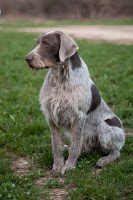
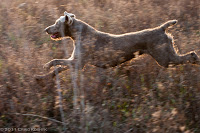
Cema covered a beat of about 150 meters on either side of us. She kept up a furious pace. In the tighter cover of the slough, she worked closer in, plowing through the cattails, her tremendous desire obvious to everyone watching. She ran with a powerful, athletic stride, head held relatively high but lower if she came across a trail of a running pheasant. Her points were solid, her retrieves snappy and to-hand. At the end of her run, I concluded that if all Slovak Pointers were like Cema, then whatever the creators of the breed used to develop it, they must have used some very high-quality ingredients.

The next day we travelled to another area to observe a few other Slovak Pointers hunt small game in a vast series of winter wheat fields. Cema was there along with several other dogs from other breeders. Once again, we were quite impressed with what we saw. All the dogs hunted well and showed a good deal of desire. But there were obvious differences among them in terms of appearance and working style. Their coats varied from flat-lying and wirehaired to much longer, softer and woolly. There was also at least one dog there that showed clear signs of alopecia—a genetic condition that causes bald patches on the flanks. There were even two very handsome SRHPs with roan coats: a mix of grey and darker “sable” plates on the flanks.

The running and hunting style of the dogs varied as well. To my eye, Cema was the best dog there. She continued to impress me with a dynamic run and stylish points. The other dogs ranged from very good to so-so. At the end of the day, I was left with the impression that the best Slovaks are world-class, but the breed as a whole is still in the development stages.


Read more about the breed, and all the other pointing breeds from Continental Europe, in my book Pointing Dogs, Volume One: The Continentals
http://www.dogwilling.ca/index.cfm