Contact Us

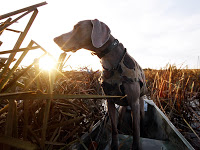
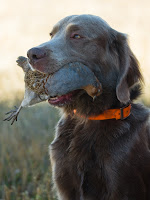
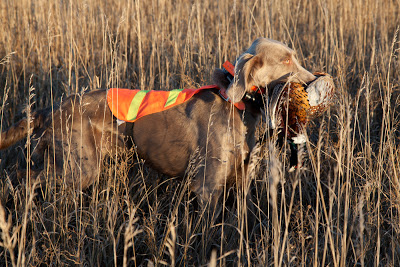
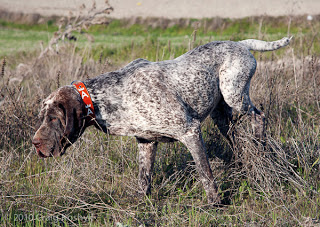
Use the form on the right to contact us. We should get back to you within 24 hours. If not, it means we are out chasing birds with dogs, shotguns and Canons. In that case we will get back to you as soon as we've finished the roasted Teal and Bordeaux . 


Form Block
This form needs a storage option. Double-click here to edit this form, and tell us where to save form submissions in the Storage tab. Learn more
         

123 Street Avenue, City Town, 99999

(123) 555-6789

email@address.com


You can set your address, phone number, email and site description in the settings tab.
Link to read me page with more information.

Pointing Dog Blog

The world of pointing dogs in words and images, moving and still.

Breed of the Week: The Weimaraner Part 2

Craig Koshyk
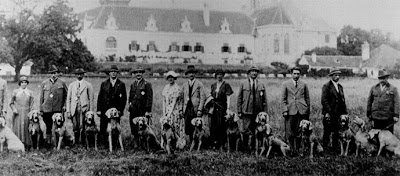

Members of the Austrian Weimaraner Club circa 1946

In the early days, the Weimaraner struggled for survival, coming close to extinction several times. But by the mid-1920s the situation had improved, largely due to the efforts of Major Herber, who first hunted with Weimaraners in 1915 and wrote extensively about them for many years afterwards. He was elected club president in 1922 and ultimately became known as the father of the Weimaraner for his untiring efforts to promote the breed.

Major Robert Herber and his wife
The interest generated by Major Herber and others eventually reached across the Atlantic to America, where New England sportsman Howard Knight first heard about the breed in the 1920s. In 1929, Knight became the first non-German to be accepted into the Weimaraner club. He even managed to convince its German members to sell him breeding stock, thus becoming the first person to import Weimaraners to the US. By 1941, he was the president of the newly formed Weimaraner Club of America. Meanwhile, in Germany, Weimaraner breeders suffered the terrible effects of the Second World War. Prior to the conflict, an average of 100 Weimaraner pups were whelped in Germany annually. By 1945, that number had fallen to an all-time low. Club records indicate that in the final year of the war, only ten pups were whelped.

After the war, the few Weimaraner breeders that survived found a willing market for their pups among the hundreds of thousands of foreign servicemen and women occupying their country. Thus, a steady stream of exports began in 1948 and continued throughout much of the 1950s. Eventually, alarmed by the declining quality of the breed and the exodus of good stock to the US and elsewhere, the German club passed a resolution forbidding its members from selling more than half a litter for export. These new regulations, along with a reestablished testing system, soon helped to stabilize the situation in Germany. However, the breed continued to grow rapidly outside the country. The demand for Weimaraners proved to be strongest in the US, thanks mainly to the efforts of publicist Jack Denton Scott, hired by the Weimaraner Club of America to stimulate the market for the “Grey Ghost”.
James Spencer, in his excellent book POINT! Training the All Seasons Birddog wrote that: 

Mr. Scott and his numerous imitators created the “Wonder Dog” myth, which first lifted the breed to great heights of popularity and then plunged it almost into oblivion in America. Soon after WWII, fast-buck breeders were crawling out of their holes everywhere to hawk Weimaraners. Many made fortunes from the breed. But, of course, the dogs couldn’t perform up to their Wonder Dog billing. What breed could? Gullible Americans realized they had been had. Demand (and prices) fell to near zero. The party was over. The breed was in shambles. To the few serious Weimaraner fanciers, it must have looked like the party site on the morning after a world-class New Year’s Eve bash. First, they had to get the drunks (fast-buck operators) up and out. ...Then they had to clean up the mess these “guests” had left.

The few serious fanciers managed to clean up some of the mess of the early days and by the 1960s some of the damage had been repaired. For hunters, however, the recovery was not without a price. By the 1970s, the Weimaraner was quickly becoming yet another breed of gundog transformed from hunter of game to hunter of blue ribbons. If it were not for a small, dedicated group of field trialers and hunters, Weimaraners could have faded completely from the field, forest and waters of North America.

Then, in the 1990s, the breed was dealt another blow as a new generation of fast-buck operators rediscovered the lucrative market for grey dogs. And once again it was largely due to one man—this time, a photographer named William Wegman—that the breed captured the imagination of the general public. But instead of touting it as a wonder dog for hunters, Wegman’s work portrays Weimaraners as cute dress-up dolls. The artist made a fortune flogging all manner of kitsch featuring photos of his Weimaraners dressed in humiliating costumes, and the market for the Grey Ghost became red-hot again as tens of thousands of Weimaraner pups were bred and sold. Inevitably, many were dumped into rescue shelters (or worse) as new owners realized that a rapidly growing adolescent Weimaraner is anything but a cuddly dress-up doll. 

For Wegman and the eager breeders riding his coattails, it was a gold rush. For the Grey Ghost, it was yet another disaster.
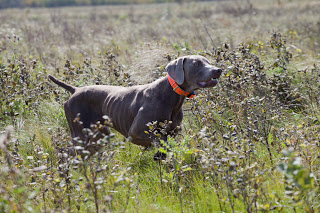
Current Situation: First, the bad news: most Weimaraner breeders do not hunt. Most Weimaraner breeders do not participate in field trials or prove their dogs’ ability in hunt tests. Most Weimaraner breeders focus their efforts on servicing a massive and growing market of non-hunters seeking sleek grey dogs for companionship or showmanship. As a result, for every decent, hard-hunting Weimaraner in the world today, there are at least 100 others that range from mediocre to completely useless in the field. As a lover of the breed, it pains me to admit such things and I expect to receive some hate mail for doing so, but I would be less than honest if I did not point out the fact that most Weimaraners being bred today are not really hunting dogs. They may be great pets, beautiful blue ribbon champions and loving members of the family, but the hunting heritage of most lines has been neglected for so many generations that dogs from them no longer have enough natural ability to do a decent day’s work in the field.
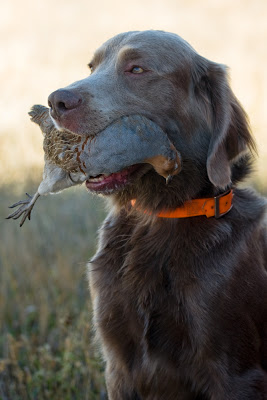
Now, the good news: A great hunting Weimaraner is not that hard to find! The comparatively small number of breeders that continue to hunt and test or trial their Weims produce dogs that can hold their own against any other breed of Continental pointing dog in the world. Ninety-nine percent of the Weimaraners born in Germany, for example, are from proven, tested stock. Outside of Germany, the largest group of field-oriented breeders is in the US were dedicated individuals have made tremendous progress in 
the last 30 years. They produce top-notch hunting dogs, even a few that are competitive in all-breed field trials. There has also been a significant increase in the number of Weimaraners being tested in NAVHDA and, while only a few of them have earned the title of Versatile Champion, that number will surely increase as a new generation of NAVHDA-oriented breeders develops more lines based on fully tested dogs. Other areas showing progress in producing good hunting stock are France, Holland, Sweden, Denmark and Norway.

Of course, the Weimaraner is not the only breed dominated by non-hunting breeders and owners. And, to be fair, some Weimaraner breeders do select for “dual” dogs capable of winning in the field and the show ring. But the fact remains: the majority of Weimaraners in the world today are not bred to hunt. Anyone seeking one as a hunting partner needs to keep this in mind. If you deal only with breeders who actually hunt and/or prove their dogs in tests and trials, you stand a good chance of getting a great Weim. 

If you don’t, then all bets are off.

PART THREE HERE

Breed of the Week: The Weimaraner Part 2

Craig Koshyk


Members of the Austrian Weimaraner Club circa 1946

In the early days, the Weimaraner struggled for survival, coming close to extinction several times. But by the mid-1920s the situation had improved, largely due to the efforts of Major Herber, who first hunted with Weimaraners in 1915 and wrote extensively about them for many years afterwards. He was elected club president in 1922 and ultimately became known as the father of the Weimaraner for his untiring efforts to promote the breed.

Major Robert Herber and his wife
The interest generated by Major Herber and others eventually reached across the Atlantic to America, where New England sportsman Howard Knight first heard about the breed in the 1920s. In 1929, Knight became the first non-German to be accepted into the Weimaraner club. He even managed to convince its German members to sell him breeding stock, thus becoming the first person to import Weimaraners to the US. By 1941, he was the president of the newly formed Weimaraner Club of America. Meanwhile, in Germany, Weimaraner breeders suffered the terrible effects of the Second World War. Prior to the conflict, an average of 100 Weimaraner pups were whelped in Germany annually. By 1945, that number had fallen to an all-time low. Club records indicate that in the final year of the war, only ten pups were whelped.

After the war, the few Weimaraner breeders that survived found a willing market for their pups among the hundreds of thousands of foreign servicemen and women occupying their country. Thus, a steady stream of exports began in 1948 and continued throughout much of the 1950s. Eventually, alarmed by the declining quality of the breed and the exodus of good stock to the US and elsewhere, the German club passed a resolution forbidding its members from selling more than half a litter for export. These new regulations, along with a reestablished testing system, soon helped to stabilize the situation in Germany. However, the breed continued to grow rapidly outside the country. The demand for Weimaraners proved to be strongest in the US, thanks mainly to the efforts of publicist Jack Denton Scott, hired by the Weimaraner Club of America to stimulate the market for the “Grey Ghost”.

James Spencer, in his excellent book POINT! Training the All Seasons Birddog wrote that: 

Mr. Scott and his numerous imitators created the “Wonder Dog” myth, which first lifted the breed to great heights of popularity and then plunged it almost into oblivion in America. Soon after WWII, fast-buck breeders were crawling out of their holes everywhere to hawk Weimaraners. Many made fortunes from the breed. But, of course, the dogs couldn’t perform up to their Wonder Dog billing. What breed could? Gullible Americans realized they had been had. Demand (and prices) fell to near zero. The party was over. The breed was in shambles. To the few serious Weimaraner fanciers, it must have looked like the party site on the morning after a world-class New Year’s Eve bash. First, they had to get the drunks (fast-buck operators) up and out. ...Then they had to clean up the mess these “guests” had left.

The few serious fanciers managed to clean up some of the mess of the early days and by the 1960s some of the damage had been repaired. For hunters, however, the recovery was not without a price. By the 1970s, the Weimaraner was quickly becoming yet another breed of gundog transformed from hunter of game to hunter of blue ribbons. If it were not for a small, dedicated group of field trialers and hunters, Weimaraners could have faded completely from the field, forest and waters of North America.


Then, in the 1990s, the breed was dealt another blow as a new generation of fast-buck operators rediscovered the lucrative market for grey dogs. And once again it was largely due to one man—this time, a photographer named William Wegman—that the breed captured the imagination of the general public. But instead of touting it as a wonder dog for hunters, Wegman’s work portrays Weimaraners as cute dress-up dolls. The artist made a fortune flogging all manner of kitsch featuring photos of his Weimaraners dressed in humiliating costumes, and the market for the Grey Ghost became red-hot again as tens of thousands of Weimaraner pups were bred and sold. Inevitably, many were dumped into rescue shelters (or worse) as new owners realized that a rapidly growing adolescent Weimaraner is anything but a cuddly dress-up doll. 

For Wegman and the eager breeders riding his coattails, it was a gold rush. For the Grey Ghost, it was yet another disaster.
Current Situation: First, the bad news: most Weimaraner breeders do not hunt. Most Weimaraner breeders do not participate in field trials or prove their dogs’ ability in hunt tests. Most Weimaraner breeders focus their efforts on servicing a massive and growing market of non-hunters seeking sleek grey dogs for companionship or showmanship. As a result, for every decent, hard-hunting Weimaraner in the world today, there are at least 100 others that range from mediocre to completely useless in the field. As a lover of the breed, it pains me to admit such things and I expect to receive some hate mail for doing so, but I would be less than honest if I did not point out the fact that most Weimaraners being bred today are not really hunting dogs. They may be great pets, beautiful blue ribbon champions and loving members of the family, but the hunting heritage of most lines has been neglected for so many generations that dogs from them no longer have enough natural ability to do a decent day’s work in the field.

Now, the good news: A great hunting Weimaraner is not that hard to find! The comparatively small number of breeders that continue to hunt and test or trial their Weims produce dogs that can hold their own against any other breed of Continental pointing dog in the world. Ninety-nine percent of the Weimaraners born in Germany, for example, are from proven, tested stock. Outside of Germany, the largest group of field-oriented breeders is in the US were dedicated individuals have made tremendous progress in 
the last 30 years. They produce top-notch hunting dogs, even a few that are competitive in all-breed field trials. There has also been a significant increase in the number of Weimaraners being tested in NAVHDA and, while only a few of them have earned the title of Versatile Champion, that number will surely increase as a new generation of NAVHDA-oriented breeders develops more lines based on fully tested dogs. Other areas showing progress in producing good hunting stock are France, Holland, Sweden, Denmark and Norway.

Of course, the Weimaraner is not the only breed dominated by non-hunting breeders and owners. And, to be fair, some Weimaraner breeders do select for “dual” dogs capable of winning in the field and the show ring. But the fact remains: the majority of Weimaraners in the world today are not bred to hunt. Anyone seeking one as a hunting partner needs to keep this in mind. If you deal only with breeders who actually hunt and/or prove their dogs in tests and trials, you stand a good chance of getting a great Weim. 
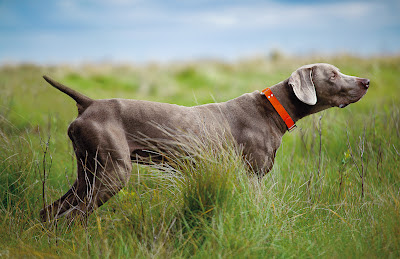
If you don’t, then all bets are off.

PART THREE HERE


Read more about the breed, and all the other pointing breeds from Continental Europe, in my book Pointing Dogs, Volume One: The Continentals
http://www.dogwilling.ca/index.cfm

Breed of the Week: The Weimaraner Part 1

Craig Koshyk


Over the next three weeks,  the Breed of the Week will feature a versatile gundog that is very close to my heart - the Weimaraner. I've decided to devote extra time to the Weim for a couple of reasons. First of all, I hope that sharing the story of this fascinating German hunting breed might serve as a wake-up call to other breeds that are on the slippery slope of beauty over ability. But more importantly, I want to make it very clear to hunters that despite the Weimaraner's reputation as a less than stellar performer in the field, there are in fact some awesome hunting Weims out there. With a little homework, you really can find a Weim that is as good as any other versatile hunting dog on the planet. 

Readers of this blog are probably familiar with my views on the Weimaraner. I have written about it since I started the blog in 2006 and have gone off on a few rants like this one herehere and here. But when it came time to write the chapter on the breed in my book, I dialled the rhetoric down a notch.

Despite the fact that I am very familiar with the breed—I own Weimaraners and spend an average of about 50 days per season hunting with them—writing this chapter was more difficult than I had anticipated. It was not due to any lack of information, resources or access to breed experts. The hard part was resisting the urge to rant about the sorry state of the breed in much of the world today.

Nevertheless, if I could only say one thing about Weimaraners, it would be this: they can be awesome gundogs. If you take the time to look around, you can find a Weimaraner that any hunter would be proud to own.

I have been very fortunate that all my Weimaraners have turned out to be good workers. The handsome fellow on the cover of this book is Félix, my very first hunting dog. The best thing about him was his drive, nose and unwavering loyalty. The worst thing about him was that he was way too smart for his own good. Training him was like trying to debate astrophysics with Steven Hawking. Since then, I have had other Weims, short-haired and long-haired, and they’ve all been excellent hunters. They’ve all come from breeders who hunt as much as I do and look for the same things in a gundog as I do: desire, speed, point, nose, and a love of water.

Ten years ago, I got a pup from Dick Wilber, a straight-talking Texan who has proven his dogs in the highest levels of competition. That pup turned out to be an absolutely “out of the box” dog. She literally trained herself. All I did was take her hunting and keep my mouth shut. I’ve hunted more days over my Souris than over any other dog, and I truly believe she may be my once-in-a-lifetime hunting partner. My other Weims include a long-haired bitch I imported from Germany, and an absolute rocket of a Weim from my friend Judy Balog. I hope those two will be the foundation of my very own line.

Since the breed suffers from a fairly poor reputation among hunters, especially in the US and Canada, I have been on the receiving end of some nasty remarks when people find out I have Weims. But I am happy to say that I have shown many naysayers the error of their ways. I remember one fellow in particular who could not talk enough trash about the breed when we first met. But after spending an afternoon hunting over my dogs, he apologized for his disparaging remarks, and asked to be put on the waiting list for a pup!

I have heard similar stories from others in North America who are working to keep the hunt in the breed and to convince other hunters to join their cause. Recently, an alliance has been formed among field-oriented breeders to do just that. It is still the early days for a group that exists mainly online at www.huntingweimforum.com, but they are taking a giant step in the right direction. Hopefully, their efforts will lead to a better awareness among American and Canadian hunters that Weimaraners from proven lines can make excellent hunting partners.

So how did the Weim end up being at the bottom of the V-dog totem pole when it comes to the ratio of good to bad workers in the breed? Well, it turns out that the story of the Weimaraner has all the elements of a Hollywood melodrama. It is a classic tale of how marketing, money and the vain pursuit of blue ribbons can turn a noble breed of hunting dog into a caricature of its former self. Fortunately, like any good melodrama, there’s a happy ending. Despite the challenges the breed continues to face, there are still dedicated Weimaraner breeders out there producing world-class gundogs.

The official history of the Weimaraner begins on June 22, 1897 when
 a club for the “pure breeding of the silver-grey Weimaraner pointing dog” was formed in Erfurt, Germany. The breed’s development since that time is relatively well documented. The historical record from before that time is much less clear. And since the further back it goes, the fuzzier it gets, all we have are theories based almost entirely on speculation.

While researching the history of the breed for the book, I looked at several of the most common theories and found gaping holes in most of them. The "Grey Dogs of King Louis Theory" for example suggests that Weims descend from dogs known as Chiens Gris (grey dogs) brought back from the orient by King Louis of France hundreds of years ago.
Chien Gris de Saint Louis

What supporters of this theory conveniently overlook is that the word
gris does not refer to the dilute brown shade that gives the Weimaraner its unique color. In the modern standards for the Griffon, Picardy Spaniel and other breeds, the term gris (and “grey” in the English translation) is used to describe the tight mix of white and brown hairs in their coat. What’s more, the best of King Louis’ dogs were actually said to be tri-colored with gris (brown and white) and/or black along the back and red markings on the legs.

The other most commonly held theory is that the breed was created by the Grand Duke Charles August of Weimar. However, there is exactly ZERO evidence to support the theory. Personally, I don't think the Grand Duke had anything to do with the breed at all and I would challenge anyone who claims he did to provide evidence to support their position. So far no one has taken up the challenge. I wrote about the Grand Duke theory here.

After digging as deep as I could into the history of the breed, I came to the conclusion that the theory that makes the most sense, is the "GSP Theory". It is one of the more controversial theories  and was first proposed around 1900 by several authorities. They claimed that the Weimaraner was either a grey version of the GSP, or that it was created in much the same way as the GSP: by crossing heavy old-style German dogs with English Pointers. Karl Brandt, a founding member of the Weimaraner club, supported this theory, as did a Dr. A. Stoese, who wrote in 1902 that the Weimaraner descended from a yellow and white smooth-haired English Pointer bitch imported into Germany in the 1820s. Unlike the other theories, the GSP theory is actually supported by some fairly good circumstantial evidence. Several eyewitnesses attest to the fact the Weimaraner was quickly transformed from a large, lumbering tracking hound into a sleek pointing dog.
In my younger years, I saw (the Weimaraner) look like a German bloodhound with hanging lips and watering eyes, but now it has arrived at the form of the German Shorthair and so it has certainly changed for the better. (Carl Linke quoted by William Denlinger, The Complete Weimaraner, 36)
In the end, it is fair to say that we will never know just how the Weimaraner came to be. But the fact that so much ink was spilled trying to come up with a plausible back story is very revealing. It shows that breed supporters knew they had to convince the dog establishment that the Weimaraner was not just another recent creation or a grey version of the GSP. They had seen how a breed known as the Wurttemburger was eliminated as an unwanted color variety of the GSP and feared the same thing would happen to the Weimaraner. So, they published all kinds of stories about the breed’s supposed noble past and its connections to royal dogs from France.

They went on and on about how pure the Weimaraner was and even presented pseudo-scientific “studies” based on crackpot theories of Germanic head shapes and other nonsense. Surprisingly, it worked! After nearly 20 years, the Delegate Commission recognized the Weimaraner as a separate and independent breed. Nevertheless, from 1897 to 1922, Weimaraners did not have their own registry, but were listed in the German Shorthaired Pointer’s stud book. Dr. Werner Petri wrote about the system then in place:
In the early years, pups were not registered; and only dogs that had previously been shown at exhibitions or tested and evaluated. This was certainly necessary at the time since dogs had to be examined first to establish their “breed purity”, at least when it came to appearance. In the first few years the numbers of Weimaraners entered was from five to 19. In 1900, 62 dogs were registered, obviously en masse, since dogs with birth dates back to 1891 were included. In subsequent years, the entries were sparse, but then, in 1904, a record high of 121 were made. Here again many older dogs born in 1894 are found. Then, the registration numbers fall off strongly once more. From 1907 to 1913 there are no Weimaraners found in the stud book. In total, during the first ten volumes of the Deutsch Kurzhaar (GSP) stud book, 265 Weimaraners were registered.
Dr. Petri goes on to explain that the increasing pressure to eliminate the grey coat color from the German Shorthaired Pointer led to some Weimaraners being refused entry into the stud book. As a result, many Weimaraner breeders stopped registering their dogs. This led to a decline in the number of dogs listed and to a decline in the overall population of the breed.
...it may be assumed that in these years the Weimaraner as a breed was nearing extinction. That was the fate of the Württemberg breed which, by being registered in the German Shorthaired Pointer stud book, went extinct or was absorbed into the German Shorthaired Pointer.

PART TWO: The Weim bounces back...bigtime!!


Read more about the breed, and all the other pointing breeds from Continental Europe, in my book Pointing Dogs, Volume One: The Continentals
http://www.dogwilling.ca/index.cfm


Breed of the Week: The Burgos Pointer

Craig Koshyk


Following the ancient trade routes that have criss-crossed the Pyrenees mountains for millennia no longer requires a dangerous trek through steep mountain gorges. Nowadays it’s a pleasant drive on a modern highway. But as we traveled across the stunning landscape dotted with the remains of ancient fortresses and timeworn shepherd trails, we could imagine what it must have been like in the 14th century when hunters in the area first began to hunt with pointing dogs.

Lisa and I had left cool, green, humid France in the morning and by mid-afternoon we were in hot, arid Spain. We were traveling through the very birthplace of the pointing dog on our way to photograph Spain’s native breeds. Stopping at a roadside gas station, I decided to reprogram our GPS unit to allow a short detour. I wanted to pass through the province in which Spanish hunters developed one of the breeds we were going to see. When the device asked me to spell the name of a major town in the area, I punched in the letters B-U-R-G-O-S.


It is tempting to conclude that the Burgos Pointer is the granddaddy of all pointing dogs. After all, it looks like an old breed, it comes from the very region where all pointing dogs originated, and
 it is even called “Old Spanish Pointer” in some publications. However, according to veterinary geneticist and breed expert José manuel Sanz Timón, the Burgos Pointer is a relatively modern descendant of the Old Spanish Pointer that is so often referred to in the old literature.

Sanz Timón points out that all too often, people simply assume that any historic mention of a Spanish Pointer automatically means it was from Burgos, or that any painting that includes the image of a hunting dog represents a Burgos Pointer. He suggests that it is “patriotic enthusiasm” that has caused breed supporters to claim that the Burgos is the original pointing dog.

According to Sanz Timón, the first time that words Perdiguero and Burgos were mentioned in the same sentence was sometime after 1808. He writes that an inventory drawn up by an official of the King’s Ger- man Legion includes a list of supplies and materials that were to be shipped out. On the list, it is said, is mention of dogs that “are called Perdigueros in Burgos”. He also cites another reference to the breed in the 1907 book, Geschichte der Königlich Deutschen Legion (History of the King’s German Legion), in which author Bernhard Schwertfeger writes about large brown and white dogs from the area of Burgos that were given as gifts. Based on these and other documents, Sanz Timón concludes that the region of Burgos has only recently been associated with a specific type of pointing dog. If the Burgos Pointer were the original Spanish Pointer, there would be much earlier references to it by name. Furthermore, the Burgos Pointer has a white and brown coat while many of the early English references to the Old Spanish Pointer indicate that it was often black, or even tri-colored.

In Spain there are remarkably few references to any kind of generic, widely distributed pointing dog. But there are mentions of local varieties that went by names such as Pachón de Navarra, Pachón de Vitoria, Perdiguero Navarro, Perdiguero Leonés, Perdiguero Gallego, Perdiguero Portugués, Ca Mè Mallorquí and Gorgas. In some cases, these local varieties differed in name only. In other cases, the dogs were clearly different in size, shape, coat or other important aspects. The largest contributing factor to these differences was the ratio of blood from the original types of dogs used to create them: the Sabuesos, a type of tracking dog, and Pachónes, the earliest type of pointing dogs.

No matter what the name or variety, all the local varieties of Old Spanish Pointers were already in decline when William Arkwright traveled to Spain in the 1890s to research the history of the English Pointer. Since he makes no mention of any type of dog from Burgos, it is assumed that the breed now known as the Pediguero de Burgos represents a comparatively recent branch of the Old Spanish Pointer that developed in the relative isolation of the Burgos region.

In modern times, we find references to the breed in 1912 when the first two Perdigueros were registered with the newly founded Real Sociedad Central de Fomento de las Razas Caninas en España, the Royal Spanish Canine Society. The pedigree record indicates that during this time breeders were practicing either extremely tight inbreeding or they were crossing to other breeds. As a result, there was very little uniformity in the breed. In fact, until the 1950s, there wasn’t even an official standard for the Burgos Pointer.

The civil war that engulfed Spain in the 1930s had dire consequences for all dog breeds in Spain. For the Burgos Pointer, there was the added difficulty that many of them were taken out of Spain by German soldiers stationed there as “volunteers” and advisors. Members of the so-called Condor Legion are said to have purchased many Burgos for shipment back to Germany and there are several eyewitness accounts of planes being loaded with large numbers of adult dogs and pups.

In a symposium on Spanish dog breeds held in 1982, José Manuel Sanz Timón presented an account from a Spanish military officer. Don Raúl García Bengoechea, who was assigned to the capital of the national zone at that time, personally saw how this emigration was carried out.
They bought adult females, pregnant (females) and puppies, as well as males. One can not say how many dogs the Germans took, but it is assumed that it was many and the best. The war was a hard blow to the breed.
By the end of the civil war, there were very few Burgos Pointers left in Spain. Those that remained were very heavily inbred and inbreeding depression be- came a serious issue. By the late 1960s only a dozen or so Burgos Pointers were registered each year with the Spanish Canine Society and articles with titles such as “Farewell Burgos Pointer” began to appear in the Spanish sporting magazines.

Then, in 1972, José Manuel Sanz Timón decided to take action to save the breed. His first step was to search the area of Castilla y León for any remaining Burgos Pointers that he could use in an intensive breeding program. He managed to find several good specimens that would eventually form the pillars of his breeding program. By the early 1980s Sanz Timón had developed seven separate bloodlines. In 1983 he and a number of fellow breed supporters formed the AEPPB (Asociación Española del Perro Perdiguero de Burgos). Their goal was to establish a long-term breeding and testing system designed to raise the level of field ability and conformation in the breed.

Inevitably, some breeders disagreed with the program and its strict requirements. Eventually a second club was formed, the CEAPPB (Club Español de Amigos del Perro Perdiguero De Burgos). More recently a third club was formed, the AECPB (Asociación Española de Cazadores con Perdiguero de Burgos). I have no idea what the divisions are between the various clubs but it does seem that there has been a certain amount of mud-slinging between them. So I can only suggest that anyone looking to find a good Burgos Pointer do a LOT of homework first and check into the breeding approaches being practiced by the various clubs.

Today the Burgos Pointer is well established in Spain and in recent years has enjoyed an increase in popularity. However, it is still more or less unknown outside of its native land, with only a few in Portugal and France. In a previous post I wrote about seeing a Burgos Pointer for the first time and posted a link here to a gallery of photographs of the dogs we saw on a more recent visit to Spain (all dogs featured courtesy of the Asociación Española del Perro Perdiguero de Burgos).


Read more about the breed, and all the other pointing breeds from Continental Europe, in my book Pointing Dogs, Volume One: The Continentals
http://www.dogwilling.ca/index.cfm

Breed of the Week: The Portuguese Pointer

Craig Koshyk

The old literature is filled with references to Old Spanish pointers and various French and Italian pointing dogs. And just about every history of the English pointer traces that breed’s origins to dogs brought to England after the War of Spanish Succession around 1715. But another old breed from the Iberian peninsula is often overlooked. It is a hard-hunting, naturally talented gundog from Portugal that played a major role in the development of the modern pointing dog.

The first glimpses we get of gundogs in Portugal are from old drawings and fairly vague references found in old manuscripts such as the Livro da Montaria written by Portuguese King João I in the 15th century. The dogs were probably very similar if not identical to others being developed in Spain and southern France at the time. They were most likely used to flush small game for the net or falcon, and if they did stand their game or “point”, they were surely trained to do so. Later on, they were selected for a more pronounced natural point and, like the dogs in Spain and elsewhere, eventually became true pointing dogs.

By the 18th century, they were common enough in Portugal to allow for a good number to be exported to England. Once there, they played a role in the development of the English Pointer. This is a point that almost every history of the Portuguese Pointer emphasizes, but one that is often overlooked in the histories of other breeds. This is probably due to the fact that many 18th and 19th century sources seem to refer to any dog from the Iberian Peninsula, or even southern France for that matter, as “Spanish Pointers”.

Fortunately, some sources do specifically mention Portuguese dogs. In a book written in 1776 titled A Treatise on Field Diversions by a Gentleman of Suffolk, author Barnabas Simonds writes that the English Pointer “...is acknowledged to be a native of Spain or Portugal; as many were and yet are brought to us from both kingdoms.”

English soldiers almost certainly discovered short-haired pointing dogs either while stationed in Spain or by frequent contact with Spanish soldiers in other areas of Europe. It is obvious that they also would have had ample opportunity to come into contact with dogs in Portugal since Lisbon is a major port through which many English troops would have traveled. So it is reasonable to conclude that Portuguese Pointers were taken to England and that they contributed to the development of the English Pointer. But to categorically state that they alone are that breed’s “grandfather” is a bit of a stretch. After all, Portuguese Pointers are from the same basic root stock that gave rise to all pointing breeds and were probably closely related to the pointing dogs in Spain and France.


In any case, what we do know is that the native pointing dogs of Portugal fell on hard times in the late 1800s and early 1900s when English Pointers, Setters and other breeds caught the imagination of large numbers of Portuguese hunters. Socio-economic factors and rampant crossbreeding also led to such a steep decline in the breed’s fortunes that by the 1920s it was in very rough shape. Fortunately in the 1930s efforts got underway to rehabilitate the breed. A breed standard was drawn up in 1931, but it wasn’t until 1939 that the modified standard was recognized. Looking back on the years of decline, the author of one of the first books on the breed, Father Do- mingos Barroso, wrote in an article published in the 1940s that:
In 1924 hunters from the city wanted to have the fury of the “Poin- terized” dogs and others like them. But the villages retained their old dogs. Time went by. The city folk realized that they had made a mistake and stepped back.
The “step back” was toward a more traditional version of the breed, one that had not been overly modified by excessive amounts of English Pointer blood. By 1948 Father Barroso would write that he had Portuguese Pointers of “excellent breeding”.


Throughout the 1960s and ’70s, progress toward the complete rehabilitation of the breed continued, and in 1984 the breed club l’Associação do Perdigueiro Português was established. Soon after, the reputation of the Portuguese Pointer began to move beyond the national boundaries. Breed clubs were formed in France (1999) and in the US (2004).

Today the breed continues to grow in popularity in Europe and North America. Its dynamic and well-organized club in Portugal has succeeded in keeping the breed mainly in the hands of hunters and in
promoting the breed first and foremost as a hunting dog.

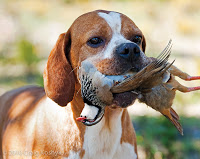
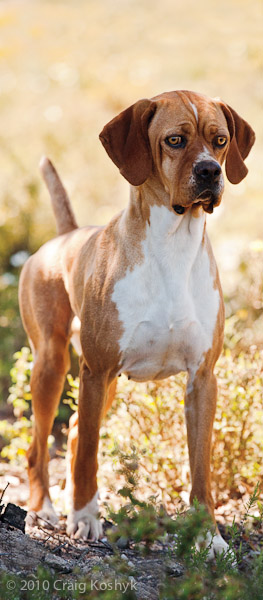
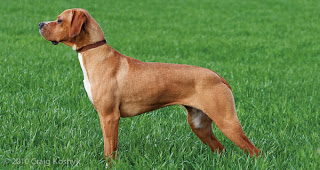
The first thing you notice about a Portuguese Pointer is its resemblance to the English pointer and, in some ways, to the Boxer. But when we spent the day photographing Portuguese Pointers in their native  Portugal, what stood out more than anything else were their eyes. The dogs that day had the most expressive eyes we had ever seen.

Whenever Lisa and I meet with breeders of gundogs, I warn them to count their dogs before we leave since Lisa always carries a purse
 big enough to smuggle a puppy or two out of the kennel. Everyone knows I am joking, but when we were in Portugal, I was not so sure. I had the sneaking suspicion that if she’d been left alone for a few minutes, she just might have turned into a puppy-napper! And to be perfectly honest, I don’t think I would have turned her in if she had. We both really took a shine to the breed.

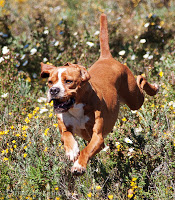
Of course, the views we formed were nowhere near objective. We saw some of the best dogs in the breed running across the gentle hills of a beautiful cork tree plantation in central Portugal. We were in the company of three of the most experienced members of the breed club and we’d just been served one of the most delicious picnic lunches we’d ever had. The dogs were super-affectionate and were calm in their kennels, but all business in the field. They pointed hard, backed each other and retrieved every bird to-hand.

And those eyes! They were so striking 
they gave some of the dogs a near-human expression. It must be the way that the dark pigment around the eyes, nose and lips contrasts with the yellow/brown coat. Lisa said that some of them looked as if they had a “Cleopatra eyeliner” sort of thing going on.

Back at our hotel, we reviewed the photos we’d taken at the cork plantation. They were some of our best work yet and only added to the positive impression that the breed had made on us. We talked about how great the day had been. We’d seen some very nice dogs, enjoyed charming company and beautiful weather. There was only one disappointment. Somehow, Lisa had resisted temptation: there were no puppies in her purse!

Click here to see a gallery of photos of Portuguese Pointers doing their thing in Portugal.


Read more about the breed, and all the other pointing breeds from Continental Europe, in my book Pointing Dogs, Volume One: The Continentals
http://www.dogwilling.ca/index.cfm

Breed of the Week: The Pachón Navarro

Craig Koshyk

Published in 1938, The Dog in Sport is a wonderful collection of charming tales describing days spent afield with gundogs. In it, author J. Wentworth Day wrote: 
"There were Ponto and Tanto, the two great, solemn-eyed, double-nosed Spanish Pointers who lurked in a dignified way about the house, a gentle gloom upon their countenances. They were the grandchildren of the Spanish Pointers owned by my great grandfather, Robert Asplan, the little, old, dapper gentleman who wore black knee-breeches with stockings and silver-buckled shoes."
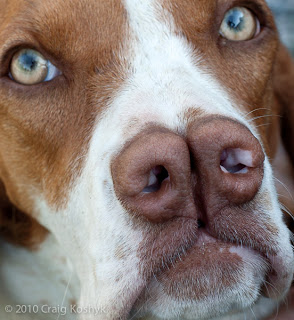
When I first read those lines I almost said aloud, “what the heck is a double-nosed Spanish Pointer”? Did it have a nose that did double duty, air scenting and tracking? Or did “double nose” describe a physical feature? Searching the literature, I eventually found out. Freeman Lloyd, a noted American journalist, wrote in an issue of the AKC’s Gazette magazine published in the 1930s that some dogs had noses like the double barrels of a shotgun.

A nose like the double barrels of a shotgun? Was that even possible? I checked a few veterinary textbooks and soon learned that dogs – and people – can be born with what doctors call a bifid nose. The condition ranges from a slightly deeper than normal crease between the nostrils to a completely cleft nasal structure resulting in the double barreled shotgun look described by Lloyd. And it turns out that Spanish Pointers are not the only gundogs that can have such a nose. Even William Arkwright mentions double-nosed gundogs from Portugal and France and wrote that he knew of a family of double-nosed Irish Red Setters.

Once I had figured out just what a double nose was and understood that dogs from various regions could have them, I was determined to find out if there were any double nosed Spanish Pointers left in the world. Re-reading The Dog in Sport did not give me much hope.
I think those Spanish Pointers knew that their day was done, that they were the last of their race -- gone with the hand-sickle and the centuries of the long September stubbles, where partridges had sit like quails.
Even so, from time to time I would surf the web looking for information on “Old Spanish”. I rarely turned up anything new so I stared to believe hat the breed really had gone the way of the Dodo bird. Then one day, more or less by accident, I came across a photograph that stopped me in my web-surfing tracks.

I had somehow stumbled onto the website for the Spanish magazine Perros de Caza, and found myself looking at the image of a dog with an orange and white coat, amber eyes and a nose like the double barrels of a shotgun! I was stunned. This wasn’t some dusty old painting, it was a recent photograph. The dog was a modern dog. The double-nosed Spanish Pointer was still alive!

Five years later, Lisa and I drove down a narrow road to a Spanish hamlet nestled into the side of hill near Pamplona. We were on the final leg of a journey that began with e-mails and phone calls and would end with a fascinating photo shoot in the foothills of the Pyrenees Mountains were the Spanish Double-Nosed Pointer, known locally as the Pachon Navarro is still bred.

The Pachon Navarro traces back to the very first pointing dogs that developed on both sides of the Pyrenees Mountains in the 13th century. But until fairly recent times there were remarkably few written references to it. Nevertheless, it is generally accepted that the breed began as a blend of the two most common kinds of dogs used for hunting in Spain during the middle ages —tracking dogs and indigenous mastiff breeds.
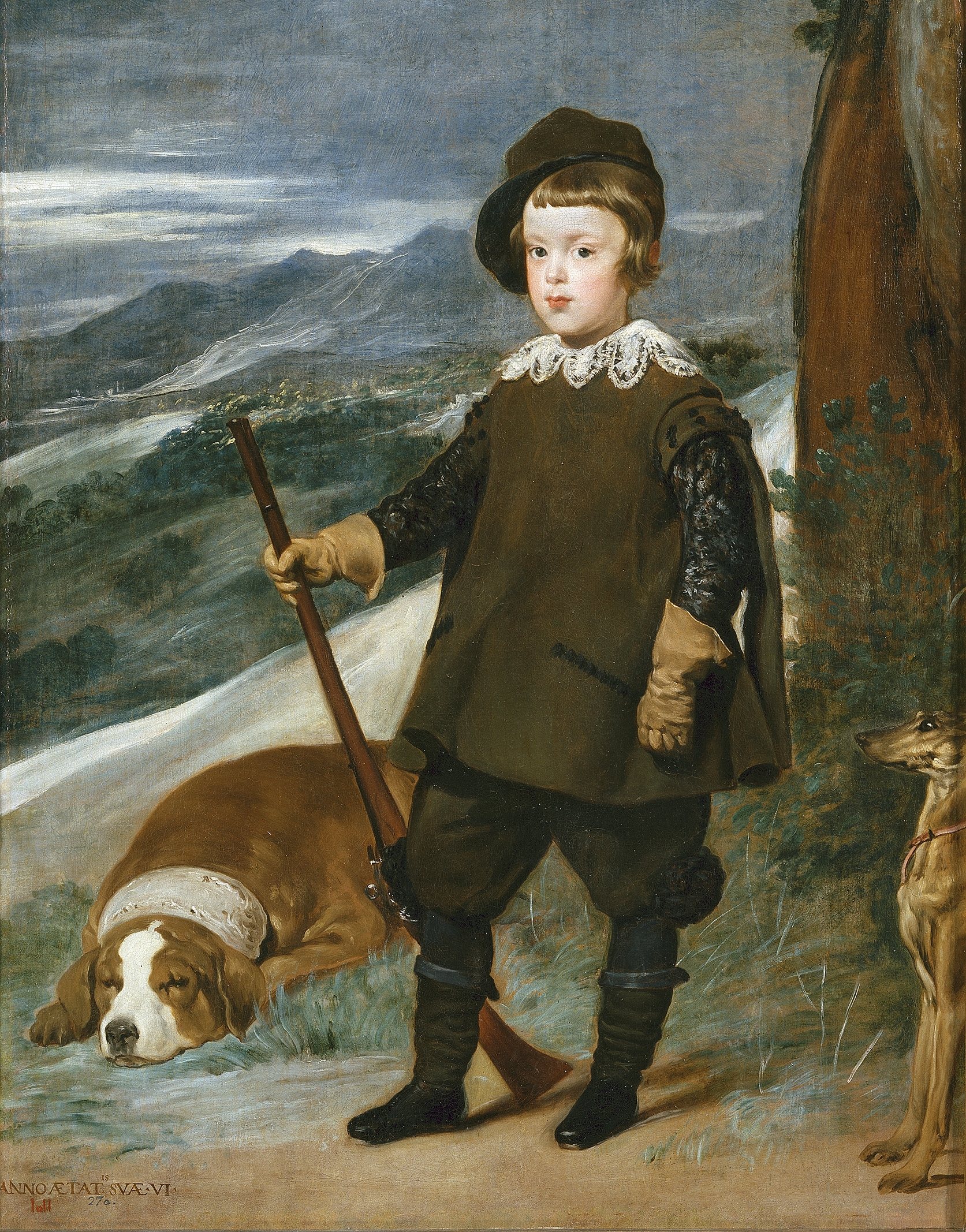
About the middle of the 15th century, images of pointing dogs began to appear in Spain. Among the best-known are a miniature falconry scene in the cathedral of Toledo and a much later painting of Prince of Asturias Baltasar Carlos by Velázquez that features a dog that looks remarkably like the modern Pachon Navarro. 

Over the centuries, Spanish hunters refined the various types of local pointing dogs and named them for the area in which they were most common. By the 1800s, dogs of the Pachon type were found throughout northwestern Spain and went by a variety of names: Pachón, Perdiguero Navarro, Pachón de Vitoria, Pachón Español, Perdiguero Común or just Navarro. But when dogs shows began to be organized in Spain in the 1890s, they were all grouped under one name: Pachon Navarro.

By 1911, the Pachon Navarro gained the official recognition of the Real Sociedad Canina de España (Royal Canine Society of Spain). Thanks to influential breeders such as D. Gregorio Martínez López and several others, the Pachon Navarro made progress in terms of conformation and performance and continued to be bred by and for hunters until the 1950s. But when myxomatosis, a virus affecting rabbits, all but eliminated one of the main quarries of the Pachon Navarro, hunters abandoned the breed and turned to the specialist bird dogs, especially Pointers and Setters. By the early 1970s, the Pachon population was so low that most people believed it had gone extinct.

Then, in 1978, concerned with the dire straits facing many indigenous dog breeds in Spain at the time, the Central Canine Society of Madrid created a special Commission for Spanish Breeds and appointed José Manuel Sanz Timón as overall director. In 1979 the Commission asked three young veterinary students, Luis M. Arribas, Luis A. Centenera and Carlos Contera to locate and catalog any remaining Pachones they could find in the Narvarra, Rioja and Alava regions as well as parts of Portugal. The project was intended to be a relatively short-term effort designed to produce a written report and census of the breed. But it ended up being much more than just a research project and anything but short term. Today it is seen as the turning point in the history of the Pachon Navarro since it sparked a renewed interest among Spanish hunters for their native breeds of gundog.

When I finally got the opportunity to meet Dr. Carlos Contera near Guadalajara, Spain, I asked him why he became interested in the breed. 
 It was great fun for a young student, but it was a lot of work. People in other countries had undertaken similar surveys for horse breeds but there was never much interest in searching for hunting dogs except for some work done in finding Spanish Mastiffs. We used the same methodology to find Spanish Alans later on, but with the Pachon Navarro, I saw it was a noble cause, something that would enrich our culture. We put in an enormous amount of work without any outside help. We were criticized by many and ignored by others but my father, uncles and cousins all worked on the project. It took us a long time - our hair is now grey - but we’ve succeeded. The young hunters today don’t even realize that the breed was once considered to be almost extinct!
Today the breed continues to gain ground among Spanish hunters. The number of Pachon Navarro pups whelped each year continues to climb. With a dynamic club working to gain full recognition for the breed, the future of the Pachon Navarro seems bright.

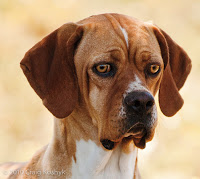
The Pachon Navarro could never be accused of looking like just another gundog. While it shares many of the features common to most Continental breeds, there are some significant differences. The most obvious, of course, is the nose. All dogs have a slight crease between their nostrils but it is usually no more than a very shallow line. But many Pachones have nostrils that are clearly divided by a much deeper furrow making it look similar to the business end of a side-by-side shotgun. This is the famous “double nose” referred to in the old literature.

Anatomically, it is actually a cleavage in the structure of the nose itself. It is not unique to the Pachon Navarro. In fact a good number of breed standards mention a split or double nose but when they do, it is always listed as a serious or disqualifying fault. The Pachon Navarro standard is the only one that allows it.

It is interesting to speculate just how the double nose came to be viewed as a positive characteristic for the Pachon Navarro. It is certainly possible that an individual with a split nose just happened to be an excellent hunter with a very fine sense of smell. Was this then seen as “proof” that at double nose was better than a regular nose?

Nowadays of course, breeders understand that the double nose offers no advantage over a normal nose and that it is simply a cosmetic feature of the breed. Furthermore, not all Pachones have a double nose. Nor do all breeders select for it. Pachon breeders understand that by using double-nosed dogs in their lines, they run the risk of producing pups with completely cleft palates. I was told that up to 10% of pups are either stillborn or are put down immediately after birth since the cleft is so profound that they are incapable of breathing or nursing properly. But most Pachones have a moderate cleft and are fine. They can breathe and suckle, run and hunt just like any other dog. 

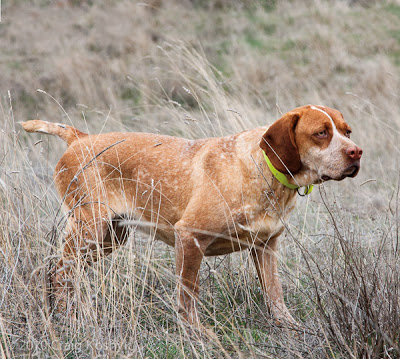
The most common coat type in the breed is a short, smooth coat similar to that of other short-haired Continental breeds. A longhaired or Seduño coat similar in length and texture to that of some of the Brittany is also accepted. A wide variety of colors are allowed. Carlos Contera told me that The Pachon is a hunting dog and there are no bad colors for hunting dogs. The most common combinations are white and orange, white and brown, white and black and white and liver (a darker shade of brown) with or without patches or ticking. There are also self-colored (monochrome) and tri-color coats.

The Pachon Navarro is a fascinating breed of gundog. It is the closest thing we have to a direct link back to the ancestral dogs that were first developed on either side of the Pyrenees Mountains. Studying it allowed me to better understand what the pointing dogs of the 14th century must have been like.  

Our first encounter with the Pachon Navarro was in 2001 near Pamplona. Lisa and I had traveled from France to visit Pachon breeder Juan J. García Estévez the vice president of the Circulo de Cazadores y Criadores de Pachón Navarro. When we arrived, we were greeted warmly by Juan and his lovely wife, Carla, and by the most extraordinary-looking dogs we had ever seen. A solidly built bitch and two six-month old pups greeted us as we stepped into the yard. All of them had noses that fit Freeman Lloyd’s description to a tee—they were like the double barrels of a shotgun!

We spent two days with Juan and Carla and learned a lot about their dogs and the program to revive the breed. On an absolutely beautiful afternoon and evening walking in the hills near their home we watched their dogs work in the extraordinary light of the foothills of Los Pirineos, the Pyrenees Mountains, the breed’s birthplace.

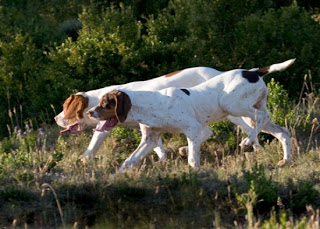
I found the dogs to be exactly as advertised. They were tireless workers that kept a steady pace searching for game more or less within gun range. They mainly trotted but broke into a loping gallop for minute or two if the conditions warranted it and dug into even the thickest cover.

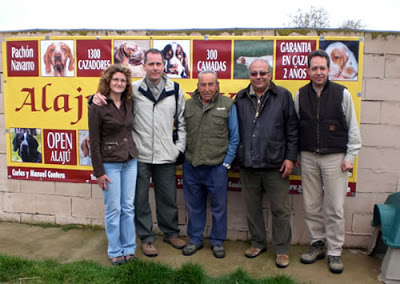
Four years later, on another trip to Spain, we had the distinct pleasure of meeting the leader of the recuperation effort, Carlos Contera and his father, Manuel, at their home near Guadalajara. Juan was there too. He kindly drove the three hours from his home to meet us once again. This time we saw a larger number of dogs, some with the double nose, some without. We also had the opportunity to see the longhaired version of the breed. 

In the field, we followed along as Carlos and Manuel hunted quail with their dogs. My initial impressions of the breed were confirmed. All the Pachones showed a good degree of desire, hunting hard despite the thick, thorny cover. Points were fairly intense but often lasted only until the gunner was within about 5 meters at which point the dog would bust into the thick, thorny cover to flush the bird. 

Watching the Pachones Navarro work, I got a real sense of what it must have been like to hunt with pointing dogs in the 14th century. The terrain and game they pursued was exactly as described in many classic works on pointing dogs. In fact, I am sure Carlos and Manuel could have used a nets or crossbows instead of modern firearms. The dogs certainly worked close enough and were able to sniff out the tiny European quail even in the tightest cover on that hot, dry day.


Read more about the breed, and all the other pointing breeds from Continental Europe, in my book Pointing Dogs, Volume One: The Continentals
http://www.dogwilling.ca/index.cfm