Contact Us

Use the form on the right to contact us. We should get back to you within 24 hours. If not, it means we are out chasing birds with dogs, shotguns and Canons. In that case we will get back to you as soon as we've finished the roasted Teal and Bordeaux . 


Form Block
This form needs a storage option. Double-click here to edit this form, and tell us where to save form submissions in the Storage tab. Learn more
         

123 Street Avenue, City Town, 99999

(123) 555-6789

email@address.com


You can set your address, phone number, email and site description in the settings tab.
Link to read me page with more information.

Pointing Dog Blog

The world of pointing dogs in words and images, moving and still.

Everyone Loves a Clean Bitch

Dog Willing

Never trust the translation or interpretation of something without first trusting its interpreter. ― Suzy Kassem

Today’s translation programs are light-years ahead of where they were just a few years ago. And they will only get better with time. I use Google Translate and DeepL for various tasks, from communicating with gundog enthusiasts in other countries to translating documents, old and new, written in languages I do not understand. However, every day, I am reminded of their limitations when it comes to translating gundog-related terms and concepts.

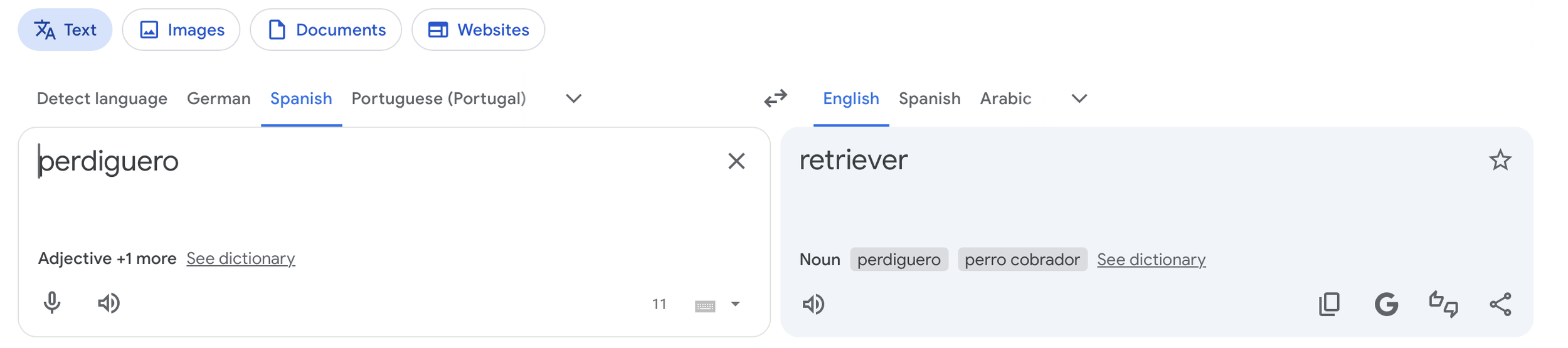
Here is an example. If you enter the Spanish word “perdiguero” into Google Translate or DeepL you get “Retriever” as the result. If you enter the name of the Spanish pointing breed “Perdiguero de Burgos”, you get Burgos Retriever. But the translation is wrong.

Let me explain.

The word “perdiguero” is made up of two parts. “Perdi” is from the Latin word perdix which means ‘partridge’ and ‘ero, from the Latin suffix “-arius’ which means “pertaining to” or ‘connected with’. So a literal translation of perdiguero would be  ‘partridge dog’. In the old sporting literature, we see the words perdiguero and its Portuguese equivalent, ‘perdigueiro,’ used to describe a certain type of hunting dog found across much of Europe. Other Spanish terms like Braco, Perro de Punta, and Perro de Muestra were also used for the same type of dog. All of those terms refer to dogs that hunted partridges by pointing them.

Did some of those dogs retrieve? Absolutely! All the perdigueros I photographed in Spain showed a strong natural retrieving desire. And all the breeders I spoke to expected their dogs to retrieve. But the word perdiguero in the context of hunting dogs does NOT mean retriever. It means pointing dog. And all the dogs I saw were used as pointing dogs and all their breeders considered finding and pointing birds their dogs' number one job.

So why does Google Translate say it means ‘retriever’? Well, because it does mean ’retriever’ (sort of), but in a completely different context.

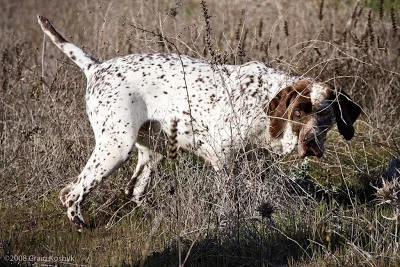
Perdiguero de Burgos

If you look up the word 'perdiguero' in major Spanish dictionaries, you will find the ‘partridge dog’ definition is listed first. However, in some older, more in-depth dictionaries, you can find a secondary definition of the word, one that pertains to a person who purchases game (like partridges) from hunters to sell to the public.

Take a look at this entry in the Spanish dictionary Diccionario general etimológico de la lengua española published in 1889. The first definition is the one we would expect: Adjetivo que se aplica al perro u otro animal que caza perdices (Adjective applied to a dog or other animal that hunts partridges). But take a look at the second definition. El recovero que compra de los cazadores la caza para revenderla. (The dealer who buys game from hunters to resell it).  See the word “recovero” in there? In this context, it refers to the person, dealer, or middleman who purchases game (such as partridges) from the hunter and then resells them. But in other contexts, it can mean someone or something that ‘recovers’ or ‘retrieves’ something. And that, I believe,  is the source of the faulty translation of the word ‘perdiguero’. Both Google Translate and DeepL, for some strange reason, skip the first and most obvious definition and opt for the second, far more obscure definition. 

And as if that is not confusing enough, Google Translate has no problem with the Portuguese word “Perdiguiero” or the breed name “Perdigueiro português”. It says that Perdigueiro means ‘pointer’ and Perdigueiro português means ‘Portuguese Pointer’. But DeepL, usually more accurate than Google, falls once again into the ‘retriever’ trap, translating the words as ‘retriever’ and ‘Portuguese retriever’. 

So why does it matter? Well, to most people it doesn’t. But to anyone who wants to know more about the breed, it can lead them to believe that the Perdiguero de Burgos is a retrieving breed, and not a pointing breed. I have even seen breed enthusiasts insist that the “retriever” translation is correct since they consider the breed to be one of the retriever/pointer/versatile breeds. But that is simply not true. Yes, a well-bred Perdiguero de Burgos should have a solid retrieving instinct. And yes, they can do well in NAVHDA tests and be used as a versatile dog. But the breed was developed as a pointing dog, first and foremost, and the breed name makes it clear that its number one job has always been to find and point partridges and other feathered game.


The first rule of translation: make sure you know at least one of the bloody languages! ― Faiz Ahmed Faiz


Now imagine how many other things we could get wrong if we rely on machine translations for dog-related content from non-English countries, or if non-English speakers use them to translate what we write about our dogs.

A friend of mine was trying to communicate with a breeder in France about a potential breeding. They’d been exchanging emails, translated via Google Translate, but were unable to figure out what they were saying. They asked me to review the messages to see if I could figure it out. And as soon as I did, I knew exactly what the problem was.

There were sentences about dogs ‘throwing’ litters or having pups ‘on the ground’ out of a ‘blue hen’. There was talk of dogs ‘hitting objectives’ in field trials and using whoa posts, carded pigeons, and check cords for training. There were entire paragraphs about ‘breaking’ dogs to be ‘steady to wing and shot’ and even mentions of ‘snake breaking’ and ‘trash breaking’! When those terms were fed into Google Translate, the results were insane. The French breeder had no idea why the English speaker was talking about chickens (blue hens) and was shocked by the idea of ‘throwing’ puppies around! He even asked why we ‘break’ dogs, snakes and trash? What the hell was wrong with us!?

In the end, I helped both sides figure it out, and the breeding was a success. But both parties realized that when using machine translation apps, you really have to avoid using the sort of dog slang we tend to take for granted when talking to other gundog enthusiasts. Even between different English-speaking countries, there can be vast differences in expressions and concepts. ‘12 O’clock tails’ are just as confusing to an Englishman as ‘sticky’ setters are to an American.

So, how do you say “retriever” in Spanish? Strictly speaking, it would be perro de cobro, i.e., a dog that retrieves, but in Spain, hunters just use the English word. They say retriever. It is even in the official name of the "Club Espanol de Retrievers". Here is a quote from the club’s website: Los Retrievers son perros de cobro de pluma, tanto de tierra como en agua, y están representados por 6 razas en el grupo 8 de la FCI. (Retrievers are dogs that retrieve feathered game, both on land and in water, and are represented by six breeds in the FCI’s Group 8.) 

Bottom Line: Machine translation apps can be great for getting the gist of something, but they often fail when they encounter terms or concepts used in highly specialized contexts. Use them with caution.

L'épagneul de Pont-Audemer peut-il survivre ?

Dog Willing

Avertissement n° 1 : Je ne suis ni éleveur de chiens, ni dresseur, ni vétérinaire, ni généticien canin, ni historien diplômé. Je suis chasseur, photographe, écrivain, musicien, baladodiffuseur et auteur. J'ai passé les 30 dernières années à étudier et à écrire sur les différentes races de chiens d'arrêt d'Europe, de Grande-Bretagne et d'Irlande. Je les ai tous vus en action, dans leur pays d'origine, et j'ai également interviewé certains des meilleurs éleveurs et experts en matière d'élevage de chacune de ces races. J'ai moi-même eu un Ponto, j’ai aidé des personnes à en importer trois autres en Amérique du Nord et j’ai chassé avec plus d'une demi-douzaine de Pontos en France, au Canada et aux États-Unis. En 2007, j'ai organisé une petite réunion informelle avec des propriétaires et des éleveurs de Pontos, à Pont-Audemer même. J'ai également aidé des éleveurs à mettre en place des programmes de croisement entre des Pontos, des épagneuls d'eau irlandais et des setters anglais. 

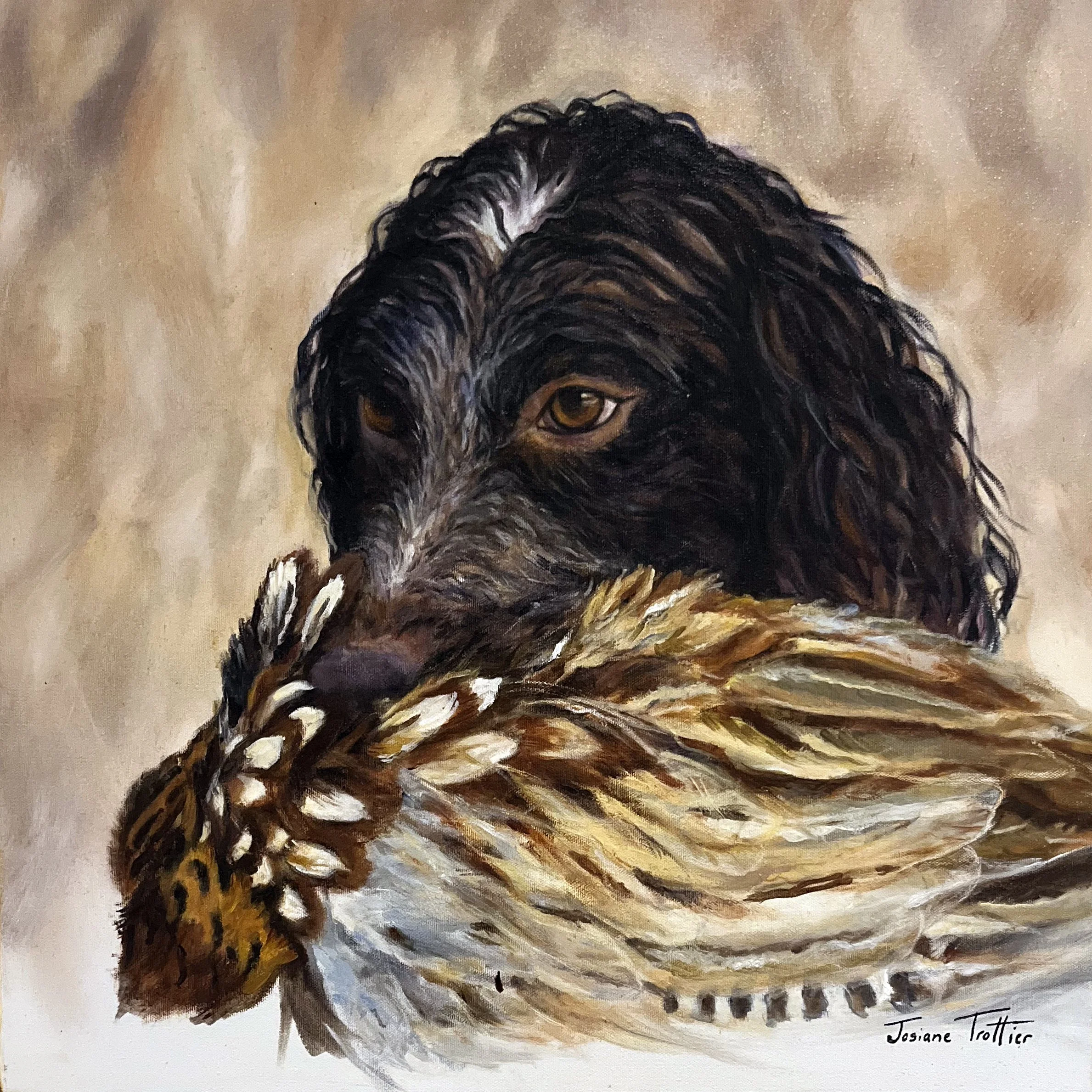
Uma des coteaux de YannijeanHuile sur toile, Josiane Trottier

Avertissement no 2 : Cette lettre ouverte n'est pas une feuille de route détaillée vers le succès. Il s'agit de mes réflexions sur le sujet et d'une liste de mesures que je prendrais si j'avais le temps, l'argent et l'énergie nécessaires à consacrer à la cause de l'épagneul de Pont-Audemer. Cette race fantastique mérite beaucoup plus d'attention et de soins qu'elle n'en reçoit actuellement. Certaines de mes propositions peuvent être controversées, mais je les présente ici telles que je les vois.


Je ne vais pas retracer ici toute l'histoire du Ponto. Si vous souhaitez connaître tous les détails, vous pouvez lire le chapitre consacré à la race dans mon livre intitulé Pointing Dogs, Volume One: The Continentals. Il convient toutefois de se rappeler que le Ponto n'a connu qu'une popularité limitée, à l'exception de quelques brèves périodes dans certaines parties de la France au cours du dernier siècle et demi. Il a également connu une crise d'identité pendant une grande partie de son histoire. Est-ce un chien d'eau? Un chien d'arrêt? Un leveur de gibier (spaniel)? Bien qu'un petit nombre de chasseurs aient toujours aimé cette race, la trouvant excellente pour la chasse à la bécasse et le rapport du gibier d'eau, elle n'a jamais bénéficié du soutien d'un club de race solide, unifié et indépendant. Aujourd'hui, la race est représentée par le Club des épagneuls de Picardie et de Pont-Audemer. Malheureusement, d'après mon expérience et les commentaires que j'ai entendus de la part de nombreux autres amateurs de Ponto, la race est traitée comme le parent pauvre du club. Elle est largement ignorée par le conseil d'administration et par la plupart des membres. 

Aujourd'hui, la race est au bord de l'extinction. La plupart du temps, le nombre de portées produites par les quelques éleveurs restants se compte sur les doigts d'une main. Et même si le coefficient de consanguinité réel* n'est peut-être pas dangereusement élevé, lorsqu'un éleveur cherche un bon chien pour engendrer une portée, les choix se limitent à très peu d'individus. 

*Les calculs de consanguinité basés uniquement sur les informations généalogiques doivent être pris avec des pincettes. Dans le cas du Ponto, il est recommandé de les prendre avec précaution. Des croisements avec des épagneuls irlandais, des bretons et des setters ont eu lieu au fil des ans, même récemment, mais ils n'apparaissent pas dans les pedigrees. L’avenir nous réservera peut-être une meilleure idée du coefficient de consanguinité réel de la race, au fur et à mesure que les tests d’ADN deviendront plus fiables.  

Que pouvons-nous faire? Est-il même possible de sauver la race?

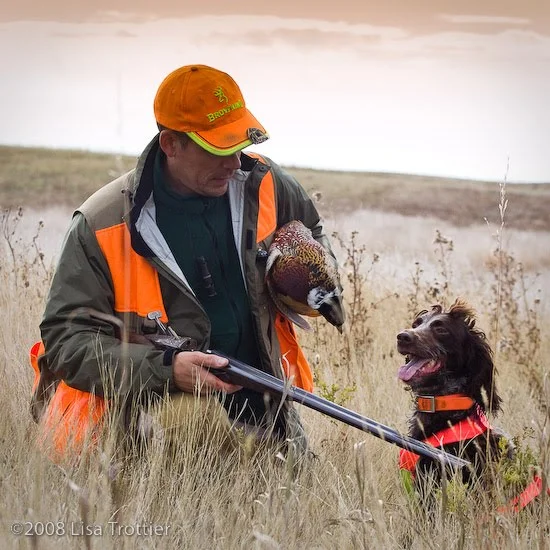
Avec Uma en Dakota du Nord.

La réponse est oui, sous certaines conditions. Il est certainement possible de sauver le Pont-Audemer. Les éleveurs de setters irlandais rouges et blancs l'ont fait avec leur race. Même des races qui avaient complètement disparu, comme le braque du Bourbonnais et le Pachón Navarro, ont été recréées. C'est donc possible, mais ce n'est pas facile. Tout programme de sauvetage du Pont-Audemer nécessiterait au moins une décennie d'engagement, des fonds importants et beaucoup de travail. Mais c'est possible. Voici comment je décrirais le processus :

NB : Tout effort visant à faire revivre la race doit être centré en France. Le Pont-Audemer est une race française et doit le rester. Tout effort de retrempe ou de croisement doit être effectué en France et, dans la mesure du possible, avec l'autorisation et sous la supervision de la SCC.

Étape 1 : Constituer un petit groupe de passionnés dévoués prêts à se joindre à l'effort. Ce groupe doit comprendre des personnes issues de différents pays européens et d'Amérique du Nord. Cependant, il DOIT être constitué en France et dirigé par des membres français.

Étape 2 : Quitter le club actuel et former un nouveau club indépendant placé sous la tutelle du club du Saint-Usuge. Il s'agit d'une mesure assez radicale qui se heurterait à une forte opposition du club actuel. Cependant, cette option mérite d'être explorée, car le Ponto n'a jamais vraiment eu sa place au sein du club actuel et a parfois été confronté à l'hostilité ouverte de certains membres du conseil d'administration. À plusieurs reprises, un membre du conseil m'a dit que le Ponto était « une race inutile » qui n'était « même pas un chien de chasse ».

Étape 3 : En consultation avec un généticien canin qualifié, élaborer un plan de relance pour la race. Cela nécessiterait un recensement complet de tous les Pontos vivants en France et à l'étranger, ainsi qu'un plan détaillé de croisement avec des races ancestrales. J'ai toujours pensé que le meilleur croisement serait celui entre des épagneuls irlandais, issus de lignées de chasse, et des épagneuls français, issus de lignées de travail. Parmi les chiots (issus de plusieurs portées de chiens différents), on sélectionnerait ceux qui se rapprochent le plus du Ponto en morphologie et, surtout, en capacités de chasse. D'autres ont suggéré de croiser des épagneuls irlandais d'eau avec des setters anglais (ce qui a déjà été fait avec de bons résultats) ou avec des épagneuls picards ou des épagneuls de Saint-Usuge. Dans tous les cas, l'apport de sang issu de races ancestrales est essentiel à tout programme de relance, mais il ne fonctionnera que s'il s'inscrit dans un plan à long terme. Le programme devrait s'étaler sur au moins une décennie (de 5 à 6 générations). 

Étape 4 : En collaboration avec des clubs dédiés à d'autres races à faible effectif, demander au SCC de former un comité consultatif pour les races vulnérables, comme l'a fait le KC au Royaume-Uni. Ce comité pourrait offrir des conseils d'experts, de la promotion et même un soutien financier. Contacter autant d'organisations locales, départementales, régionales et fédérales que possible afin d'obtenir un soutien financier et moral. Commencer par la ville de Pont-Audemer même, puis élargir votre champ d'action. Contacter les sociétés historiques, les musées, les universités, les écoles vétérinaires et tous les services gouvernementaux locaux, départementaux, régionaux et fédéraux qui s'occupent des chiens, de l'agriculture, de la conservation ou de la chasse. Rechercher des subventions, des prêts et d'autres formes de soutien. 

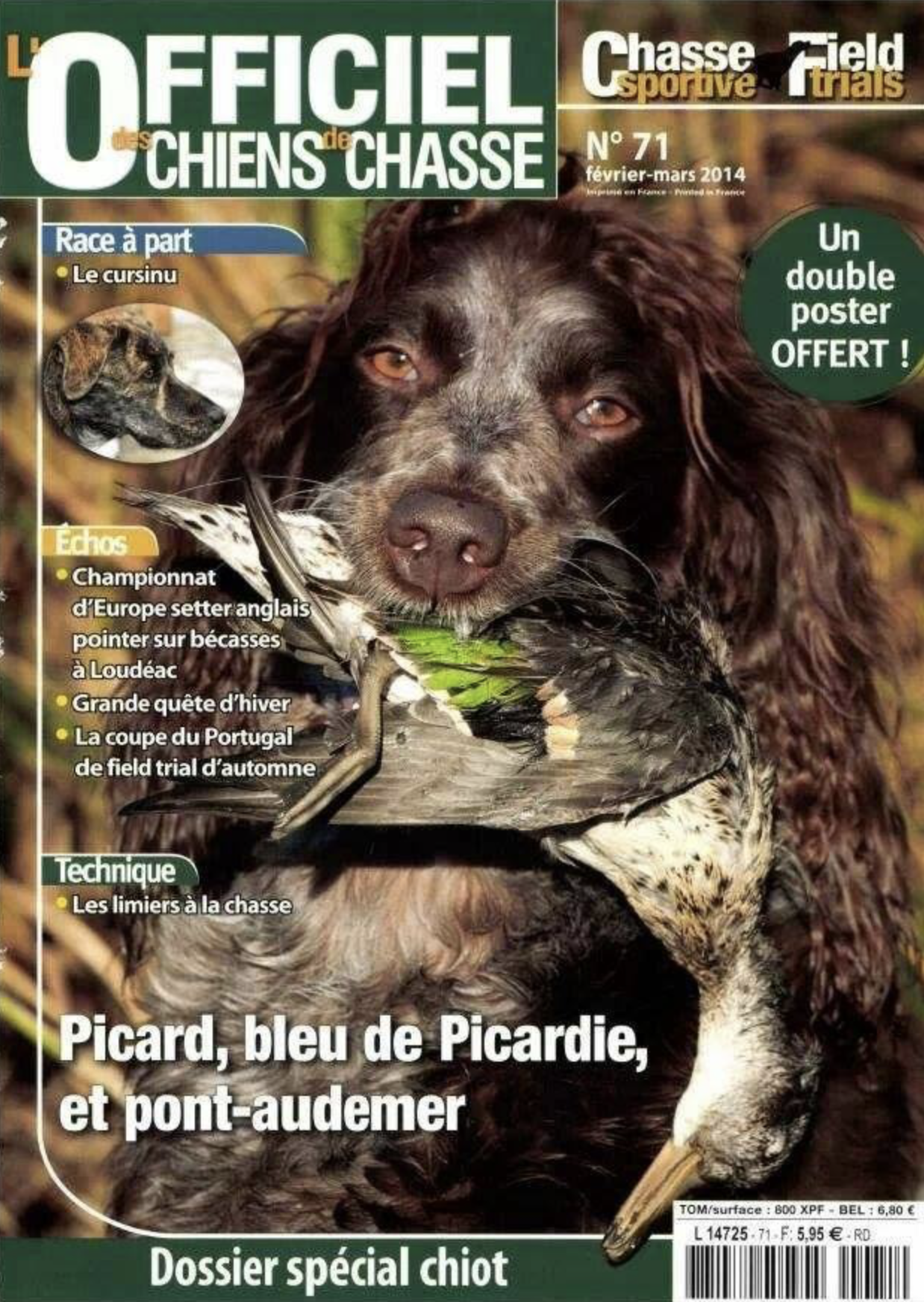
Uma sur la couverture du magazine L'Officiel des chiens de chasse, 2014

Étape 5 : En consultation avec un expert en marketing, au fait du milieu canin français et international, établir un plan pour faire connaître la race. Il est incroyable de constater que le Ponto existe depuis près de 200 ans, mais reste pratiquement inconnu, même en France. J'ai été surpris d'apprendre que la race est totalement inconnue dans la ville de Pont-Audemer même! Pourquoi n'y a-t-il pas de statue d'un Ponto dans la ville de Pont-Audemer? Pourquoi le maire de la ville ou les représentants régionaux du gouvernement n'ont-ils pas de Ponto? D'une manière ou d'une autre, il faut faire connaître le Ponto aux amateurs de chiens de chasse en France et ailleurs. Et l'un des meilleurs moyens d'y parvenir est de voir davantage de Pontos sur le terrain à la chasse, lors des concours et des épreuves de chasse. 

Étape 6 : Confier les bons chiens à des dresseurs et des participants aux concours expérimentés afin qu'ils puissent contribuer à la renaissance de la race et attirer l'attention des chasseurs et des amateurs de fields. Il n'y a rien de mieux pour la réputation d'une race que le succès sur les terrains de chasse et lors des concours. Plus il y aura de chiens devant public, plus la demande de chiots sera forte. Les races populaires le sont parce qu'elles l'ont été! Oui, elles sont également performantes sur le terrain, et le Ponto a encore du chemin à parcourir avant de pouvoir rivaliser avec les meilleurs, mais il faut bien commencer quelque part. Donc, si j'étais éleveur, je ferais de mon mieux pour placer au moins un ou deux chiots de chaque portée entre les mains d'un dresseur expérimenté ou d'un guide de chasse ayant une large clientèle. J'irais même jusqu'à offrir les chiots ou à prendre en charge les frais d'inscription aux concours et autres dépenses, afin de garantir que les chasseurs et les participants aux concours puissent voir de bons Pontos en action sur le terrain. Je ne saurais trop insister sur l'importance de cette étape. Si toutes les autres étapes décrites ci-dessus sont suivies à la lettre, à l’exception de celle-ci, l’effort de relance échouera. 

Étape 7 : Suivi, suivi, et encore, suivi. La renaissance réussie d'une race nécessite des décennies d'efforts ciblés. J'ai interviewé plusieurs personnes qui ont consacré leur vie à la renaissance d'une race de chiens d'arrêt. Michel Comte a presque, à lui seul, recréé le braque du Bourbonnais, et Carlos Conterra et son père ont fait de même avec le Pachón Navarro. Jean-François Berho et d'autres ont relancé le braque de l'Ariège, et Cesare Bonasegale a joué un rôle déterminant dans la renaissance du Bracco Italiano. Et ils avaient tous en commun des cheveux gris, le résultat de décennies de travail acharné, mais gratifiant.


The Pont-Audemer Spaniel, can it survive?

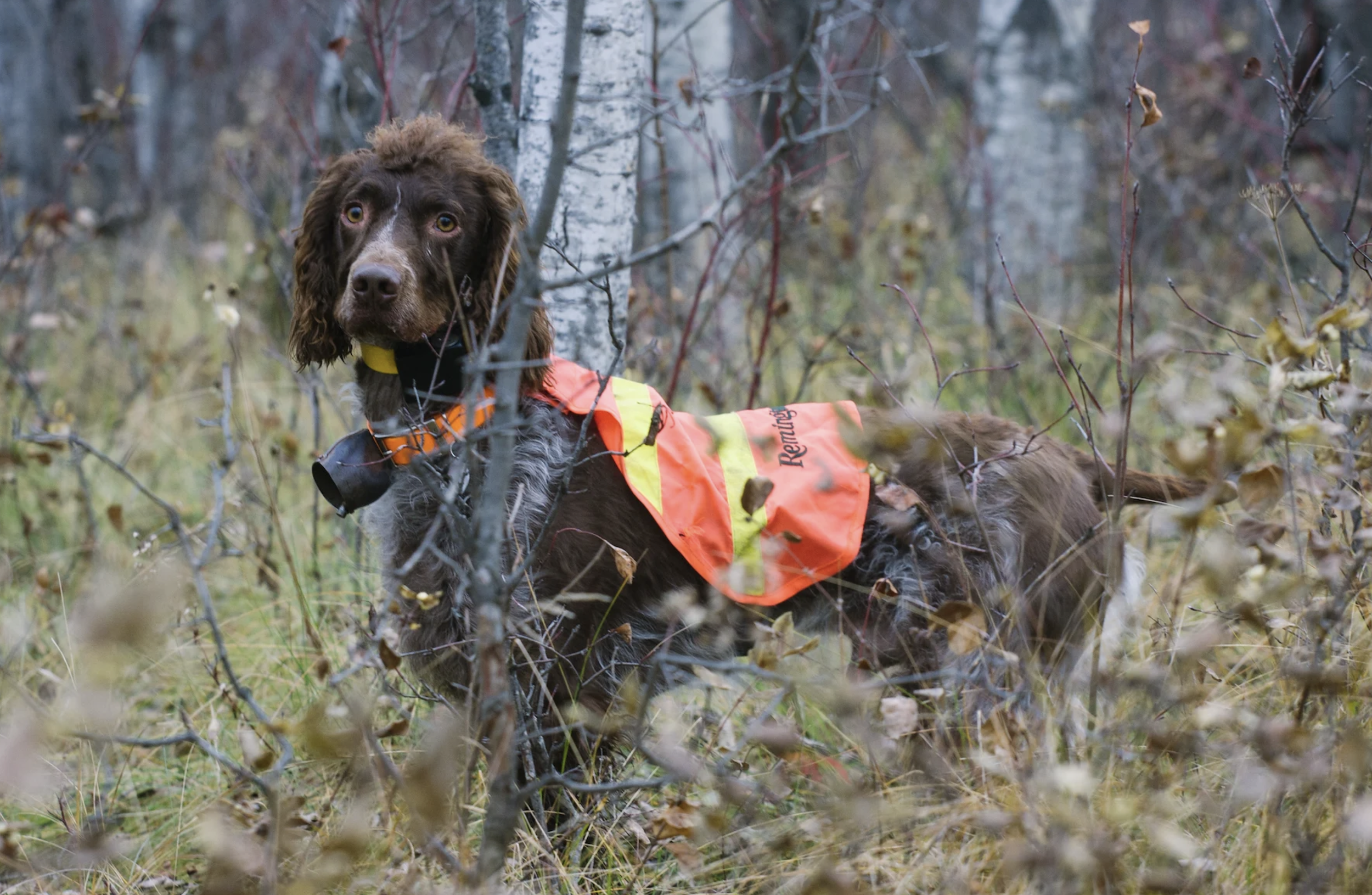
Vinnie des coteaux de Yannijean in the grouse woods of Manitoba


Caveat 1: I am not a dog breeder. I am not a dog trainer. I am not a veterinarian, canine geneticist, or formally trained historian. I am a hunter, photographer, writer, musician, podcaster, and author who has spent the last 30 years studying and writing about the various breeds of pointing dog from Europe, Britain, and Ireland. I’ve seen every one of them in action, in their native lands, and I have interviewed some of the top breeders and breed experts in all of them as well. I’ve owned one Ponto, helped import three others to Canada, and have hunted over a half dozen Pontos in France and Canada. In 2007, I organized a small, informal meeting with Ponto owners and breeders in the city of Pont-Audemer and at the Vernier Marsh. I’ve also helped breeders undertake crossbreeding programs involving Pontos, Irish Water Spaniels, and English Setters. 

Caveat 2: The following open letter is not a detailed roadmap to success. It is a collection of my thoughts on the matter and a list of steps I would take if I had the time, money, and energy to devote to the Epagneul de Pont Audemer. This fantastic breed deserves much more attention and care than it is currently receiving. Some of my proposals may be controversial, but I call 'em as I see 'em.

I won’t go into the complete history of the Ponto here. If you want all the details, you can read the Ponto chapter in my book Pointing Dogs, Volume One: The Continentals. But it is essential to keep in mind that the Ponto has never been a particularly popular breed, except for short periods over the last 150 years in some areas of France. It has also struggled with an identity crisis for much of its history. Is it a water dog? Flushing dog? Pointing dog? Although a small number of hunters have always loved the breed, finding it an excellent woodcock hunter and waterfowl retriever, the breed has never had the support of a strong, unified, stand-alone breed club. Today, the Club des épagneuls de Picardie et Pont-Audemer represents the breed. Unfortunately, in my experience — and from the feedback I’ve heard from many other Ponto enthusiasts — the breed is largely ignored by the board of directors and by most members. It is basically the club's red-headed stepchild.

Today, the Ponto is on the verge of extinction. In most years, the number of litters produced by the few remaining breeders numbers in the single digits. And while the true Coefficient of Inbreeding may not be dangerously high, when a breeder goes looking for a good dog to sire a litter, the choices are limited to very few individuals (calculations of COI that are based solely on pedigree information must be taken with a grain of salt. With the Ponto, a large chunk of salt is recommended. Crosses to Irish Water Spaniels, Bretons, and Setters have occurred over the years, even quite recently, but they do not show up in the pedigrees. Going forward, we may get a better idea of the actual COI in the breed as DNA tests become more reliable.   

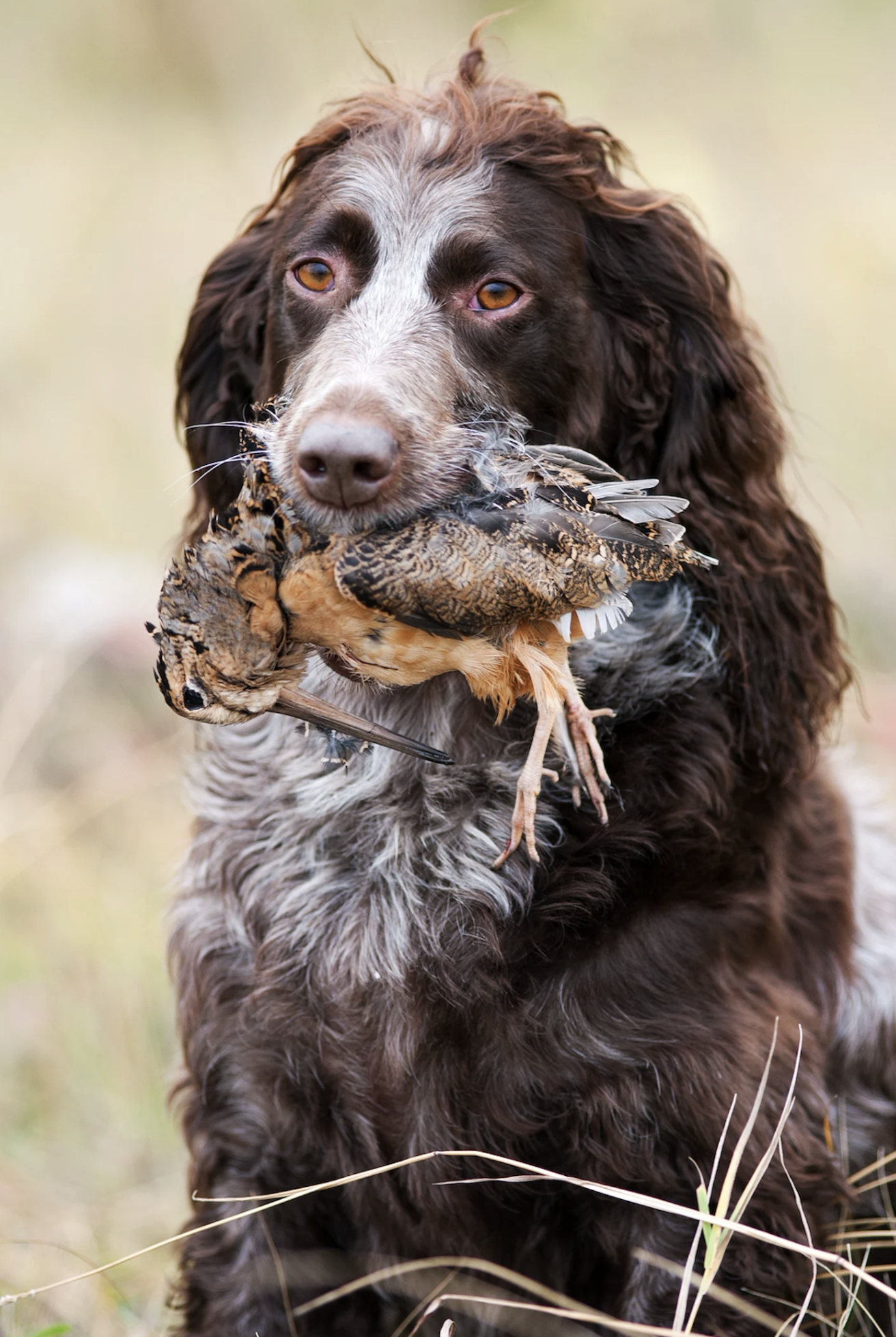
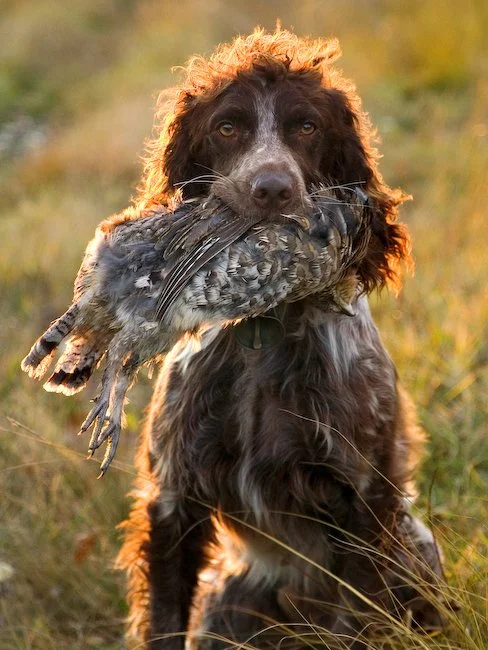
Uma with a woodcock

So what can we do? Is it even possible to save the breed?

The answer is a qualified yes. It is certainly possible to save the Pont Audemer Spaniel. Irish Red and White Setter folks have done it with their breed. Even breeds that have gone completely extinct, such as the Braque du Bourbonnais and the Pachon Navarro, have been recreated. So it can be done, but it is not easy. Any rescue program for the Ponto would require at least a decade of dedication, substantial funding, and a lot of hard work. But it can be done. Here is how I would outline the process:

NB: Any effort to revive the breed must be centered in France. The Pont Audemer is a French breed and must remain so. The French must lead any cross-breeding effort, and, as much as possible, do so with the permission and oversight of the French Kennel Club. 

Step 1: Establish a small group of dedicated enthusiasts willing to join the effort. The group should include people from various European countries and North America. However, it MUST be established in France and led by French members.


Step 2: Leave the present club and form a new stand-alone club under the guardianship of the Saint Usuge Spaniel Club. This is a fairly radical step and would face severe opposition from the current club, and may not appeal to the club for the Saint Usuge. However, it should be explored, as the Ponto has never really benefited from the current club and has at times faced open hostility from certain members of the board. On more than one occasion, I’ve been told by a sitting board member that the Ponto was ‘a useless breed’ that was ‘not even a hunting dog’. 


Step 3: In consultation with a qualified canine geneticist, formulate a revival plan for the breed. This would require a complete census of all living Pontos in France and abroad, along with a detailed plan for cross-breeding to ancestral breeds. I’ve always believed that the best mix would be to cross Irish Water Spaniels from hunting lines with field-bred French Spaniels (Epagneul Francais). From among the pups (several litters from different pairs of dogs), one would select those closest to the Ponto in terms of size, coat, colour, and, above all, hunting abilities (mainly run and point). Others have suggested Irish Water Spaniels crossed to English Setters (it has been done before with good results) or to Picardy Spaniels or Saint Usuge Spaniels. In any case, injections of blood from ancestral breeds are vital to any revival program, but will only work if there is a long-term plan in place. To really benefit the breed, the program would have to take place over at least a decade (5-6 generations).


Step 4: Either alone or in collaboration with clubs for other vulnerable breeds, request that the SCC establish an advisory committee for vulnerable breeds, as the KC has done in the UK. They can offer expert advice, promotion, and even financial support. Reach out to as many local, regional, and federal organizations as possible to solicit financial and moral support. Start with the city of Pont Audemer itself and work from there. Contact local, regional, and federal historical societies, museums, universities, veterinary schools, and any department at any level of the government that deals with dogs, agriculture, conservation, or hunting. Look for grants, loans, and other forms of support. 

Sim du Bois de Fréchencourt with a ruffed grouse

Step 5: In consultation with a marketing expert familiar with the French and international canine scene, establish a plan to spread the word about the breed. It is incredible to realise that the Ponto has been around for almost 200 years, yet remains virtually unknown, even in France. I was shocked to learn that the breed is entirely unknown in the city of Pont Audemer itself! Why is there no statue of a Ponto in the town of Pont Audemer? Why does the mayor of the city or the regional representative of the government not have a Ponto? The breed club is more or less useless at promoting its breeds, especially the largely forgotten Ponto. Somehow, gundog enthusiasts in France and beyond must be made aware of the Ponto. And one of the best ways to make a splash is to see more Pontos in the hunting field and in field trials and hunt tests.


Step 6: Place good dogs in the hands of expert trainers and field trialers, who can help guide the breed's revival and draw the attention of hunters and field trialers. There is nothing better for a breed’s reputation than success in the hunting field and in field trials. The more dogs out there, the more demand there will be for pups. And that will lead to more dogs in the field, which in turn will lead to more pups. Popular breeds are popular because they are popular! Yes, they are also good in the field, and the Ponto has a ways to go before it can be competitive with the best of the best, but one has to start somewhere. So, if I were a breeder, I would do my best to get at least one or two pups from every litter into the hands of an experienced field trialer or hunting guide with a large clientele. I would even offer the pups for free or cover the costs of field trial entries and other expenses to ensure that hunters and field trialers could see good Pontos in action in the field. I cannot overstate the importance of this step. If every other step outlined above is followed to the letter, but this one is not, the revival effort will fail. 

Step 7: Follow up, follow up, then follow up again. Successful breed revivals take decades of focused effort. I’ve interviewed several people involved in the revival of a pointing breed. Michel Comte almost single-handedly recreated the Braque du Bourbonnais, and Carlos Conterra and his father did the same with the Pachon Navarro. Jean Francois Berho and others revived the braque de l’Ariege, and Cesare Bonasegale was instrumental in the revival of field-bred Bracco Italianos. And the one thing they all had in common was grey hairs from decades of rewarding hard work. 

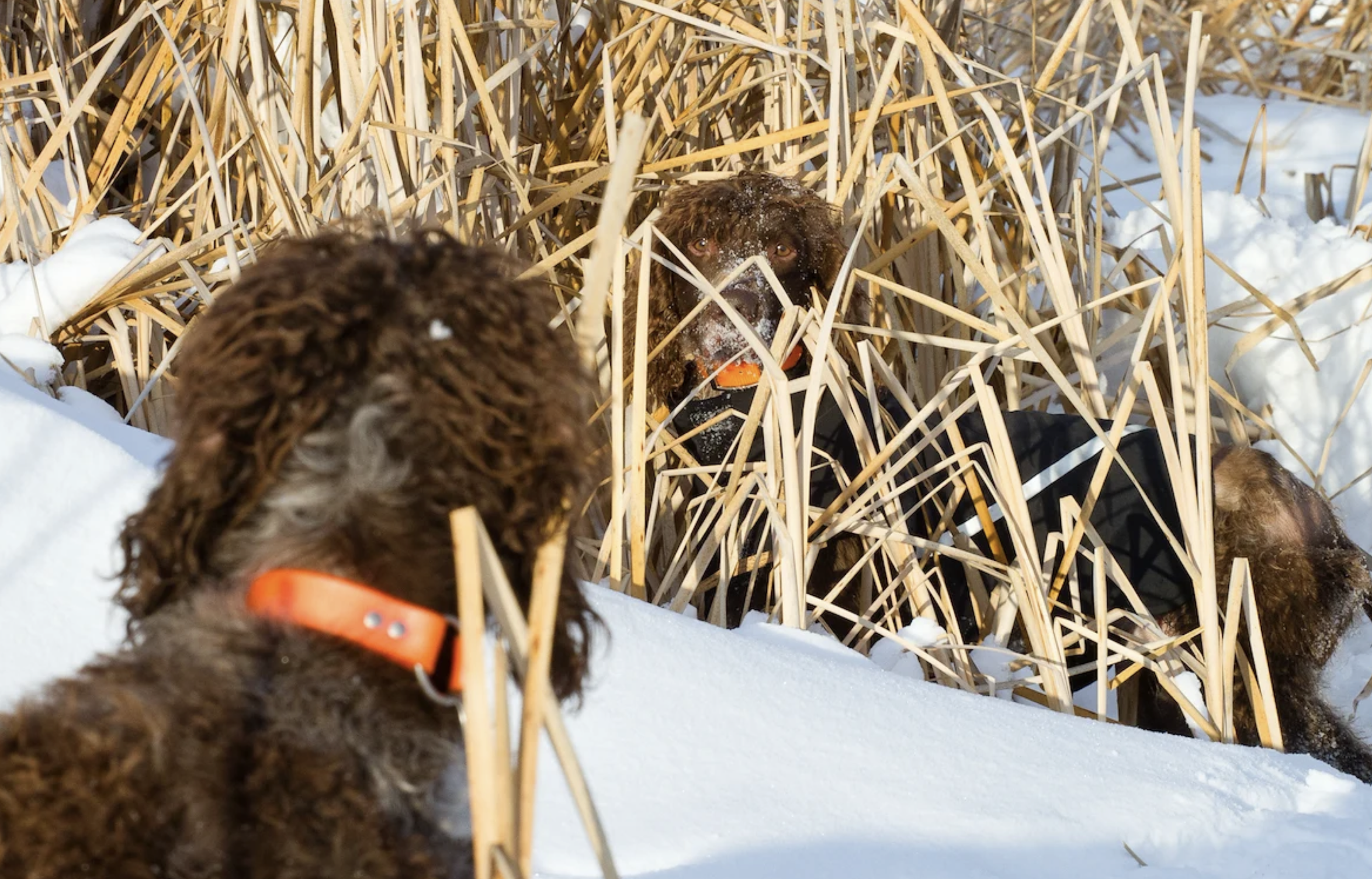
Uma and Vinnie on a January pheasant hunt in the Dakotas