Contact Us

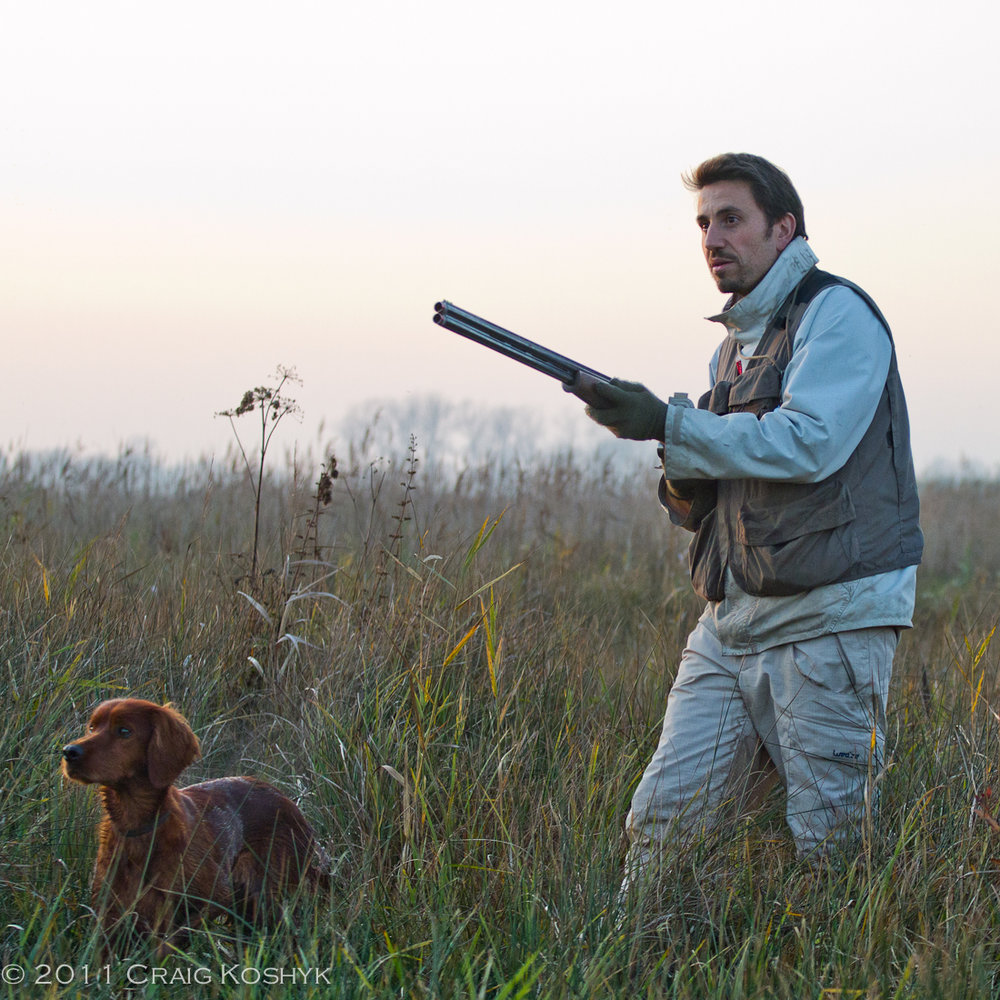
Use the form on the right to contact us. We should get back to you within 24 hours. If not, it means we are out chasing birds with dogs, shotguns and Canons. In that case we will get back to you as soon as we've finished the roasted Teal and Bordeaux . 


Form Block
This form needs a storage option. Double-click here to edit this form, and tell us where to save form submissions in the Storage tab. Learn more
         

123 Street Avenue, City Town, 99999

(123) 555-6789

email@address.com


You can set your address, phone number, email and site description in the settings tab.
Link to read me page with more information.

Pointing Dog Blog

The world of pointing dogs in words and images, moving and still.

Meanwhile in Picardy

Craig Koshyk


The 1880s were a difficult time for the French pointing breeds. Nearly overwhelmed by a tsunami of Setters and Pointers, they were struggling to get their house in order. Lacking written breed standards, even official names for some breeds, judges had a hard time figuring out what was what in the show ring and how the various breeds should perform in the field. Even worse, a seemingly endless number of “rediscovered” breeds kept cropping up. After judging a dog show in Paris in 1884, Ernest Bellecroix published a plea for order.
Last year we were crushed under a completely unexpected number of classes. In all the species, native or foreign, new breeds, until now unknown, were discovered. There were 145 classes! Of all these different classifications, which one is the proper one? We have no idea. Therefore we request that the Society that has the difficult task of improving the breeds of dogs determines these breeds once and for all and clearly defines their characteristics.  Even the owners of dogs sometimes had no idea what kind of dogs they owned or bred and often would enter them into the wrong class at a dog show or field trial. 
Meanwhile in Picardy, many of the locally bred dogs were of the French Spaniel or Pont-Audemer Spaniel type. They were medium sized, long haired dogs with white and brown or white and black coats and were said to be excellent workers in the field and water. However by the 1880s it was increasingly obvious that a hefty dose of British blood had made its way into most kennels.

Nowadays, the official story of how and why that happened goes something like this: wealthy British sportsmen would travel to northern France to hunt in the fall but then leave their Setters and Pointers with the locals for the winter since there was a quarantine back home. While they were away, their dogs would occasionally get lucky and have a fling with a local pointing dog and voila, suddenly a bunch of 'setterized' épagneuls and 'pointerized' braques were seen running around.

As plausible as it sounds, I've always found that story to be a bit too convenient. First of all, the quarantine act didn't come into effect until 1901. So for most of the 1800s British hunters could come and go as they pleased with their dogs. And secondly, it is well documented that a lot of French hunters were captivated by the beauty and abilities of the British dogs and would seize upon any opportunity to breed their dogs to them.  French sportsman and dog expert, Adolphe De la Rue, actually witnessed the very beginning of the widespread and indiscriminate period of crossbreeding in France.
I remember that it was on one of the opening days, so noisy and numerous, that I saw for the first time a large black pointing dog
 of the kind that appeared in France in 1814 with the English army. The dog was so highly regarded that his owner did not know who to answer first. All of his neighbors had the dog cover their bitches, even if the bitches were épagneuls. Based on what I saw, I can conclude that these thoughtless crosses were taking place more or less everywhere, a dog of a foreign breed would appear, everyone would take a liking to it and want one of its kind. 
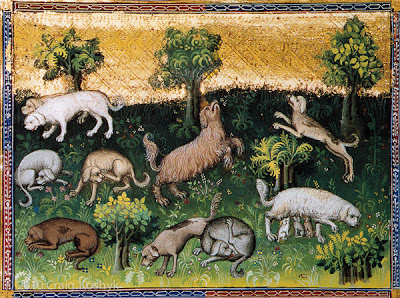
Clearly, the various setterized families of epagneuls in the north of France were not the results of happy accidents or illicit flings. They were intentionally created for the use and enjoyment of local hunters. In fact, there are even written records describing exactly how some of the families were created and in one case, an extraordinary colour illustration of what some of the first crosses may have looked like.

In an 1885 article published in Le Chenil a M. DE TOURIGNY wrote about tri-coloured dogs that were entered as French Spaniels in a number of shows and were awarded first place several times. (*translation mine, original French version below)

In 1883 at the Tuileries dog show two black and white spaniels with tan points were shown as French Spaniels. These two dogs, Odett and Kroumir 1 won first and second place in the class.

At the time, we criticized the decision, noting that these animals were not of the French Spaniel type; they were more like watered-down versions of English Setters, obviously the result of cross breeding or inadequate selection. This year, Odett was again shown with her son Kroumir II and five puppies, and won again. And yet we still failed to find any more of the French Spaniel type in Odett and her offspring this year than in 1883. 
Our criticism didn't seem to have any effect since Odett and her offspring are still registered as French dogs by the Kennel Club and are well on their way to creating a line of pseudo-French Spaniels. Recently, a portrait of Kroumir and Odett appeard in the Journal d'agriculture pratique with an explanation of their origins. Here it is verbatim:
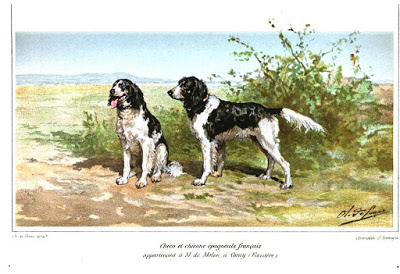

In I855, Mr. Molon obtained a Setter from Scotland. It was entirely white with silky hair, very beautiful and remarkably good. He crossed that white Scottish dog with a beautiful black and white silky-haired bitch with bright tan markings on her cheeks and the same colour on the nose and paws. The bitch was from North America, where it had been bred by a captain, a friend of Mr. Molon. 
Later a bitch from this cross was bred to a beautiful Setter from England, with the same colour coat as the dog from North America and most probably belonging to the Laverack breed, although it was white with large black spots and bright tan markings above the eyes, cheeks and legs. However it did not have the same sort of undercoat as the Laveracks. It is through judicious inbreeding among the first crosses that Mr. Molon established his breed, which is now as beautiful and as good as Odett and Kroumir. 
From the foregoing we can only conclude that the alleged French Spaniels are in fact from various Setter crosses; yes, they have been in France for thirty years, but their origins are actually English. We will refrain from discussing their qualities or from criticizing Mr. Molon; he bred and kept good dogs and they did well. Ultimately he did what we recommend French breeders do: use good dogs where you can, but use authentic purebred Pointers and Setters and stick with them. 
But somehow the products of all these crosses have become French because they were born here and we've become used to them. But they are not now and never will be French breeds of dogs, and we wish to remind the Judges of upcoming exhibitions, and the Kennel Club, that we must require purebred dogs, and not accept the unfortunate mixes we now have on hand.  
M. DE TOURIGNY

Eventually the French pointing breeds did get their act together. Official standards were drawn up, clubs were formed and breeders learned how to keep their lines pure...more or less. Nowadays, the épagneul breeds of France are recognized for what they really are; national treasures, living works of art, created by dedicated French hunters from a bygone era.

Today, the Brittany and the French Spaniel are doing quite well, while others like the Picardy, Blue Picardy and (especially) the Pont-Audemer remain vulnerable. But in yet another twist to the story, the French breeds which were nearly wiped out by an invasion of British breeds 150 years ago now seem to be winning hearts in the UK.

British and Irish hunters are shooting over Griffons, braques and épangeuls in increasing numbers. There is even a club for the Picard, Blue and Pont-Audemer in the UK now and the first litters of Picardy and Blue Picardy pups were whelped this year. A litter of Pontos may soon follow. I guess the old saying 'what goes around, comes around' is true after all!


Stay tuned for more on the origins of the Picardy and Blue Picardy Spaniels. I've got some more great images and quotes from the sporting press of the late 1800s and early 1900s.


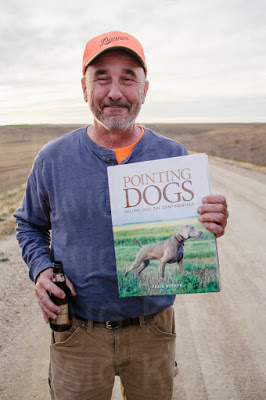
Enjoy my blog posts? Check out my book Pointing Dogs, Volume One: The Continentals

www.dogwilling.ca


* En 1883 on pouvait voir à l'exposition de la terrasse des Tuileries deux chiens épagneuls blancs et noirs, légèrement marqués de feu, exposés comme Epagneuls français. Ces deux chiens, Odett et Kroumir 1 furent classés par le Jury premier et deuxième dans la classe des Epagneuls français.

11 nous souvient alors d'avoir critiqué celle décision, en faisant remarquer que ces animaux n'avaient aucun des caractères typiques des Epagneuls français; ils faisaient songer à une dégénérescence de Setters anglais, suite de croisements ou de sélection insuffisants.

Cette année, ladite Odett, de nouveau exposée avec son fils Kroumir 11 et cinq chiots, a obtenu le rappel de son premier prix de 1883 et le premier prix d'élevage, toujours pour Epagneuls français. Nous nous sommes permis encore de ne pas trouver davantage cette année qu'en 1883 dans Odett et dans ses produits le type de l'Epagueul français.

Critique bien platonique, assurément, puisque voici désormais Odett, et tous ses Kroumirs, inscrits comme chiens français sur la liste des origines de la Société canine et parcheminés à la patte, prêts à faire souche de prétendus Epagneuls français. Ces temps derniers, le portrait. d'Odett et de Kroumir a été reproduit dans le Journal d'agriculture pratique, et une notice explicative de la gravure donne l'origine des deux chiens et de leur race.

Nous reproduisons textuellement : « En I800, 31. M. de Molon se procure un Setter écossais, entièrement blanc, à poil soyeux, très beau et remarquablement bon. Il croise ce chien écossais blanc avec une magnifique chienne épagneule à poil soyeux mais noire et blanche avec feu très vif aux joues et mouchetée de même couleur sur le nez et les pattes. Cette lice était originaire de l'Amérique du Nord, d'où elle avait été ramenée par un capitaine de vaisseau, ami de M. de Molon.

Plus tard une lice issue de ce premier croisement fut donnée à un très beau Setter venant d'Angleterre, de la même robe que la chienne venant de l'Amérique du Nord et appartenant très probablement à la race Laverack, bien que ce chien blanc avec grandes taches noires et feu vif aux-yeux, aux joues et aux pattes, n'eût point le fond de la robe traitée comme la plupart des Laveracks.

C'est grâce à des alliances judicieuses in and in entre les produits de ces premiers croisements que M. de Molon est parvenu à constituer la race, absolument confirmée, aussi belle que bonne, représentée par Odett et Kroumir. Après ce qui précède la conclusion se tire d'elle-même. Les prétendus Epagneuls français ne sont que des chiens provenant de divers croisements de Setters ; ce sont donc bien et dûment des chiens anglais élevés depuis trente ans en France, mais réellement d'origine anglaise.

Nous nous garderons bien de discuter leurs qualités, ni de critiquer M. de Molon; il a reproduit et conservé des chiens qu'il trouvait bons et s'en est bien trouvé. En définitive il a fait ce que nous conseillons aux éleveurs français:,se contenter de prendre son bien où on le trouve, c'est-à-dire de recourir aux reproducteurs authentiquement de race pure — Pointers ou Setters — et s'en tenir là.

Mais les produits de ces élevages, devenus français par la naissance, par l'habitat, ne sont pas et ne seront jamais ce que. l'on appelle des chiens de race française, et nous signalons tant à l'attention des Jurys de nos expositions à venir, qu'à celle de la Société canine, la nécessité d'exiger la production des origines, et la regrettable anomalie que nous venons de constater pièces en main. DE TOURIGNY
NAVHDA ROCKS!!

Craig Koshyk

Who goes to Sioux Falls, South Dakota for a weekend in January? Crazy dog people like me, that's who!


The North American Versatile Hunting Dog Association held its annual meeting in Sioux Falls this past weekend and it was a blast!! Not only did I get to meet a ton of great people and talk dogs over fine food and adult beverages, I was given the tremendous honour of delivering the keynote address!

Yes, you read that right. Me, a guy who might hold the record for the lowest passing score ever in a NAVHDA test was given a microphone and a soapbox in a room filled with the who's who of the NAVHDA world.


I did my best to keep the speech short and to the point (pun intended). I managed to cover about 500 years of pointing dog evolution and explained how NAVHDA is now absolutely crucial to their further evolution in North America. I concluded with the following thoughts:

The golden age of gundog creation ended about a hundred years ago. The modern age of gundog development came to an end in the early 2000s. And that means we are now in a new age, a post-modern age of gundogs and all the traditional structures that led to the creation and development of our dogs are in flux.*

We now produce puppies via artificial insemination and analyze their DNA. We vaccinate them and inject microchips under their skin. We transport them across the ocean in airliners and through the marsh on all terrain vehicles. We keep track of them with the help of satellites floating in the sky above and can now access more information about them in a few minutes on our smartphones than William Arkwright or Jean Castaing could have accessed in a year in the biggest library in the world.

So dog breeds, breeders, breed clubs and registries all face a choice now. They can evolve, or wither on the vine. Currently some of the most influential structures in the canine world are paying the price for their reluctance or inability to evolve. Memberships are in free-fall, boards are floundering, wracked with internal conflict. 

And then there's NAVHDA, an organization well-positioned to actually thrive in this new knowledge-based society.  You see, in our high-tech global world, information and communication are king. They are the dominant driving forces behind just about every aspect of life. So for an association like NAVHDA, designed from the get-go to collect, store and share information, this new age might just turn out to be a new golden age.

After all, when we are in the fields with our dogs, we are following in the footsteps of Gaston Phebus. And every time we test a dog we pay homage to Hegewald and Oberlander, Solms and Korthals. But even as we honour the past, NAVHDA's main focus is, and always has been, firmly on the future. NAVHDA has but one real purpose: to help shape the future for hunters, breeders and their canine companions.


Prior to the main event, I gave a seminar about the Continental pointing breeds, using a number of photos and videos from this very blog. Here are links to some of the things I mentioned in the talk for those in attendance that would like to see them again:


And finally, thank you to everyone who purchased a copy of my book and my apologies to those that wished to purchase a copy but were unable to do so after all copies were sold. If you would like to order one, you can get it at the same price it was selling for at the meeting. 

Just go to this link and look for the coupon code box above and to the right of the BUY NOW button. Type in NAVHDA and instead of paying the usual $99.00, you will get the book for only $79 with free shipping!!


www.dogwilling.ca


* UPDATE: I've been asked to expand a bit on the idea of the various gundog eras I spoke about. I will do so in much more detail in my next book, Pointing Dogs,Volume Two: The British and Irish Breeds, but for now, here is a quick overview:

The National Bird Dog Championship, one of the greatest and oldest events in canine sport starts next Monday, Feb 8, 2016. First held in1896, the National Bird Dog Championship was a key player in what I think of as the golden age of gundogs. During that time, breeders, handlers, trainers and trialers all made great leaps of progress. Breed clubs and registries were formed, established breeds became more uniform and reached new heights of performance and most of the Continental breeds were created around that time. 

But all that ended just before the first World War as the British breeds began their long decline into near obscurity in their native lands and the creation of new breeds of pointing dogs ceased completely.

And that is when I feel we entered into the modern age, characterized by continued growth and development of the British breeds outside of the UK and the rapid expansion of various continental breeds throughout North America. It is the age of the GSP, the Brittany, the GWP, Pudelpointer etc. and the continued rise of the Pointer and Setter. It was an age when a growing middle class of Americans and Canadians swelled the field trial ranks, when new trials and trial formats were developed and new clubs, new registries, organizations flourished. And it was a time when news and marketing of the gundog scene relied on newspapers, magazines, books and to a lesser extent radio and TV.

But that age came to an end just after the advent of the Internet, around the early 2000s. Almost overnight, everything changed. Yes, we still have trials and tests and yes, our dogs continue to improve. But the average age of participants across the gundog world is creeping upward and many club membership numbers are in decline. Few, if any new clubs are being formed, few if any new trial venues or formats are being created and we no longer rely on the traditional media to spread the word, we rely on the Internet, just as you and I are doing right now. And as I said in my speech:

"We now produce puppies via artificial insemination and analyze their DNA. We vaccinate them and inject microchips under their skin. We transport them across the ocean in airliners and through the marsh on all terrain vehicles. We keep track of them with the help of satellites floating in the sky above and can now access more information about them in a few minutes on our smartphones than William Arkwright or Jean Castaing could have accessed in a year in the biggest library in the world." And to me, that is what defines what I think of as the post-modern world of gundogs. It is smaller, faster, more knowledge-based and information dependant. It is an era in which we will probably see breakthroughs in canine genetics that will astonish us. I recently read a paper by a fellow I know in Germany. He and his team think they've found the area of dogs' genetic code that determines pointing behaviour (link below). Will we one day soon have genetically modified dogs like we know have genetically modified corn? I have no idea. But even posing a question like that 20 years ago would have been crazy. Nowadays, it is probably being studied by someone in a lab coat. We are beyond the modern age. We are now in a sort of post modern age for gundogs. Hang on to your hat, it's going to be an interesting ride!

*Homozygosity mapping and sequencing identify two genes that might contribute to pointing behavior in hunting dogs: http://www.ncbi.nlm.nih.gov/pubmed/26401333


Enjoy my blog posts? Check out my book Pointing Dogs, Volume One: The Continentals

www.dogwilling.ca

A New Pup!

Craig Koshyk

Aramis des Marais de Saint Hilaire 
Dog folks are a curious bunch. No matter how many dogs they currently have and how happy they are with them, thoughts of the "next dog" still pop up from time to time. For Lisa and me our next dog is always an ongoing conversation since we are constantly exposed to dangerous levels of puppy cuteness. After all, in our travels, we often meet with top breeders and handlers of all sort of dogs and many of them offer us a pup at some point. So we'd probably have a dog or two from every pointing breed in the world if our credit cards could handle it.

But somehow, we've been pretty good at resisting temptation. We keep just enough dog power with us to cover our hunting needs and keep us warm on cold Manitoba nights.

But then, last May, Henri died.

Henri the Pocket Rocket nearing the sound barrier in pursuit of snipe. 
His passing left a massive hole in our hearts and massive shoes to fill. We were suddenly down to two ancient gundogs: Souris nearly 16 and Uma 12. Sure, we had other dogs we could hunt with when needed. We chased roosters with the Amazing Maisey.  Zeiss rocked the prairies in honour of his buddy Henri. Beebe, a daughter of Henri , spent the fall with us cuddling, hunting and getting her freak on with Zeiss (pups are due next week!). But when the season ended, we were left with a nagging void around the house.

As our hearts began to mend, we considered getting another Weimaraner. But over the years, we'd lost two magnificent Weims to terrible diseases so now, every time we talk about it, we end up on the verge of tears. So we thought about the other breeds we'd always wanted. The list was long. Lisa and I have never met a breed of pointing dog that we didn't like. But we do have a short list of dogs we want next. It includes breeds with a lot of white in the coat (I wrote about the reasons why here) and a couple of other breeds that we've always loved, the Portuguese Pointer and the Picardy Spaniel

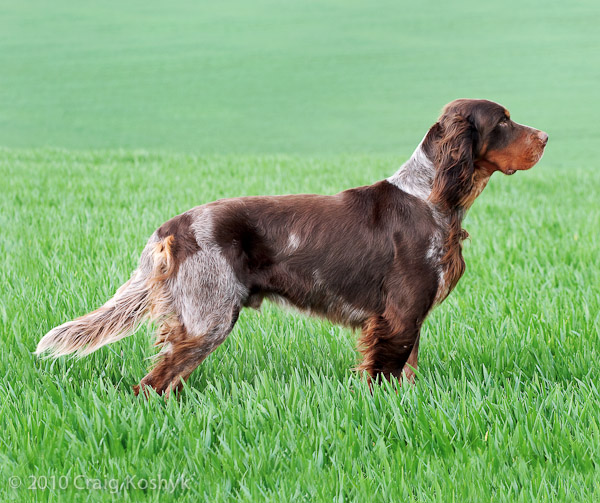
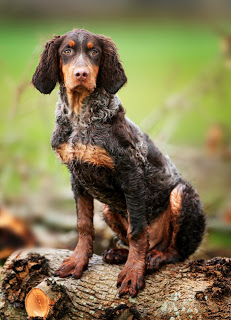
Aramis des Marais de Saint Hilaire, one of the best Picardy Spaniels I've ever seen. 
Then a couple of weeks ago, photos began to pup up on my Facebook feed. They were of the first litter of Picardy pups whelped in the UK. I had been helping breeders of Picardies and fans of the breed connect via Facebook and email for a number of years already. I'd even set up a Facebook group for the breed and told anyone that would listen that the Picardy would be a great choice for North American sportsmen and women. 

So last week I 'shared' the post with all the photos of cute Picardy pups and wrote: If you've ever considered getting a Picardy pup, now might be the time! Check out these photos of pups from the first litter whelped in the UK and try to resist.

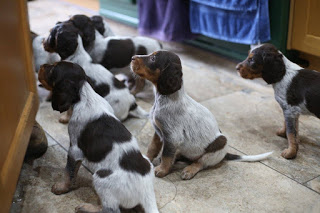
One of the shots that shattered my resistance. Photo: Sue Axtell

And the more I looked at the photos, the more I felt my own resistance fading. At one point I had to step away from the computer and plead with Lisa,: "Talk me down dear, help me step away from the edge". I fully expected her to provide me with some solid, logical reasons why I should not get a pup at this time. But instead of being reasonable and helping me resist, she said: "A new pup!? I'll go get my purse..."

So, despite my best efforts, it looks like the first person to give into temptation was...me!

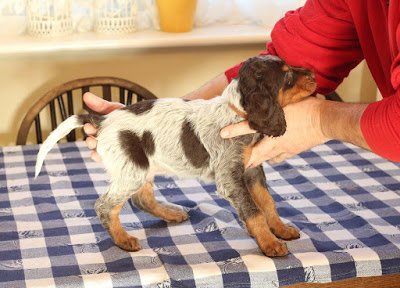
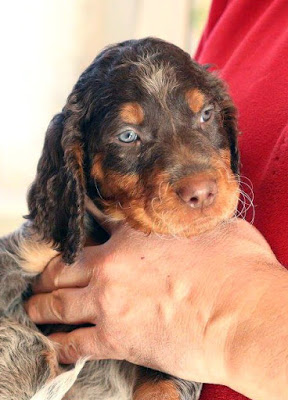
SAY HELLO TO LEO!! He's headed to Canada!

Photo: Sue Axtell

Since announcing that we were getting Leo, I've received a lot of questions about him, his breed and our reasons for the choice. Here are a few answers to the most common among them:

Why that breed? Do you just want to show off by having a breed nobody else has?
How rare or popular a breed is has zero influence on our choice of hunting dog. I have always maintained that you can find hard-hunting, well-bred gundogs in any pointing breed. The only difference is how much time and effort it takes to actually find and get one. With some breeds it is dead easy; just find a litter, reach in and pick a pup. Your chances of getting a decent hunting dog are excellent. With other breeds, it is a total crap shoot, you really have to search high and low to find a good one among all the crap.

Having studied the pointing breeds for nearly 2 decades and having excellent contacts in a ton of breeds means that Lisa and I can find a decent gundog in just about any breed we choose. So it comes down to which breed is best suited to the kind of hunting we do (there are quite a few) and all the little things about it that, for whatever reason, we find appealing. Lisa loves the expressive eyes of the Portuguese Pointer, I love the tri-colour coat of the Picardy. Lisa loves the curly coat and quirky characters of the Pont-Audemer Spaniel and I like the class and style of Pointers and Setters.


This is Leo's father Justus, a fantastic dog in all respects. 
So why did you choose the Picardy in particular? Was it a spur of the moment decision?
We met our first Picardy Spaniels in France about 10 years ago and have been a fan of the breed ever since. In fact on one of our trips to Europe, I would have purchased the handsome fellow at the top of this post right there on the spot! I wrote about him in my book and used his photo for the main shot in the breed chapter. So, no, it was not a spur of the moment decision.

I'd always known that one day, I would get a Picardy. As a mediocre trainer and someone who just wants an easy-to-live-with gundog, French breeds tend to fit my style better than German breeds. And since the Picardy region has a lot in common with Manitoba --good to great waterfowl and upland game hunting -- the pointing breed native to that area seemed to make sense. And finally, I've always thought that among all of the French pointing breeds, the Picardy may be the best suited to North American hunters and the types of game and terrain we hunt. By bringing Leo to Canada I am putting my money where my mouth is and making a commitment to the breed. With fellow hunters in Québec and the US I want to establish a breeding population of Picardy Spaniels on this side of the Atlantic.


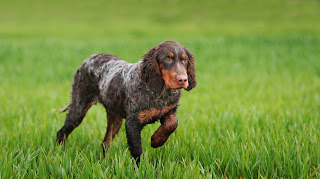
Loves water you say?


Aren't rare dogs way more expensive? Aren't they rare for a reason (ie: they suck)?
Short answer: no. Long answer here.

Leo left side. Photo: Sue Axtell

Picardy SPANIEL? Spaniels are flushing dogs, not pointing dogs! 
There are actually more breeds of 'spaniels' that point than breeds of spaniels that flush! Sort of.  It's complicated.

Are you abandoning the Weim? 
No. I love Weims and will continue to support the efforts of those in the breed that are committed to producing solid hunting Weims. We will continue to hunt with Zeiss and Maisey even if they don't live with us and will probably get another Weim at some point in the future.


Leo right side. Photo: Sue Axtell


The Picardy intrigues me. How can I get more info? Where can I get a good one?
Start by buying my book!  lol..  If you are on Facebook, check out the group I set up for the breed in North America here. There are breed clubs for the Picardy Spaniel (and Blue Picardy and Pont-Audemer) in France and the Netherlands and a Picardy club in the UK. If you are serious about getting a Picardy, drop me a line via Facebook or via email: dogwillingpublications@gmail.com and I will be happy to lend a hand.

Leo in full cuteness mode. Photo: Sue Axtell

UPDATE: New photos of Leo posted here


Enjoy my blog posts? Check out my book Pointing Dogs, Volume One: The Continentals

www.dogwilling.ca


In South Dakota, For a Little While

Craig Koshyk

The land belongs to the future, Carl; that‘s the way it seems to me. How many of the names on the county clerk‘s plat will be there in fifty years? I might as well try to will the sunset over there to my brother‘s children. We come and go, but the land is always here. And the people who love it and understand it are the people who own it—for a little while. ― Willa Cather


Well the weatherman is calling for snow tomorrow and there's only a few more days of deer season left. That means the 2015 hunting season is pretty much history. Sure, I we may get out a couple more times for grouse if the snow ain't knee-deep, but for all intents and purposes, our trip to South Dakota last week was the last big adventure of the year.

And what an adventure it was! Even though we could not bring any birds back with us (there is a complete ban on the importation of anything remotely resembling a chicken to Canada due to avian flu stateside), we still managed to take (and eat) a few. More importantly, we managed to get some great photos of some very nice dogs and their friendly owners.


And I really need to thank an the Upland Journal's awesome online discussion forum for much of our success! You see, a few weeks before we headed south I submitted a post asking anyone running Pointers and/or Setters in ND or SD to drop me a line if they would let me photograph their dogs in action. It wasn't long until Brad Adrian stepped up and offered to let me follow him and his sweet Pointer Peanut as they chased prairie birds near Pierre. Along with Brad were few other UJ members, and one of them also had a couple of really nice Pointers.

So Lisa followed them with our Canons instead of shotguns. We could not have asked for better conditions. The temps were near perfect, the light was just right and the hunters, dogs and birds put on a great show. We managed to get some shots that we are really happy with, one or two of which I am pretty sure will make it to my next book.

If you'd like to see a selection of our favourites, check out the 2015 hunting gallery below. It features shots spanning the entire season, in reverse chronological order from South Dakota to North Dakota to Manitoba.

Enjoy!!


LA BELLE SAISON by Craig Koshyk on Exposure


Enjoy my blog posts? Check out my book Pointing Dogs, Volume One: The Continentals

www.dogwilling.ca

Pursuit: Photos of Hunters and Huntresses in The Field

Craig Koshyk


I guess most people would describe me as a photographer of gundogs. And it’s true. I do spend ungodly amounts of time, energy and money capturing images of gundogs. But along the way, I also snap a shot or two of the hunters and huntresses who follow the dogs, ready to harvest the game their canine companions manage to outwit.

Below are some of my favourite images of the hunters and huntresses with whom I’ve had the honour of sharing the most precious moments of my life. I hope you enjoy looking at them half as much as I enjoyed taking them.

Place your mouse over the first image and scroll down to view the others.


PURSUIT by Craig Koshyk on Exposure


Enjoy my blog posts? Check out my book Pointing Dogs, Volume One: The Continentals

www.dogwilling.ca

Interview with a Connoisseur

Craig Koshyk

Unlike most professional gundog trainers in France, and there are a lot of them, Xavier Thibault specializes in training French pointing breeds. His love of the 'old' breeds goes back to his youth when he first started hunting and continues to this day. Recently I asked Xavier about his involvement with the French pointing breeds and his opinions on the current state of affairs of the French gundog scene.

Xavier and a small herd of Braque Saint Germains

CK: Xavier, how did you first get interested in the French pointing breeds?
XT:  I must have been 14 or 15 when I got my first hunting permit, and I was initially attracted to two French breeds, the Braque Dupuy and Braque Saint Germain. But when I became a professional trainer later, I mainly trained and raised English Setters. However I found them to be overrated. Now, don't get me wrong, Setters are great dogs with loads of natural ability, but to me, they were just overrated. So I went in search of a dog that was not necessarily from the top breed in the world, but a dog that suited me. A combination of circumstances lead me to the Braque Saint Germain and, by extension, to the world of our old French breeds. The more I got to know them, the more I fell in love with them.  I realized that all our old breeds were developed to serve hunters in the various regions of France, that they were created by the hunters, game and terrain found there.


CK: In your opinion, in what way do the French breeds differ from the other pointing breeds from England, Germany and elsewhere?
XT: They reflect the same differences that we can see when we compare the people and cultures found in those countries. The large variety of our breeds is due to the simple fact that they were created to suit the needs of the local hunters and average citizen of the area they come from. The major difference between the English and French breeds is also due to different breeding systems. English breeders developed a more sophisticated breeding system than the French.  To perfect the Pointer for example, the English used our Braques to lighten it, and then proceeded from there. We then adopted the English style and either anglicised our breeds by crossing them to Setters or Pointers or we abandoned them. On the German side, they turned to greater versatility, so they needed a different kind of dog, with a stronger character, but still easy to train. 

Braque Dupuy

CK: The French canine system has always faced the same challenges as canine systems in other countries. Egos and politics always play a role and make things difficult, especially in France where it seems that arguing has been raised to an art form. But despite all that, the French have created more pointing breeds than any others and they continue to produce some of the best dogs in the world. How is that possible? How can so many good breeds and good dogs come from a system that always seems to be at war with itself?
XT: Our system is becoming increasingly messed up, more and more people are breeders in name only and the system focuses only on the here and now, not on the long term. The rules are constantly changing and many clubs are now lead by people who are not there to manage a breed, but are there to use the club to promote a single line, usually their own. Too many breeders have no long term goals, their dogs are no longer being selected in a truly objective way, they are guided only by subjective criteria. Personally, I believe that if a breeder doesn't have long term, consistent goals and demonstrates strict selection criteria, he or she should not be allowed to breed. But French breeders reflect their Gallic heritage, they are guided more by passion than by logic and they can produce excellent dogs and we have created fantastic breeds.  


CK: What do you see in the future of French breeds? Which breeds are in decline? Which ones are on the rise? Are French hunters returning to the old French breeds or is Anglomania still strong in France?
XT: Anglomania will continue to be strong among French hunters, but some of the old breeds like the Braque d'Auvergne are on the rise. However, others are in decline, unfortunately. And the reasons are always linked to the people involved often at the club level. What happens far too often is that a gang of incompetent people seeking to gain an advantage over another gang of incompetent people, takes over a club. And the result is almost always the same, the breed's field abilities decline. If we want to improve all these old breeds our selection needs to focus less on creating the perfect dog and more on creating more good dogs. When I see an excellent dog that no one uses for their breeding program simply because it lacks a minor point in terms of breed type, for example, it makes me furious. Our French breeds are fragile and will follow the decline of the overall population of hunters I'm afraid. The ONCFS (Office National de la Chasse et de la Faune Sauvage) had a repository of ancient dog breeds, but faced with a lack of interest on the part of the breed clubs and other stupidity, the program fell apart.


Braque d'Auvergne
CK: How do French breeders and hunters feel about the growing number of people outside of France that are now interested in the French breeds? It seems to me that there is very little effort to promote the French breeds outside of France, where there is a growing interest and a market. Aside from the Épagneul Breton, the other French breeds are almost completely unknown outside of France, why?
XT: Because too many French breeders are no longer breeders, they are salesmen who consider anyone with 'his breed' abroad as potential competition. I'd say that 80% of litters produced by our so-called 'breeders' do nothing for the breed.  80% are produced without any specific purpose, without selection of any kind. And that is why I got out of breeding.  Too few breeders actually breed. Many believe they do, but they don't. Breeding means implementing a strict selection process to improve the breed. It is not about stroking one's ego, or about self-promotion and selling to the masses etc. Anyone who isn't in the process of implementing a 5 generation plan is not breeding, they are just producing puppies. 

Breeding means 15, 20, 30 years of dedicated work, of whelping puppies, keeping the unsold ones, training young dogs and competing with adult dogs. It means having breeding plans for many years in advance. It means understanding that just because faults don't appear, that they are not there, it means being able to step back to see your breeding program objectively.  Too many breeds now face an uncertain future because too many breeders are seeking the one 'perfect' specimen. But there are no perfect dogs and even a near-perfect specimen may contribute very little to the breed overall because when a gene pool gets too small, the breed will die out.  The wealth of a breed is in its diversity! Nothing good can come from a narrow-minded breeding program run by a kennel blind breeder.

CK: What advice do you have for someone outside of France interested in a dog from one of the French breeds, a Braque,  épagneul or griffon ? How does one find a good dog, a good breeder?
XT: I'd advise them to look elsewhere than the breed club. Look at the listings of litters and pups published by the French kennel club, and then contact the breeder to ask for pedigree and breeding program information. If you live abroad you will need to find someone over here that you can trust to help advise you, and if you can travel, then you should go see the parents in the field.  Avoid like the plague any breeder who bad-mouths other breeders just to talk up their own dogs. Avoid like the plague so-called 'experienced' breeders who've only been at it for 5 years and have had a grand total of two litters (you can generally find them on the board of directors of the breed club). Flee from all those who claim to have the best dog in the land, but always has a sketchy reason to never actually prove it in competition or tests. Avoid any breeder that does not hunt with his or her dogs! And for some breeds, look for a breeder outside France.

Braque du Bourbonnais

CK: Thank you Xavier
XT: You are very welcome!


Version française

CK : Quand as-tu développé ton intérêt pour les races françaises et pourquoi?
XT : Tout d'abord, j'ai été attiré par deux races françaises : le Dupuis et le BSG. Je devais avoir 14 ou 15 ans au moment de mon premier permis. Devenu dresseur professionnel plus tard, j'ai élevé du Setter anglais, mais ce dernier pour ma part était surfait, plein de qualités certes, mais surfaites. Je me suis donc mis en quête du chien non pas idéal, mais qui me correspondait. Un concours de circonstances m'a fait entrer dans le monde du BSG et, par extension, dans le monde de nos vieilles races que j'ai appris à connaître et à aimer. J'ai trouvé dans chacune de nos vieilles races un animal de terroir, un outil adapté à un territoire, adapté à des hommes, à une chasse, chaque chien de ces races françaises correspond à ce pour quoi il a été créé pour la majorité.


CK : À ton avis, comment et pourquoi est-ce que les races françaises sont différentes par rapport aux autres races de chiens d'arrêt? Anglaises, allemandes, etc.

XT : Elles sont différentes, comme le sont les hommes. La variété de nos races est due au simple fait que suivant leurs besoins nos paysans ou nos éleveurs ont sélectionné le chien qu'il leur fallait. Le fait qu'il y ait autant de différences entre chiens anglais et français est dû aussi à l’élevage. L'éleveur anglais sait évoluer dans l’élevage, le français non! Pour perfectionner le Pointer, les Anglais ont eu recours à nos braques afin de l’alléger, ils ont évolué. Nous, nous avons de tout temps suivi la mode et l’anglicisation de nos races ou leur abandon pur et simple. Du coté allemand, ils se sont tournés vers la polyvalence, donc il leur a fallu un autre type de chien, plus fort de caractère tout en restant corvéable.


CK : Le système canin français rencontre les mêmes défis que les systèmes canins dans d'autres pays. L'ego et la politique des hommes peuvent rendre les choses difficiles, surtout en France où s'engueuler est un art. Malgré tout, les Français ont créé plus de races de chiens d'arrêt que tout autre peuple et ils continuent de produire parmi les meilleurs chiens au monde. Comment est-ce possible? Comment tant de bons chiens peuvent-ils encore venir d'un système qui semble être en guerre constante contre lui-même?

XT : Notre système devient de plus en plus difficile, de plus en plus de gens n'ont rien à faire en tant qu’éleveur. Notre système, pour nos vieilles races, ne donne des résultats que sur un instant et sur un élevage. Les règles changent constamment au gré des dirigeants de club qui, en général, ne gèrent pas une race par l’intermédiaire d'un club, mais une souche; de façon générale, la leur. Le chien n'est plus vraiment sélectionné sur de vrais critères, mais juste sur des critères subjectifs. Trop d’éleveurs élèvent sans but, personnellement si un éleveur doit élever sans vraiment de but cohérent et une évidente sélection, il ne devrait pas pouvoir le faire. Mais l'éleveur français reste avant tout un passionné, l'éleveur français est resté gaulois dans l'esprit comme le résumait si bien Sénèque, je crois.


CK : Que vois-tu dans l'avenir des races françaises? Lesquelles sont en déclin? Lesquelles sont à la hausse? Les chasseurs français retournent-ils aux vieilles races françaises ou est-ce que l'anglomanie est toujours aussi forte?

XT : L'anglomanie restera toujours aussi forte, car dans l'esprit des chasseurs, leur race est la meilleure « du moins tant qu'ils n'en changent pas ». Certaines vieilles races ont le vent en poupe, le braque d'Auvergne, par exemple, d'autres sont malheureusement en déclin, les causes sont toujours humaines. En général, une bande d'incapables cherche à prendre l'avantage sur une autre bande d'incapables mais, de façon générale, ils se retrouvent toujours pour nuire à ceux qui eux travaillent sur le terrain. L'élevage de toutes ces vieilles races devrait être quantitatif et non qualitatif. Quand je vois un chien bourré de qualités ne pas reproduire juste parce qu'il manque légèrement de type, par exemple, cela me fait bondir. Les races françaises sont fragiles et suivront le déclin des chasseurs. L'ONCFS avait fait un conservatoire des vieilles races de chien, mais devant l'inintérêt des clubs ou, pour certains autres, leur virulence cette heureuse initiative est tombée à l'eau.


CK : Comment est-ce que les éleveurs et les chasseurs français perçoivent les gens de l'extérieur de la France qui s'intéressent aux races françaises? Il me semble y avoir peu d'effort fait pour promouvoir ces races à l'extérieur des frontières, là où il existe un intérêt croissant et un marché. Mis à part le Breton, les autres races françaises sont inconnues en dehors de la France, pourquoi?

XT : Juste parce que l’éleveur français n'est plus éleveur, mais un bon marchand qui voit dans le développement de « Sa race » à l’étranger une concurrence potentielle. Pour beaucoup, leur élevage est bon vu qu'ils exportent. 80% des portées faites par « des éleveurs » ne le sont pas par intérêt de la race, 80% sont faites sans but, sans sélection d'aucune sorte. J'ai arrêté le chien pour toutes ces raisons. Peu d’éleveurs élèvent.  Beaucoup le croient, mais peu le font. Élever c'est sélectionner pour améliorer la race et non flatter l'ego, s'auto-recommander, s'auto-déclarer, etc. Ne pas voir plus loin que les cinq générations à venir ne s'appelle pas élever, mais produire.

CK : Donc pour quelqu'un en dehors de la France qui s'intéresse à une belle race française, braque ou épagneul, que lui conseillerais-tu? Comment peut-il trouver un bon chien, d'un bon éleveur?
XT : Je lui conseillerais de prendre conseil ailleurs que dans les clubs, regarder les naissances auprès de la SCC, ensuite demander aux éleveurs une projection de pedigrees. Et ensuite, se renseigner, si vous habitez à l'étranger faites confiance à une personne sur place et si vous pouvez vous déplacer demandez à voir les parents sur le terrain. Pas de terrain, pas d'achat. Évitez comme la peste ceux qui pour valoriser un élevage en casse un autre, les éleveurs savants qui élèvent depuis cinq ans et ont fait deux portées (en général ils dirigent ou font partie du club de race). Fuyez tous ceux qui ont le meilleur chien du canton, mais qui pour x raisons n'ont pu faire de concours. Fuyez celui qui n'utilise pas ses chiens sur le terrain! Et pour certaines races, achetez votre chien dans de bons élevages hors de France.


CK: Merci Xavier
XT: Je t'en prie.