Contact Us

Use the form on the right to contact us. We should get back to you within 24 hours. If not, it means we are out chasing birds with dogs, shotguns and Canons. In that case we will get back to you as soon as we've finished the roasted Teal and Bordeaux . 


123 Street Avenue, City Town, 99999

(123) 555-6789

email@address.com


You can set your address, phone number, email and site description in the settings tab.
Link to read me page with more information.

Pointing Dog Blog

The world of pointing dogs in words and images, moving and still.

You say Tomato..

Craig Koshyk

The pronunciation of the word “braque” as in Braque Français, Braque du Bourbonnais and "bracco" as in Bracco Italiano etc, is fairly straightforward, or at least so I thought.
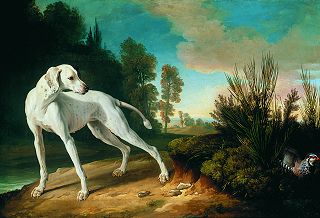

Lisa and I speak French at home, and the majority of our research into the various Braque breeds for Pointing Dogs Volume One was done in France, Québec and Italy, mainly in French, but also in Italian. So we had never heard anyone pronounce “braque” or "bracco" to rhyme with anything other than “rack” or "racko' Here is a native French speaker saying "braque" and here is a native Italian speaker saying "bracco".  So it came as a bit of a surprise when I began to interview breeders and owners of braques in the US and heard them call their dogs “brocks” and "brockos" (rhymes with “rock” or "rocko"). 

So in my book, when it came to describing the various braque breeds, I thought it would be easy to clarify. I would just write that “braque” rhymes with “rack” and bracco rhymes with “jacko” since, to my Canadian ear, the words “rack”, “jack” and “braque” all rhyme. However, when I asked an American friend about it, he told me that, to his ear, the correct pronunciation of “braque” does not quite rhyme with “rack”. To him, it has a slightly longer “a” sound, something like “brahk”. He speculated that the reason it rhymed with “rack” to me was because I speak English with a Canadian accent. 

In any case, we both agreed that “braque” should not really be pronounced “brock”. It rhymes, more or less, with “track” with maybe a slightly longer “a” sound for American ears. But then again, as the song goes:

You say eether and I say eyether,
You say neether and I say nyther;
Eether, eyether, neether, nyther,
Let's call the whole thing off!

You like potato and I like potahto,
You like tomato and I like tomahto;
Potato, potahto, tomato, tomahto!
Let's call the whole thing off!

When it comes to the origin and meaning of the word braque, as they say on Facebook: “It’s complicated.” The short version is that it means “pointing dog”. The long version can be found in Les Chiens d’Arrêt, where Jean Castaing devotes six entire pages to tracing the word back almost to the time of the pyramids. I’ll choose the middle ground and offer the following explanation: 

Braque is an old word whose origin cannot be determined beyond the shadow of a doubt. It may come from the Old High German word brakko meaning “dog”, or from the French verb braquer meaning “to bend” or “turn in the direction of”—suggesting aiming or pointing at something. Whatever its origin, the word has been associated with hunting dogs for centuries. The French use braque and the Italians bracco for any breed of short-haired pointing dog. When the Pointer was first brought from England to the continent, it was listed in show catalogues in France as the 'Braque Anglais'. 

In Spanish, the word is braco and is used for pointing dogs as well, but the terms perro de punta (pointing dog) and perro de muestra (literally “a dog that indicates or shows”) are more commonly used. In Germany the word is bracke, but it is not used for pointing dogs. Rather, it is used for scenthounds such as the Deutsche Bracke, Tiroler Bracke and Westfälische Dachsbracke. “Pointing dogs” in German is vorstehhunde.


In my next post I will try to tackle the word "épagneul". Wish me luck!!
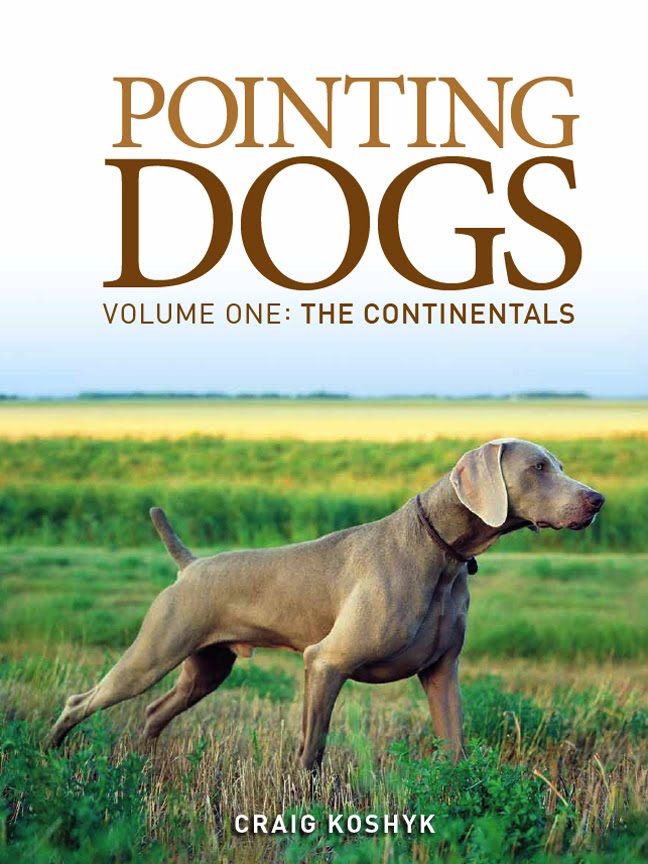


Enjoy my blog posts? Check out my book Pointing Dogs, Volume One: The Continentals
http://www.dogwilling.ca/index.cfm

BOOK REVIEW: Red Grouse Over Pointing Dogs, A Photographic Exploration

Craig Koshyk

I love books. A lot.  In fact, calling me a 'bibliophile' probably isn't enough. I think I am a full-blown biblio-maniac! So in addition to writing (and writing about) my own books, I thought I should start writing about the books of others and start posting some reviews. And I'd like to start with a book that I haven't put down since it arrived in the mail last week.


Red Grouse Over Pointing Dogs, A Photographic Exploration, is an absolutely magnificent book. It is an exquisite collection of photographs featuring pointing dogs, hunters and red grouse on the moors of Scotland and Northern England. Edited by Santiago Hererro, who also contributes many of the photos, the nearly 200 page book is big, heavy, beautifully bound and skillfully printed.

The book is comprehensive and well organized, leading the viewer from one visual treat to another. Photo captions are kept to a minimum. They provide a few details about each photo and occasionally a bit of background information, but remain tastefully unobtrusive. The first section presents the beautifully haunting look of the moors. And, thankfully, instead of the super-saturated, over-manipulated look currently trendy in landscape photography, Hererro opts for images that present a more subtle, nuanced look. He sometimes juxtaposes two photos taken at different times of the same landscape to reveal the ever-shifting light and mood unique to the heather moorland

The next section features photographs of red grouse in their native environment. Contributing photographer Roy Rimmer's images in particular are absolutely mesmerizing and reveal just how beautiful a bird Lagopus lagopus scotica really is.  Herrero's stylish Brittany Valick, -- who also 'wrote' the book's introduction -- is the star of "The Dogs" and "The Point" sections containing fantastic photos of various breeds hunting on the moors including German Shorthaired and Wirehaired Pointers, a Large Munsterlanders, Weimaraners, a Spinone, Vizslas and even a Labrador. "The Shot" section consists of some rather amazing images capturing the moment of a shot being fired or of a bird being hit, sometimes both. "The Retrieve" features photos of dogs fetching game and the book concludes with some exquisitely moody shots in a sections entitled "The Mist". 

This is a thoughtful book that is worth keeping at hand for those times when one feels a need for an
 ...unforgettable journey to the heather moorlands of Scotland and Northern England, home to the sublime red grouse, where perhaps the most spectacular bird shooting over pointing dogs in the world takes place. 
It's a big, heavy volume, worth every penny of its purchase price. It is... 
A book to turn to every time you are longing for the immensity of the moors and the whistling wind in your  ears.

You can purchase Red Grouse Over Pointing Dogs, A Photographic Exploration, on Amazon, at Coch-y-Bonddu Books or through Abe Books.

Happy Reading!


Update on the Stabyhoun

Craig Koshyk

In an earlier Breed of the Week post, I wrote the following about a breed called the Stabyhoun: 
I am happy to say that I now stand corrected. There are still at least one or two kennels doing their best to produce Staby's for the field. The owner of one of them,  Klass Zonnebeld from Nijverdal in the Netherlands, sent me some very nice photos of Stabyhouns in the field to prove it. 

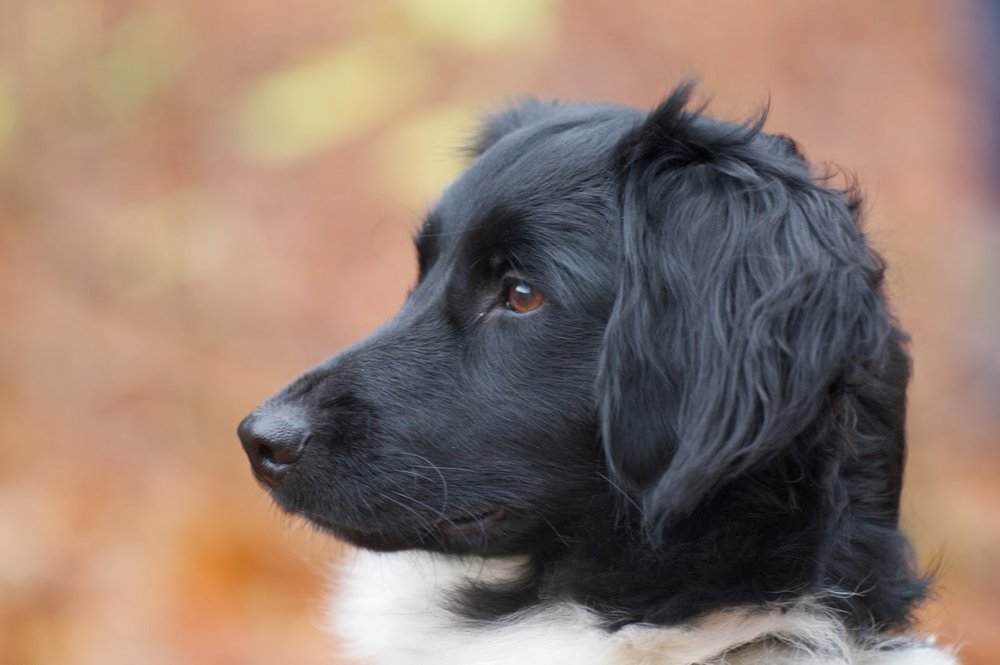
Here's a Staby showing off its good looks!


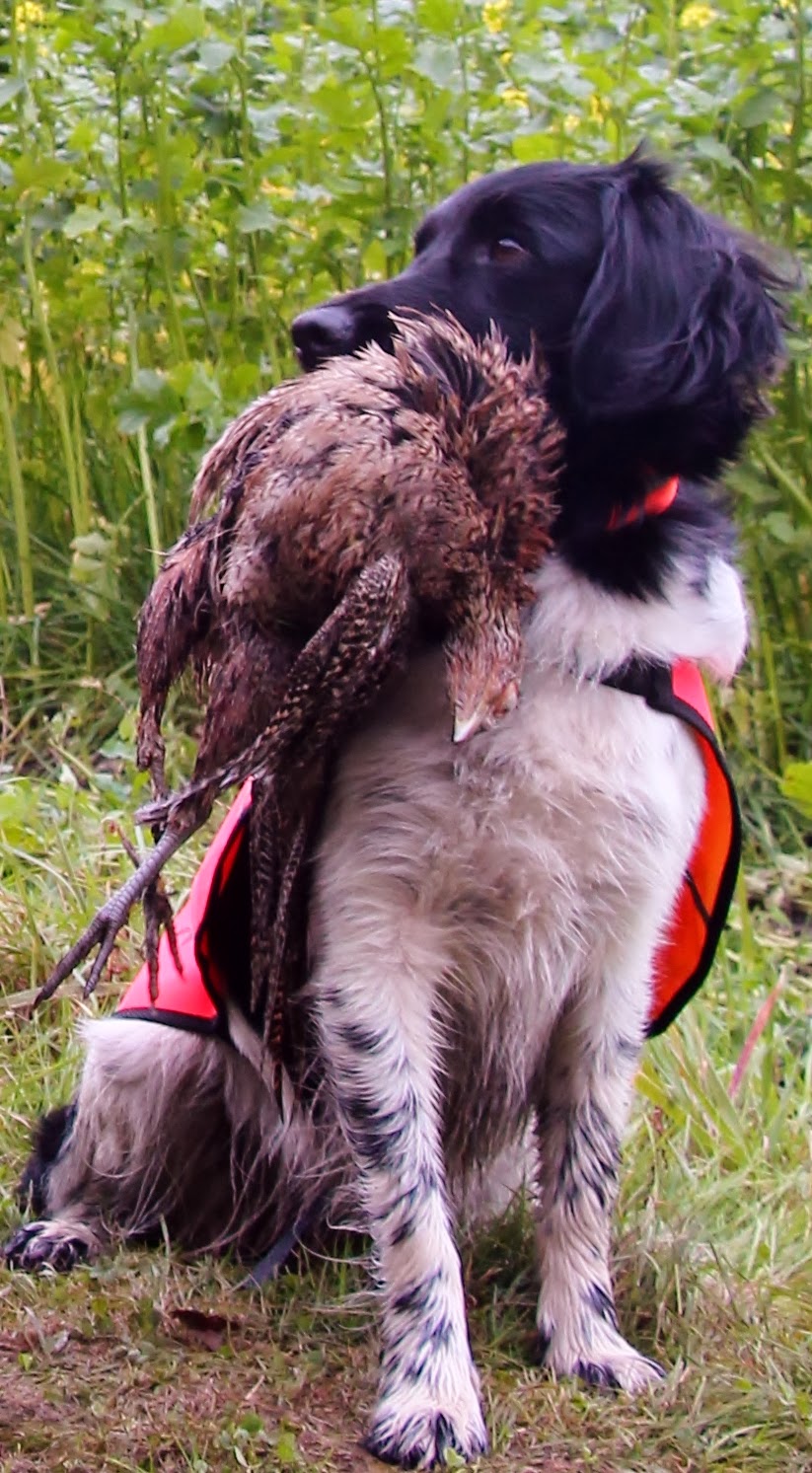
And ere's a Staby making a retrieve.

Klass and his wife Esther breed Staby's under the kennel name Fan it Heidehiem. They are among the very few folks in the world breeding Staby's for hunting. 
Several years and nests (litters) further, we can say that our kennel breeds healthy dogs with passion for hunting. We think beauty is less important than fine characters, although we do not want to lose the typical qualities that belong to our breed. We love the older Stabij type that is not too big and is able to hunt all day. The body needs to be athletic and in good proportions with good movements.
 A Fan it Heidehiem dog is first and foremost bred to have great working potential. We are not producing show dogs but a Stabij that has the health, temperament and movement to prove himself a worthy companion in the field. I enjoy seeing a dog is in his element – using his natural hunting instincts and willingness to do a good day’s work. These are the qualities I value highest in a dog. If a judge also likes the look of them then that is a bonus.
Klass and Esther offer some fascinating details on the history of the breed and how it was used to capture moles and polecats.
The Stabij was the dog for the poor man they called him Bijke and if the owner had a farm it was a farm dog, but if the owner was a hunter, it was a hunting dog. This is also why these poor people were breeding the dogs.  If they needed a stronger dog, they just find a combination with a bigger and stronger breed. But if they needed a special hunting dog,  the combination with a hunter-breed was made. The early 20th century were crisis years and everybody was poor.

In  Friesland they did a lot of mole catching and for this kind of hunting they needed a smaller dog so the Stabij was crossed with a smaller breed. In 1904 the Stabij was often sold for 15,- gulden which is about  €7,= but in 1918 a good mole catcher was worth a fortune - between f.50,- and f.100,- (€ 25,= – 50,= )  In those days, that was the main reason to breed these dogs. 
There were two ways to catch a mole. 
1) The Stabij tracked down a fresh mole-hill and stood still and waited for his boss. Together they waited until the mole started to dig.  The trick now was to wait and just before the mole was on the highest point,  put a shovel under the mole and lift it up.  The dog would then catch the mole and shake it until it died and then gave it to his boss. 
2)  The second method was when the Stabij caught the mole itself out of a tunnel by digging it out. But it could only get the young and small ones which are not worth much money. 
When  a farmer just wants to keep his land ´mole- free´,  the second option was ok. But when it was to catch a mole for the skin,  the first option was better. The mole was cut open and the skin was spread out on some wood and put to dry. When they were dry they could be sold for cloth etc. 
Today,  unfortunately the Stabij as a hunter is not used so much anymore, and other specialized dogs from outside Holland took this place. Maybe this is because the Stabij is to much of an all-rounder, he can do a little of everything. But still as a mole and a polecat-catcher he is still very valued.

For more information on the breed and more great photos of Stabyhouns, check out Klass and Esther's website: http://www.fanitheidehiem.nl/en/


Read more about the breed, and all the other pointing breeds from Continental Europe, in my book Pointing Dogs, Volume One: The Continentals
http://www.dogwilling.ca/index.cfm


Happy 14th Birthday Souris-Manon!!

Craig Koshyk

Souris-Manon (Grau Geist's Let R Rip Du Souris) is 14 years young!! 


 So here's to:
14 years of growing up


14 years of chillaxing with her buddies


14 years of play


14 years of sunbeams


14 years of wear and tear


14 years of running


14 seasons of pointing sharptailed grouse

and woodcock

and ruffed grouse
 

and huns


and snipe

and pheasants


14 years of backing


and of being backed


14 years of victory rolls


14 seasons of fetching waterfowl

and upland birds


And above all,  
14 years of putting a smile on our faces


So here's to many more 


Happy Birthday Souris!


Breed of the Week: The Stabyhoun

Craig Koshyk

Friesland is a northern province of the Netherlands. Several breeds of domestic animals were developed there including the Friesian cow, the Friesian horse and two breeds of gundogs, the Wetterhoun—a type of water dog—and the Frisian Pointing Dog, better known as the Stabyhoun.


HISTORY
The Stabyhoun is another local variant of the widely-distributed longhaired pointing dogs found throughout much of northwestern Europe. It is probably related to other pointing breeds from nearby regions, such as the Drentsche Patrijshond and the Small Munsterlander, but was often crossed with the Wetterhoun, a retrieving breed developed in the same area. When foreign hunting breeds were introduced to Friesland from Germany, France and the UK around the turn of the 20th century, the Stabyhoun was more or less abandoned by hunters. 

But the breed managed to hang on as a mole catcher. Moles were, and still are, considered a pest in the region, so catching them was helpful to farmers. Around the turn of the 20th century, a market was created for the mole’s velvet-like pelts which were used to make coats and other articles of clothing. Due to their small size, Stabyhouns were carried in the baskets of bicycles, and since they had a keen sense of smell and were eager hunters, their owners would take them from farm to farm to earn extra income catching moles.

In 1942 the Stabyhoun and Wetterhoun were recognized by the Dutch Kennel Club and a breed club, the Nederlandse Vereniging voor Stabijen Wetterhoun (Dutch Stabyhoun and Wetterhoun Association) was formed in 1947. Today the Stabyhoun is still fairly rare in the Netherlands, but its population is said to be increasing. There are also breeders in Sweden, Norway, Denmark, Finland, the US and Canada. A few owners do participate in retrieving type tests sanctioned by the breed club in the Netherlands, and I have heard reports of a hunter or two in Norway and Sweden who may use their Stabyhouns as pointers. But most agree that the FCI’s Group 7 may not be a perfect fit for the breed. 

Hanneke Dijkman, the secretary of the hunting and working committee of the Stabyhoun and Wetterhoun club in the Netherlands, explained that most Stabyhouns are simply pets.
It’s correct there are only a few people who hunt with a Staby or do hunting tests. I’m one of them. The people who do hunt with them are pleased with the dog’s performance, but they are mainly used for retrieving work. The main reason the Staby is not used for hunting is because a lot of people and breeders see it as a family dog; a nice dog to lay on the couch. People are not willing anymore to spend a lot of time to train a dog. Field trials require a lot of training and time, and everybody is too busy today.
MY VIEW
I have only seen about a half dozen Stabyhouns, most of them in the Netherlands. They were all great-looking, lively dogs, much loved by their owners. But they were pets, and none were used for any form of hunting.

We did manage to set up a photo session with a Stabyhoun near the town of Poortugaal and it was a lot of fun. The dog, a handsome young male, greeted us with a wagging tail and an eager look in its eye. Our friends who had arranged the meeting brought a few pigeons to see if we could get the dog to point.
The dog’s owner is not a hunter, but she was eager to see if her dog was interested in the birds. And he was. In fact, he was very interested. But despite our best efforts, he did not point them and seemed just like any other high-energy dog blowing off steam in the field. I got some great shots of the dog and was very happy to see a Staby in the field. But what I saw only reinforced the idea that the FCI’s pointing dog group may not really be the best place for the breed. It might be better off in Group 8 for retrieving, flushing and water dogs.

Even so, it is clear that, for all intents and purposes, the Stabyhoun is no longer a hunting breed. Its small size, once prized by mole catchers, is a now seen as an asset for families with small children, or people living in smaller houses or apartments. Its lively, friendly temperament makes it a great companion, and its athletic build and eager-to-please attitude makes it a good candidate for activities such as flyball and agility.

UPDATE: I recently came across an article about a Stabyhoun participating in a trial for pointing dogs in Sweden. So it looks like there are at least one or two people out there that are using their dogs for hunting-related activities. You can read the article here.


Read more about the breed, and all the other pointing breeds from Continental Europe, in my book Pointing Dogs, Volume One: The Continentals
http://www.dogwilling.ca/index.cfm

Hunting Pheasants in the Snow, With a Camera

Craig Koshyk


I have some great hunting buddies, but none better than my lovely wife Lisa. She 'hunts' with a camera and she's a pretty good shot! Here is a sample of her most recent work, a slideshow of images captured in South Dakota during our last pheasant hunt of the 2013 season.


Please note: some of the images capture the moment of impact as a pheasant was shot. Viewer discretion is advised. All game we harvest is prepared, with respect, for the table and enjoyed by friends and family.