This one's for the ladies
Craig Koshyk
UPDATED
Finding a shotgun that fits just right can be difficult. And it is
especially difficult if you are, as Basil Fawlty would say "an opposite
person of the contradictory gender". Rollin Oswald, the author of Stock Fitter's Bible, explains why the vast majority of guns do not fit most women:

Fact: Men and women are shaped differently.
Fact: Women are often smaller than men.
Fact: Women have proportionally slightly longer necks than men.
Fact: The average woman does not have the strength of the average man.
Fact: Most guns have stocks designed for men who are 5’ 10” tall and weigh 165 pounds.
Fact: Women/girls are often visually cross dominant. Their dominant eye is often opposite their handedness. This means that if they are right-handed, their dominant eye is their left eye. (This causes a big problem when they shoot a shotgun with both eyes open.) The cross dominance problem just adds to the difficulty many women experience when shooting a shotgun.
He then goes on to explain some of the common problems women face when trying to shoot a shotgun that doesn't fit properly.
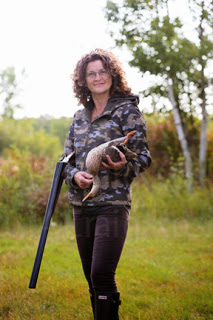 The stocks on shotguns are too long for many women. This makes the guns feel too heavy due to so much of the weight being so far forward and makes them very awkward to swing to targets.
The “comb” (top surface of a stock on which the cheekbone is snugly placed) is often too far below the level of the gun's rib. When the gun is mounted to the shoulder, the receiver or action the shooter often cannot look along the rib. If the cheek is raised to allow looking along and aligned with the rib (required to shoot well) the eye will not be able to remain aligned with the rib during swings. Something much anchor the face and eye to the stock. That something is the cheekbone on the comb of the stock. The barrel-rise that occurs naturally when the gun is fired, can drive the comb, which also rises, into the cheekbone (ouch).
The pitch (angle formed by the recoil pad and the rib) is often wrong for women. The bottom of the recoil pad stocks out too far jabs them in the upper breast. Not only is this painful but it also increases the recoil-driven barrel rise so much that the cheek is injured by the comb, even when the cheek is making snug contact.
The size of the grips on stocks is often too large for the smaller hands of women. They must slide their hand up and forward on the grip, which then requires them to pull up rather than straight back on the trigger. This is not good because it is harder to pull the trigger and fire the gun that way and as a result, it upsets shot timing - knowing exactly when the gun will fire. Here is a possible solution: http://www.aodagrip.com.
Guns are quite often too heavy for women to mount and swing easily and accurately. It may not feel heavy at first but will seem to gain weight during an afternoon of shooting. A gun that is too heavy can also cause smaller shooters to shoot with too much weight on the back foot. This will significantly increase the recoil felt by the shooter (man or woman).
Many women complain that the forward wood on a gun, the forearm, is too large to grip easily with their smaller hands. This feeling is partially due to a misunderstanding of the purpose of the forearm, which is to support the weight of the gun in the hand and to move it vertically.
Most women can shoot most shotguns, regardless of their weight, barrel length and gauge. But when a gun does not fit, she (or he, for that matter) will suffer excessive felt recoil, is likely to tire quickly, and will have difficulty hitting targets of any type. Shooting will not be nearly as enjoyable as it could be if the gun fitted the shooter.
Generally speaking, to shoot well, shooters need to use a good gun mount, stance (placement of the feet) as well as good body, head and neck posture. This is known as the shooting form. A good form promotes shooting success. A good form also helps reduce felt recoil (kick) and delays fatigue. In order to use a good form however, a gun’s stock dimensions and its weight must match the size, the shape and the strength of the shooter.
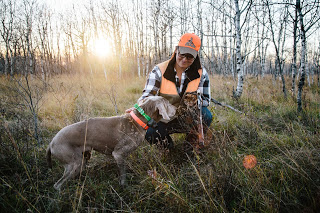 Good Shooting Form: Shooting form consists of the gun mount, the stance, the weight distribution and the head, neck and body posture used when shooting.
The shooter should stand with the body rotated no more than 45 degrees from the anticipated direction of the target. (Shooters attempting to shoot a gun that has a stock that is too long, often shoot their shotgun like a rifle with the shoulders nearly aligned with the direction of the shot. This is not good. One reason is because it hampers swings in the direction opposite the side of the gun mount.
To see clearly along the gun's rib and to help keep the eye aligned with the rib vertically and horizontally during swings, it is best when both the head and neck are in a natural, erect, posture.
The gun should be brought back to the shoulder (mounted and the cheek placed on the comb without the need to lean the neck forward and lower the cheek to he comb or, or to lean the head sideways toward the stock.
(When shooting trap targets, it is best to raise the trigger-hand elbow so the upper arm is parallel with the ground. This helps avoid moving the stock away from the cheek during swings to the side of the gun mount, often because the gun is being arm-swung rather than moved laterally with upper body rotation, powered by the legs. (The angle formed by the gun and the shoulders should not change when swinging to targets. either to the left or to the right.)
Gun weight: The gun should be able to be mounted comfortably and be easily supported with the forward hand during a full day of shooting.
Keep in mind however, that heavier guns kick less than lighter ones. The easiest way to reduce recoil is to shoot shells with a reduced weight of shot. 3/4 or 1 ounce for 12 gauge shells, moving at velocities of 1100 or 1150 feet per second (fps) are quite commonly available.
When you are new to shooting or weigh less than 160 pounds, shoot the lightest and slowest shells you can find, regardless of the gauge and weight of gun that you are shooting. There are even subsonic velocity shells available but they are less common than 1 1/8 ounce shells with a velocity of 1200 fps, which until quite recently, was the most common 12 gauge clay target load.
 Smaller gauge gun for a new shooter: A 20 gauge rather than a 12 gauge is sometimes considered. However, generally, 20-gauge guns weigh less than 12 gauge guns. For that reason, shells with an equal weight of shot moving at an equal velocity will kick considerably more in a 20 gauge gun than they will in a 12 gauge gun.
The goal should be to choose a gun that can be comfortably handled and repeatedly mounted all day but one that is no lighter than required (unless it will be used only for hunting, when carry-weight becomes more important than smoother swings and reduced felt recoil).
The best advice for the majority of women is to get the gun to fit, since most guns have stocks that are designed for men who are 5' 9" or 10" tall and weigh 160 pounds.
The easiest way to get a gun to fit you is to visit a good stock fitter. He can change the stock's dimensions so you can shoot it using a good shooting form. The good stock fitters will also teach you a good shooting form and then change the stock's dimensions so you can use that form when you get home.
How Well Does it Fit? The following will give you an idea of how well a gun fits:
The stock's "pitch" Pitch is the angle formed by the recoil pad or butt plate, and the rib (close to 90 degrees).
As the gun is being mounted and brought back to your shoulder with the barrel raised to normal shooting height (Get someone to help hold the barrel up if that is difficult to do.), the whole recoil pad, top to bottom, should make simultaneous contact with your shoulder.
If the bottom “toe” of the recoil pad (or butt plate) makes contact very much before the top of the pad, the "pitch" on the stock is wrong for you and needs to be corrected. In other words, the angle formed by the recoil pad and the gun's rib needs to be changed to fit you (makes simultaneous contact with your shoulder). If it's wrong for you, it can be changed by a stock fitter or most gunsmiths.
Stock length - length of pull (LOP) Not that you care, but the stock's length of pull is the distance from the front of the trigger to the end of the recoil pad.
 With the gun mounted (ideally, with the head and neck in a normal, erect posture) and the finger on the trigger, the nose and the trigger-hand thumb should be separated by 1.25 to 1.5 inches. If there is much more separation than that, the stock is too long and needs to be shortened. (Grip radius (size of the grip) affects the position of the hand and also the nose/thumb separation.)
A stock that is too long will make the gun feel too heavy and will be awkward to swing. It may also cause you to shoot with too much weight on your back foot and result in increased felt recoil.
The "Drop at the comb" dimension The comb is the top surface of the stock upon which the cheek is placed when shooting. This drop dimension describes the distance of the comb below the level of the gun's rib.
With the gun mounted with snug cheek pressure on the comb, you should be able to look along the surface of the rib or to look very slightly down-onto the surface of the rib when the gun will be used for trap shooting with its rising targets).
Often, combs need raised for women and girls. This can done by having an adjustable comb installed (+ or - $250) or by adding moleskin to the top of the comb or by applying one of a number of comb pads that are available commercially.
Recoil pads: Regardless of the type of shooting for which the gun will be used, there should be a recoil pad on it. Most women are not as "tough" as male shooters, most of whom use the best recoil pad they can find when shooting clay targets. Good recoil pads reduce punishment and felt recoil and make shooting much more comfortable.
Longer barrels offer a longer sighting plane, which is beneficial. The additional weight forward of a longer barrel promotes smooth swings, which is also beneficial. Many women however, are better off with guns having a barrel lengths of 26" or 28” on semi-auto and pump guns, with 26” on over & under guns being preferred by smaller women since, although the action or receiver is shorter, there are two barrels to add forward weight.
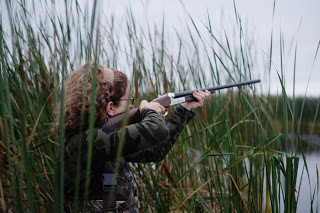 Shotgun types: Of the different types of shotguns, semi-autos are considerably softer shooting (have less felt recoil) than other designs. Of the semi-autos, gas operated semi-autos are softer shooting than inertia operated semi-autos.
Choosing a gun: If at all possible, shoot a gun before you buy it. When this is not possible, most stock dimensions can be altered to fit women (with the possible exception of the grip). Knowledgeable stock fitters can fit women of course, but so can most gunsmiths if you or a good coach tell them what dimensions you want changed and by how much. (Plug for my book)
There are also guns that come with an adjustable comb, and a few that have stocks that are specifically designed for women and younger shooters. These slightly rare guns usually come closer to fitting women and youths than do guns that are designed for "average" men, the ones who weigh 160 pounds and are 5' 10" tall.
Considering everything before buying a gun, will reap big rewards, not the least of which is money saved by trading guns less frequently, trying to find one that you can shoot comfortably and one that offers more rapid improvement with shooting experience.
Take your time and consider everything type of action (semi-auto, over & under, pump). Shoot, or at lease handle a gun before you buy it.
To get an idea of how well a gun fits you, stand with your body rotated less then 45 degrees from an imaginary target and, with your head and neck in a natural posture, slowly mount the gun with your eyes closed. Then open them and judge how your eye aligns with the rib.
 Repeat the exercise but this time, mount it so that the top of the recoil pad is extending slightly above your collarbone. Be sure that it makes contact with your shoulder inside of your shoulder joint.
Dismount it and mount it again (with your eyes closed). With the gun mounted, open them. Is your eye aligned vertically and horizontally with the rib? If not, the gun probably doesn't fit you very well. You may be able to learn to shoot it but you will pay a heavy price in felt recoil and shooting success.
If you are a new shooter, this exercise has only limited value. This is because your gun mount has not been practiced and as a result, is not yet consistent. (There are a number of ways to mount a gun, some much better than others. With the barrel raised to normal shooting height and the gun brought back to your shoulder is only one way and not the easiest way.)
Questions to ask yourself:
Did the bottom toe of the recoil pad make contact well before the top of the pad?
With my cheek on the comb, was I able to look along or slightly down-onto the surface of the rib?
Did I have to lean my neck forward and lower my cheek down to the comb? If I did, could I raise my gun mount on my shoulder just a little to reduce the neck lean and the cheek lowering? (Allow no more than about 3/4" of the recoil pad to extend above the collar bone.)
Have someone check the distance between the tip of your nose and the second knuckle of your trigger-hand thumb. Is it 1.5" or less? (The closer to 5' in height your are, the less is the separation needed, down to about an inch.)
If the separation is more than 1.5", the stock will need to be shortened. (This is also the ideal time to correct the pitch.)
 How heavy does the gun feel? Does it seem balanced between your two hands? (If not, can you move your forward hand farther forward or back to help balance the gun?) Could you mount it 25 or 50 times during a morning or afternoon's clay target shooting without becoming too tired to handle the gun without straining?
Did the bottom toe of the recoil pad make contact well before the top of the pad?
With my cheek on the comb, was I able to look along or slightly down-onto the surface of the rib?
Did I have to lean my neck forward and lower my cheek down to the comb? If I did, could I raise my gun mount on my shoulder just a little to reduce the neck lean and the cheek lowering? (Allow no more than about 3/4" of the recoil pad to extend above the collar bone.)
Have someone check the distance between the tip of your nose and the second knuckle of your trigger-hand thumb. Is it 1.5" or less? (The closer to 5' in height your are, the less is the separation needed, down to about an inch.)
If the separation is more than 1.5", the stock will need to be shortened. (This is also the ideal time to correct the pitch.)
How heavy does the gun feel? Does it seem balanced between your two hands? (If not, can you move your forward hand farther forward or back to help balance the gun?) Could you mount it 25 or 50 times during a morning or afternoon's clay target shooting without becoming too tired to handle the gun without straining?
Take your time deciding: Don't be rushed by a salesman (or your significant other). This will be your gun and you want to feel good, physically and emotionally when shooting it. Your attention to detail when choosing a gun will improve your chance of getting the best gun, one that you will enjoy shooting for many years. So, do your best to make it happen the first time.
Thanks to Rollin Oswald, the author of Stock Fitter's Bible, for allowing me to reprint this article. If you'd like to contact Rollin, you can email him here: rollin@stockfitting.com
UPDATE
YES!! Shotgun makers are finally bringing shotguns to market that are specifically designed for female shooters. Here is what the Caesar Guerini company says about its new line of Syren shotguns:
Over the years many firearm manufacturers have considered making a firearm for women. Some decided the market is too small to justify the effort. Others have made halfhearted attempts, or even worse a gun with a shortened stock that has been painted a silly color. In our opinion these efforts are something less than genuine. Syren is a different story.
As a division of Caesar Guerini and Fabarm, the goal of Syren is to provide products that are designed exclusively for Women. We want to finally end the need for making compromises. No more modifying existing products, no more paint to cover up an altered stock, no more youth models being pushed as your only option. Our shotguns and accessories are designed just for Women and led by Women. Everyone involved with Syren, from our female management team to our Pro-Staff ladies, are committed to producing the best products possible so that there will be no more compromises when it comes to our lady shooters and their needs. Learn more at http://www.SyrenUSA.com - or join the conversation on Facebook athttp://Facebook.com/SyrenUSA
And check out this promotional video for the new guns.
Enjoy my blog posts? Check out my book Pointing Dogs, Volume One: The Continentals