Use the form on the right to contact us. We should get back to you within 24 hours. If not, it means we are out chasing birds with dogs, shotguns and Canons. In that case we will get back to you as soon as we've finished the roasted Teal and Bordeaux .
123 Street Avenue, City Town, 99999
(123) 555-6789
email@address.com
You can set your address, phone number, email and site description in the settings tab. Link to read me page with more information.
With the hunting seasons winding down, I'm finding a bit more time to post blog updates, photos and videos. So here's today's project, a short video featuring our Pont-Audemer Spaniel Uma hunting woodcock in the Interlake region of Manitoba. Enjoy!
I got out for another great snipe hunt with Henri, but this time we were joined by hunting buddies, Ross, Zeiss and Vinnie. I managed to get some shaky video of some of the highlights..and low-lights.
Just over a month ago our Weimaraner Souris-Manon was very, very ill after two back-to-back bouts of pancreatitis. The Vet also discovered a fairly serious heart murmur. So the decision was made that at nearly 14 years old, Souris would retire from the hunting fields.
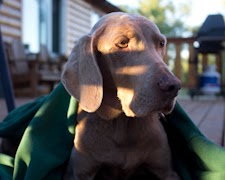
A couple of weeks ago, after the opening day of the waterfowl season I posted this photo to announce Souris' retirement and noted that she seemed to have accepted the decision and would from now on just spend her days relaxing in the warm sun.
But then I started noticing that Souris' eyes were getting a bit brighter every day and that she was protesting a bit more each time I took the other dogs to the field. So another decision was made: retirement sucks! Souris was getting back in the game! Here is a video of her first post-retirement performance. ENJOY!!
Since publishing Pointing Dogs Volume One in 2011, I have to admit that I've been a bit lazy about photographing my dogs in action. For the last couple of years, I've tended to reach more for my gun to shoot birds for diner than for my cameras to 'shoot' dogs for books and articles.
But this year, I decided to get back to capturing the action with my cameras. And I've added a bit of a twist; I've vowed to shoot even more video than still images. So watch out! I'm now armed with a new Sony camcorder and the latest version of iMovie and I intent to post a video every week or two throughout the season.
Here's my latest piece. It's features my dog Henri (Silvershot's Pocket Rocket) hunting sharptails and snipe on a friend's ranch a couple of hours north of the city. As you will see, my shooting --with camera or gun -- sucks. But we had a great time despite my lack of skill.
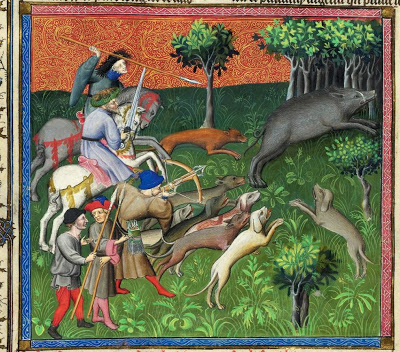
Think the German way of testing and breeding pointing dogs is an old fashioned, rigid system that never changes? Think again. The German system is, above all, practical. When hunting conditions change, the system adapts. And this adaptive strategy is now being implemented by most of the versatile dog clubs in Germany as they develop new training and testing methods to assist handlers and breeders deal with a mushrooming population of wild (and sometimes radio-active!) boars.
Recently I spoke to Tanja Breu-Knaup, a breeder of Longhaired Weimaraners in Germany about a new test that the Weimaraner club is setting up to verify a dog's willingness and ability to confront boars.
Tanja, why is a new test and award now being developed for Weimaraners?
As you know, the number of boars in Germany has increased greatly over the last 20 years. Last year, for example, German hunters killed over a half-million of them! So we realized that we needed to come up with a test to certify that a dog is able to hunt boars. Most of the other clubs are doing tests that are very similar. And it is something that has been done for other kinds of dog breeds like hounds and terriers for many years, especially in the old GDR (the former East Germany).
Can you describe the test for me? The test is conducted in a large enclosure called a Schwarzwildgatter (schwarzwild= boar,gatter = gate, ie: a fenced enclosure) where a boar weighing at least 60 kilos is located.Two judges from the club observe as a dog is sent into the enclosure on its own -- the handler remains outside. The dog searches within the enclosure and must find the boar within 5 minutes. Once it has located the boar, it should bark at it, harry it and try to get it to move without endangering itself and without any help from the handler. It must continue to harry the boar for at least 5 minutes.
The judges look at a number or things and make notes during the test. For example, they note the approximate weight of the bar, if it stood its ground or charged at the dog. They note how intensely the dog goes about harassing the boar, how close it gets to it, how long it barks for and so on.
If all goes well, the dog receives a passing grade, a notation of Schwarzwildgatter[S] is made on its record and a certificate is issues. A dog that is too reckless however, will not pass. Nor will a dog that is too nervous or refuses to confront the boar. Here is a report (in German) about training dogs in the Schwarzwildgatter to work boar.
And here is a Weimaraner confronting a boar in a Schwarzwildgatter during a test.
Does a dog have to pass this test to be allowed to breed?
No. The Schwarzwildgatter test is something that a lot of breeders want their dogs to do, and it helps us make breeding decisions, but it is not something that the club requires in order for a dog to be bred.
How is the test being received by members of the club and by hunters in general?
I think that they are generally happy with it and it is a good thing that this sort of test is now available. But that is not to say that the test is perfect. It is, after all, an artificial situation and that can lead to some problems. For example, some dogs realize that the whole thing is a 'set-up' and they don't react in the same way as they would if they were really hunting. Its like some dogs and planted birds, they don't react the same to them as they do to wild birds. So you can have a dog that hunts boars all the time and is really good at it go into the pen and not really do much since it knows that the whole thing is fake.
Or you could have a situation where the test is used to inflate the credentials of a dog that never actually hunts boars. The only boar it may ever see in its life may be the one in the enclosure. But if it passes the test, some may see it as all the proof they need to declare that they have a fantastic boar dog.
Personally, I think the certificate should be awarded to dogs who demonstrate their willingness and ability to hunt boar under actual hunting conditions in real-life hunting situations, perhaps something similar to a HN(Hartenachweis)award for predator sharpness. But the club has determined that the current way of testing is sufficient.
In North America, there are German 'Landesgruppe' (club chapters) for the Deutsch Drahthaar (GWP), Deutsch Kurzhaar (GSP), Deutsch Langhaar (GLP) and Pudelpointer. There is also the JGV-USA, a North American chapter of the German umbrella organization for all versatile dogs, the JGHV. However, I am not aware of any plans to develop similar tests on this side of the ocean. But that is not to say that it will never happen, the numbers of ferral pigs and wild boar are on the rise in many parts of the US and some speculate that a population explosion could also happen here.
And finally, if you are wondering why the Germans take boar hunting so seriously and why they train and select their dogs to be up to the challenge, have a look at this video showing just how big, fast and dangerous a boar can be (warning: graphic content).