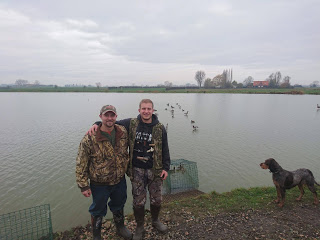
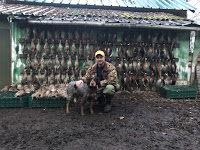
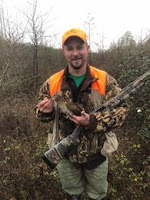
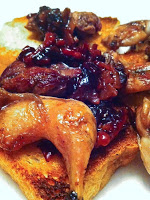
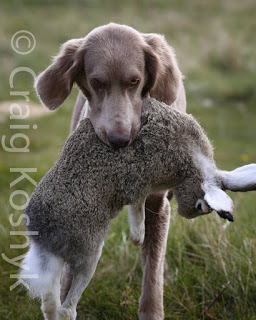
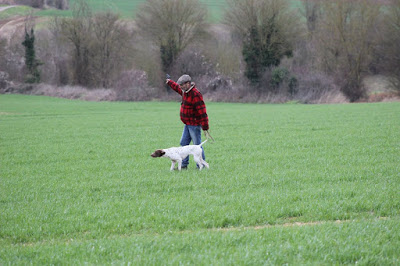
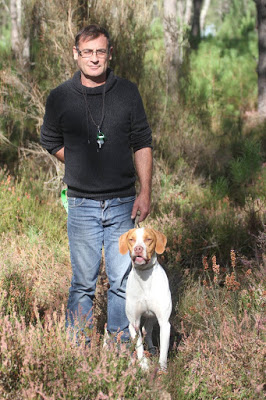
Use the form on the right to contact us. We should get back to you within 24 hours. If not, it means we are out chasing birds with dogs, shotguns and Canons. In that case we will get back to you as soon as we've finished the roasted Teal and Bordeaux .
Form Block
This form needs a storage option. Double-click here to edit this form, and tell us where to save form submissions in the Storage tab.
Learn more
123 Street Avenue, City Town, 99999
(123) 555-6789
email@address.com
You can set your address, phone number, email and site description in the settings tab. Link to read me page with more information.
Manufrance (Manufacture Francaise d'Armes et Cycles de St. Etienne) was a French mail order company located in St. Etienne France. It opened in 1885 and specialized in shotguns and bicycles but also sold a vast array of other products, ranging from fishing rods to clocks. The company closed in 1985, but was revived under new ownership in 2010. Old Manufrance catalogues and books are fascinating.
In my book I wrote about seeing a sparkle in the eye of renowned Cesky Fousek breeder Jaromir Dostal. "It was a look we had seen before; a certain fiery sparkle, a radiant glow on the faces of a handful of men we had met in our travels."
In 2016 there were fewer than a half dozen Picardy Spaniels in North America. By the end of 2017, the number had risen to nearly 30 and for the first time ever, a litter of Picardy Spaniels was whelped in Quebec. Over the last 12 months North American hunters and breed enthusiasts have imported pups from the UK, France and Germany and three Picardy Spaniel kennels are now officially registered with NAVHDA, including one in the UK, a first for the association.
Here in Manitoba, despite below average bird numbers, our Picardy Léo had an awesome 2017 hunting season. Here is question/answer format video I cobbled together of clips of Léo in the field, forest and water during the season.
One of the highlights of the season was Lisa's shooting. She was on fire! With her trusty side-by-side and Kent Bismuth ammo, she out shot me and her nephew CJ.
Another thing I really enjoyed in 2017 was helping folks connect with Picardy breeders overseas and helping them get good pups. When Lisa and I flew to Europe last spring we stopped over in the UK to bring back two pups for hunters in Saskatchewan. Seeing the smiles on the fellows' faces as their new pups jumped into their arms at the airport made our year! Thanks to social media, I was also able to help other folks have pups shipped in from overseas or even to fly to France to pick up a pup. Jamie Simmons for example, not only got a great pup, he hunted for a week in France and made several new French hunting buddies.
Once Jamie returned from France and the jet-lag had worn off, I asked him a few questions about how and why he ended up flying half way across the world to pick up a pup. Here's what he said: How did you 'discover' the Picardy?
I discovered the Picardy in a random Google search for “Spaniel” which produced the names and pictures of the different breeds. The Picardy and Blue Picardy caught my eye as I had never heard of them before. I was instantly intrigued and wanted to learn more about them. I found the North American Picardy Alliance web site and inquired where they could be found via the contact link on the site and soon received your initial email. I had also searched Facebook and found several breeder pages as well. How did you "meet" Quentin online?
I had viewed Quentin’s ad on a Facebook page and then you mentioned it as well and offered to call him to check references, etc. That meant a lot to me as a vote of confidence.
How did you and Quentin communicate on line?
All of our communication was through Messenger on Facebook. I spoke no French and he spoke almost no English so most of the communication I translated through Google Translate. I attempted to learn some French before I left but there just wasn’t enough time between when I made the decision to go (late September) and when the pups would be available (early December). Quentin had worked on his English some during that time, but we found that Google translate on my phone was easier for normal conversation. It was a hurdle but it worked well enough to communicate with him and his friends/family.
Why did you decide to go get the pups instead of having them shipped?
Honestly, cost was a big factor. With 3 kids and modest income, I wasn’t real keen on spending a lot of money on a breed of dog that I knew very little about and had never seen before (besides meeting yours once). When Quentin offered to take me hunting if I went over there, well that sealed the deal! Not only would I be getting a new pup, but also the experience of a lifetime!
Was it your first time there? What did you learn about France and the French people?
My time spent in France was mainly spent hunting and hanging out with his friends. It was not a tourist trip! We spent 3 days in the “Duck Hut,” although the migration was very slow while I was there. Most complained that this was their worst year ever for ducks, but the experience was still unbelievable! I would equate it to hanging out at deer camp, but with the ability to run out in the dark and shoot ducks on the water with a scoped shot gun! We also spent a morning chasing Bécasse (European woodcock) and I managed to bag my first! We spent another morning/evening chasing pheasants, rabbit and duck. We took one day and went to Blankaart Castle in Belgium where there is a large waterfowl preserve surrounding it. Very neat place! On the final day we did a large pheasant with 25-30 other hunters.
This was my first trip outside North America, but definitely won’t be the last! I learned that the French spend a lot of time hanging out and conversing with each other over meals and drinks. It seemed at times that we were eating non-stop! I also learned that Johnny Hallyday (their version of Elvis) passed away while I was there and was the topic of a lot of discussion among his friends and family. I also learned that most do not speak English (at least where I was), but the people were very accommodating and very nice!
What surprised me was many of Quentin’s friends and family offered for me to stay with them in their homes on my next trip to France. I thought that was very generous and I look forward to seeing them all again.
What was it like seeing your pup for the first time and hunting with their mother?
It was very neat to see Gyda (Nyda) for the first time. Out of the same little, both he and his parents were keeping pups, so there were 4 of them running around when I arrived. It was fun to see how the interacted (fought) with each other and vied for attention. Hunting with their mother, Ilka, was reassuring that I had a made a good decision. She ranged well, seemed to have a good nose on her and had a very strong desire to hunt!
How was the homecoming for your pup? Kids must have been thrilled!
Homecoming was great! It was fun to see the kids reaction after being gone a week and bringing home a new member of the family. They were happy to see me, but I think they were more excited to meet their pup! Travel was a bit stressful, but everything ended up where it should be. I would do it again now that I know the ropes.
Since she's been home, how has your pup adapted? What is her personality like?
Pup has adapted very well! It took her about a week to adjust to our time (7 hours different than France), but once we got over that she sleeps all night (most nights). She has her puppy moments, but I still cannot get over how calm she is. She loves to cuddle, but isn’t over the top with having to pet all the time. After a bit, she just finds her pillow and lies down. For 4 months that is crazy! She is also very gentle with my kids (ages 4,8,11). Her personality seems laid back with a kind of whatever attitude. She doesn’t get worked up about anything besides a little whimpering in her kennel. Vacuum, loud noises, kids yelling have no effect on her. I can’t wait to get her in the field!
I'd love to hear from other members of the growing Picardy family in North America, so post your 2017 stories in the comments below!
One day, I will write the story of how an Icelandic-Ukrainian prairie boy grew up to become a wine-sipping, snipe hunting, stark raving francophile. In the meantime, let me share just one aspect of the French life I've adopted; my love of French cooking.
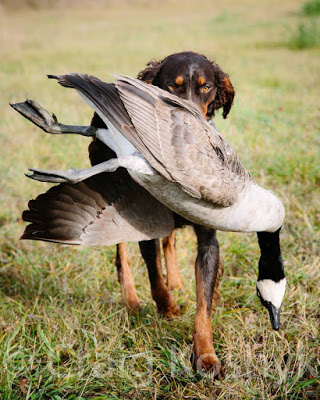
Léo's first Canada..it weighed 13lbs!
Here is a recipe that changed my entire outlook on hunting geese. I used to ignore them. Now I can't wait to put some in the game bag. So when you have a good goose shoot, for the love of dog, keep the legs, and gizzards! You can make confit and rillettes from them that will rock your world.
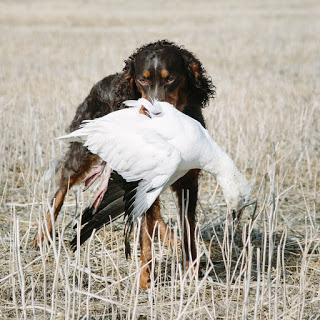
Léo's first Snow goose made awesome confit!
Ingredients
Goose legs Gizzards (cleaned and halved) Onions or Shallots Garlic Salt, pepper, thyme, rosemary (other spices can also be added. Try cardamon, cinnamon or nutmeg. If you like a bit of a kick, try some cayenne pepper).
Method Step one: Cure the meat.
Clean legs and gizzards, then wash and pat them dry Place them in a glass bowl with chopped onions/shallots, garlic, salt and spices. Be generous here, don't skimp. You are basically doing a very short "cure" and will wash most of the salt and spices off the meat before it's cooked. Put bowl in fridge overnight.
Step Two: Confit the meat.
You can even use woodcock legs!
Turn your oven on to 220 degrees Rinse the goose legs and gizzards and pat them dry. You want to get most of the salt off of them, but if some of the spices stick, that's ok. Place the goose legs and gizzards into a dutch oven or oven safe bowl that you can cover with aluminum foil. Cover all the meat with fat or oil.* Duck fat is the very best in terms of flavour, but is can be hard to find and is always expensive. Olive oil (even a relatively inexpensive brand) is a near perfect substitute. Just make sure to keep the heat under 225 degrees (I used olive oil for the legs in the photo above, it works great). Put the dutch oven with the legs, gizzards and oil or fat in the oven and then take the dog for a grouse or woodcock hunt.
Depending on the kind of goose (Snow geese cook faster than old Canada honkers) the meat will be done in as little as 4 hours. Generally, the geese we shoot take 6- 8 hours. To check if the meat is done, grab a bone with a pair of tongs. If the meat falls off as you lift it, the meat is done *Confit is to deep fat frying what barbecue is to grilling. Low and slow versus fast and furious. And don't worry, the method doesn't really add any extra fat to the dish. The oil or fat only sticks to the surface of the meat and does not really penetrate it. And since there is no breading to soak it up, a confit leg of goose has far less fat than a deep fried piece of chicken. For more information on the method see the Food Lab's article on confit.
Step three: Enjoy!
Slice the gizzards and serve them on toasted French bread with a bit of garlic aioli. Put the legs under the broiler for a minute or two to crisp/brown the surface and serve on just about anything.
OR:
Take the legs and pull all the meat off with a fork. Using tongs or your fingers if it is not too hot, shred the meat like pulled pork into a mixing bowl. Add cut up chunks of gizzards. Stir in some cognac, or brandy, or port wine and add some wild blueberries. Stir it all together and put it in mason jars. You've now made "Rillettes" and they will keep in the fridge for up to a week or so. Serve rillettes at room temperature. Eat is like a nice paté, spread it on bread or crackers and enjoy with a nice Petite Sirah or Pinot Noir.
Rabbit legs are GREAT for confit too!
Just like becoming an expert in wine–you learn by drinking it, the best you can afford–you learn about great food by finding the best there is, whether simply or luxurious. Then you savor it, analyze it, and discuss it with your companions, and you compare it with other experiences.
— Julia Child
In Part 1 I asked professional trainer Xavier Thibault about the various French pointing breeds and the French breeding system. Today I asked him about his approach to training those breeds.
When it comes to training a dog from one of the French pointing breeds should a trainer take a slower, softer approach or one in which more pressure is applied?
Xavier in the field with a Braque Français
In general, a lighter touch is best, but you can’t apply one method to all dogs, they are all different. So you have to adapt your approach to each individual. When I was a child, before learning to read and write, I learned to use a pen and pencil by coloring pictures in coloring books, and then I learned to draw letters and so on. For a young dog, it is the same sort of progression. The dog has to discover things, learn from its mistakes and successes. The trainer’s job is to guide a dog along the path he has chosen for it. And it takes about three years to fully train a dog, so don’t rush. Stay calm and carry on!
No matter what approach you take, it always comes down to being patient and giving dogs enough time to reach their full potential. Every dog, every person and every type of hunting terrain is different, and our French breeds clearly reflect that. Each was developed in its own region and each has its own character, style and look. So there is no single way to train a dog, there are as many ways to train as there are dogs, breeds and types of hunting terrains. You train a dog with your brain, not a training manual.
In general, English pointing breeds seem to mature earlier than many of the German pointing breeds. But what about the French pointing breeds? Are they slow to develop or are they more on the precocious side?
Xavier with a Braque Saint Germain
Pointing can come seen quite early in some dogs from the French breeds but in general, that has nothing to do with how well the dog will eventually turn out. Some dogs point early and some point a bit later on, but what’s the use of pointing if the dog doesn’t know how to find game to point? Let's not forget that there are only two kinds of dogs: those that just seek and those that seek..and find!
A puppy is a puppy and will be that way until it matures. Trying to rush things along is useless. The most common mistake I see among amateur trainers is trying to do too much, too soon. If the dog is good, it will always be good. There is no need to hurry. I only start taking my dogs out to expose them to real game and actual hunting situations when they are about 6 or 7 months old. In the first few months, I don’t worry about how early they starting pointing or how far they range out. Developing a pointing dog is not a race.
What French breed would you recommend to the following kinds of hunters: 1. One that hunts mostly in the marsh, duck, teal, goose, but a little woodcock in the forest? 2. One that hunts, partridge, snipe, grouse, and from time to time, waterfowl in the marsh? 3. One that hunts a bit of everything, but in a hot dry conditions?
Xavier and a Braque de l'Ariège
Each breed will adapt to the terrain it hunts, but it is usually best to choose a breed that has been developed for specific local conditions. In general, for wetlands and forest work, I would consider a dog from one of the épagneul breeds from Northern France like the the Picardy Spaniel, Pont-Audemer Spaniel, Saint Usuge Spaniel, French Spaniel etc. or a Kortahls Griffon. For dryer, hotter conditions, I would consider one of the French braques like the Braque Français, Braque Saint Germain, Braque de l'Ariège etc.. That said, I sold a Braque Saint Germain to a guy in Canada and it did really well there. But that is because our dogs are like us: they are at home wherever they end up hunting!
Xavier and two Braques Saint Germain, a Springer Spaniel and a Korthal's Griffon
Your assumptions are your windows on the world. Scrub them off every once in a while, or the light won't come in. ― Isaac Asimov
In parts one, two and three of this series, I examined some interesting differences in bird dog culture, populations and registration numbers in North America, the UK and Europe. In part four, I will share my observations on European and North American field trials and do my best to explain the different approaches each system takes when it comes to using them as a selection tool for producing gundogs for hunters.
Since most of this post is based on what I've discovered over the last 20 years or so, I've structured it almost like an interview. The questions are based on comments/questions I've received over the years from various people in private messages and public forums, and bulletin boards. My answers are based on the ones I provided at the time but have been edited here for clarity.
How do North American and European trials differ? In what ways are they the same?
Both Euro trials and NA trials are the domain of dedicated pros and amateurs doing their best to breed the highest performance animals they can. European and North American judges evaluate the style, class, brains, range, steadiness, use of nose of the dogs under judgment, but the main differences are in how they actually interpret those concepts. I will list some of the more important differences below.
Breed specific styles: On both sides of the ocean, all breeds have conformation standards. But in Europe, each breed has an official 'working standard'. European judges therefore pay more attention to breed-specific styles as they evaluate a dog's performance in the field. Setters, for example, should run very close to the ground and have a feline way of moving and crouch or even 'set' on the ground while pointing. Pointers run with a more upright style and must point standing up. Both have to perform the 'commanded approach' in a breed-specific way. Once a point is established and the handler gets up next to the dog both dog and handler move slowly towards the bird until the flush, that is called a "coulée" in French and "guidata" in Italian. A setter should do it with an extremely feline style, almost slithering along the ground, while a Pointer should do it standing tall with forceful, thrusting movements. I explain a bit more about the coulée here. Working standards are different for each breed. Some, like the working standard for the French Spaniel are just a few paragraphs that describe the ideal speed, range and pointing posture for the breed. Others like this seven thousand word working standard for the Pointer published by the Pointer club of Italy could fill a small book.
Diagram showing the ideal pattern for spring field trials.
Ground Coverage: The biggest difference may be the fact that in Europe, for many types of field trials, they want to see the dogs hunt in a windshield wiper pattern. For example, in Spring trials for British and Irish pointing breeds, as soon as they are released, the dogs make a huge cast out to 400-500 yards to the left, then turns into the wind, and runs past the handler out to another 400-500 yards to the right. Each time it passes in front of the handler it should be no more than about 50 to 60 yards in front. Michel Comte provides a good explanation of this kind of search pattern on his Braque du Bourbonnais site (the distances he provides are for the Bourbonnais. Distances for setters and Pointers are far greater).
The field coverage looks to be very inefficient, the dog just runs back and forth on what seems to be the same line.
Actually, it is a bit of an illusion in the videos due to zooming the lens in from a long way away. Optically, this creates a sort of compressed look to the frame and the dogs seems to pass only a few feet in front of the handler. In reality, the distance at which dogs pass in front of their handlers is basically shotgun range, about 40-60 yards. More than that is too big of a bite and they risk missing birds, less than that is too tight and they won't cover enough ground in the allotted time.
So the dog runs out to one side, passes in front of the handler at the appropriate distance then heads o the other side. And at the end of each cast it MUST turn into the wind...if it turns the other way, downwind, it risks being eliminated.
The diagrams imply that the dogs are always working into the wind otherwise these patterns would be inefficient. Is this always the case in practice?
Yes. The dogs are always worked into the wind. Trials run from one field to the next, each dog or brace working a new area. Judges, gallery, dogs and handlers move from one field to the next and always start into the wind. Sometimes this just means walking from one field to the next, often it means getting into the cars/vans/trucks and driving to the best place to start.
Following the trials around is sometimes kinda tricky. Everyone meets at a central location, usually a town hall in the nearest hamlet and then are divided up into groups led by a judge. Each group is then given an assigned area that consists of enough room and fields to run all the dogs. Sometimes those areas are miles from the village and even if they start off close by, they end up miles away. So if you are not there at the start, finding any particular group is kinda tough since they could be anywhere within a given zone of many square miles.
After a couple of seasons though, I got pretty good at finding groups. I would just drive around the general area and look for the long line of vans and cars out in the middle of nowhere...often on pretty rough two-tracks between fields. Here is a video (in French) about spring field trials. It has some decent footage of dogs running and pointing (I suspect that some of the scenes are set-ups with planted birds, but some are authentic). At about the 3:20 mark, there are scenes of what the gallery of people, cars and trucks looks like at a typical field trial in France.
Also it seems they want their pointing breeds to work more of an enlarged spaniel pattern. Fair?
Yes, in spring trials run in fields covered with winter wheat, they expect the dogs to have a side to side windshield wiper pattern. The reason is that the fields are basically green carpets of sprouts...no real objectives or lines per se. In fact, they even run them across plowed fields because they actually hold birds. When I first started watching trials there I thought there was no way that any birds would be out in those fields. But there can be surprisingly large numbers of birds in some areas (others have fewer...some have next to none...it depends on the year, the weather and other factors).
Field trial judges in France, 1913
Different Speeds: I've had the pleasure of watching Pointers and setters run in North American field trials and have hunted over North-American bred Pointers and setters in some on my own hunting grounds. And I've always marveled at just how fast they run. But nothing prepared me for the first time I saw Pointers and setters run in spring time field trials in France. They looked like greyhounds on a race track!
But the difference is not how fast they are capable of running. If American-bred and European-bred setters and Pointers were run on a greyhound track, I think they'd be fairly evenly matched. It is just that American bred dogs are selected, conditioned and trained to run for longer periods of time. Some North American field trials are three hours long! European bred dogs on the other hand are selected, conditioned and trained to run as fast as they are physically capable of running for 15-20 minutes at a time.
The easiest way to understand the difference is to imagine a typical North American-bred Pointer or setter running in a field trial hitting objectives and really laying down a good fast race. Now imagine that a rabbit pops up in front of that dog and the dog gives in to temptation. It decides to be a baaaad boy and takes off in hot pursuit of the bolting bunny. You see that extra gear he just switched into? Notice that no matter how fast he was running before that rabbit popped up, there was still one more gear of turbo speed he could kick it up to?
Ya, well that is the speed that the Euro dogs are expected (and bred and trained and pushed) to have for their entire run. Basically, they run like their ass is on fire, a full out sprint. And that is why I say spring trials in Europe are more like Top Fuel Drag Racing. The dogs don't run for a long time but they run really, really fast. Here is a video of a young Italian-bred setter in a trial. It is a good indication of the kind of speed they want to see.
Watching a few of the videos seems like the dogs are just hitting the after burners. Is the dog's nose able to keep up with the speed?
It depends. When I first started attending trials I could not believe any dog could actually run that fast and nail a point...especially considering that they were looking for wild huns in ankle deep winter wheat! And a lot of dogs do in fact crash and burn. They run too fast for their noses and the conditions, they bump a bird...and they are eliminated. But, amazingly, some do manage to slam points as they are running full blast. And I think that is what everyone is looking for. Like the big league trialers over here, or car racing or other thrilling sports, they want to see contestants that are just on the edge of fabulous glory...or the agony of defeat.
Here is another video that shows the kind of speeds dogs run at in some of these trials. The entire video is worth watching, but if you want to see a young Pointer run across the field like his ass is on fire skip to the 12:50 mark.
Different Tails: Have a look at the videos above one more time but this time, pay attention to the dogs' tails as they run. You will notice that it is held below the level of the back and doesn't really move much. The reason is speed. Euro handlers and breeders prefer a so-called dead tail (in North America a cracking, slashing, animated tail is preferred). The idea is that any energy going to the tail is wasted and should go to the legs. And remember the example I provided above of a North American dog chasing a rabbit? Chances are, no matter how animated a dog's tail is when it is hunting, if it switches into turbo sprint mode, it's tail will drop and be far less active as it sprints to the horizon chasing a deer or jack rabbit (look at the tail on this Saluki chasing a big jack rabbit). On point, the tail is more or less level with the back or slightly lower. To many Americans, a low tail is an abomination, just like a high tail is to many Europeans. À chacun, son goût!
I would like to see how many finds they have compared to how many birds are bumped or ran over.
If they bump a bird they are out. If the handler or judge puts up a bird they are out. That is why they go back and forth, they have to cover the entire area to make sure they get to the bird before the handler or judge. Sometimes it works, sometimes it doesn't.
Different Trial Formats and Standards: European judges follow the FCI working standards. Their version of all-age is called Grande Quêtein French (literally big quest or big search) and those trials are considered the highest level of performance. Most Grande Quête trials take place in the spring on wild huns. Grande Quête dogs are considered the top of the top and have a similar reputation to our all-age dogs (ie: some folks love em, others think they are too much dog).
Their cover dog trials are called Autumn Trials or Woods trials and are run on stocked pheasants and/or wild woodcock and other game (they also have trials on snipe for example). They usually take place in the fall. One of the most popular spots is in south western France near Bordeaux. Cover dogs are said to have a quête de chasse (hunting search, sort of equivalent to a walking gundog stake) so that, I think, would be the closest thing to what we call a cover dog (or in some ways like a NSTRA dog too I guess).
What a lot of North Americans don't realize is just how massive the European field trial scene really is. Some trials can have over 500 dogs entered! There are professional trainers and handlers all over the place and they even have their own union of sorts. National teams of dogs run in a sort of field trial Olympics for the European cup and there are huge numbers of breeders and followers all across Europe.
Have a look at this video from the awards ceremony of the 2017 Campo Felice trial in Italy, a massive two-day event held every year where Pointers and setters are run on released European quail (coturnix coturnix). Not all trials are this big of course, but it gives you an idea of just how organized and popular field trials can be over there.
When you speak of Euro trials, what area of Europe are you talking about? When my bride was in Norway/Sweden for some FT's it sounds different from what describe.
The center of the European field trial world is Italy/France/Spain. That is where most of the pros are and most of the top dogs are bred (Italian dogs dominate). But there are lots of trials elsewhere in places like Holland, Denmark, Portugal, even Greece, Croatia, Russia and elsewhere.
There is a fair sized trial system in Sweden and Norway. But the Scandinavian system is a bit different. A lot of their trials are held in the mountains on ptarmigan and other wild birds. They also use pointing dogs more like the British do...ie: after the point, the dog is expected to rush in and flush the birds and then stay steady to wing and shot. From what I understand, Scandinavian trials are supposed to be more like a day out hunting with far less emphasis on the sort of super fast and wide windshield wiper casting that is the rule in trials in France/Italy/Spain.
In the spring the birds are singles, and in coveys in the fall?
In the spring the birds are usually pairs of huns that are courting and preparing to mate, but may be singles or in small coveys. The whole spring season starts in the south of Spain in January and works north all the way to northern France until mid April. The trial dates are set to coincide with when the wheat is just high enough and the birds are paired up but not sitting on eggs. Most years it works out just right but sometimes the wheat is too high or too low, or the birds are not yet paired up.
In the fall, trials are run on woodcock (wild, almost always singles), snipe (ditto) but the biggest events of the fall season are shoot-to-retrieve trials run on released pheasants. They take place in wooded areas where birds (usually pheasants) are set out the night before. Here is a video of an autumn field trial held in southwestern France near Bordeaux.
Different Durations: In a typical field trial in Europe, dogs run from 15 to 20 minutes, sometimes longer, but almost never more than 30 minutes. In North America, dogs run from 30 minutes to 3 hours!
What's the point of having a dog that runs like hell for 20-30 minutes and then goes back to the truck? Who hunts for only that long?
In the same way that all-age field trials over here do not really reflect an average day hunting -- most North Americans do not hunt quail from horseback -- top-level springtime trials are not really designed to reflect the average day out hunting in Europe.
Both trial formats exist to develop the extreme ends of the canine spectrum. In North America, those extremes include things like speed, endurance, high tails, bird finding ability and other qualities. In Europe they want to see even greater speed, a different kind of ground pattern and a very breed-specific style of running/pointing/roading in. And let's not forget that a lot of trial formats over here (NSTRA, AKC, NAVHDA field components) are in the 30 minute range as well. They don't have as much of an endurance component either but they still manage to identify high-performance hunting dogs.
When I first started attending European trials, I asked a judge why the stakes are only 20 minutes or so. He replied: "If I can't identify the traits I want to see and the style I am looking for in a dog in 20 minutes, it is not there...it will not suddenly appear after an hour or so".
I am of the opinion that short braces for adult dogs is conceptually flawed. For starters, and we have this happening in the US, selecting animals that run full blast is not IMO good for any breed. I want a nice hard pace but this trend is producing dogs that run frantically is not to the benefit to hunters or the breed.
I would agree, and I am sure that most hard-core European field trial breeders would agree with you if their main goal was to produce dogs that were a benefit to hunters. It is not. Their primary goal is to win competitions. The fact that many of the winning dogs can offer some benefits to hunters and lines of hunting dogs is a fantastic secondary side effect and something that all hunting dog breeders should appreciate. But it is not the main focus of people trying to breed the perfect trial dog.
And that, in essence, is the upshot and downside of competitive events. They are highly effective at distilling whatever specific traits you seek. But they eventually become a world unto themselves and the envelope they push does not necessarily match the performance envelope of the hunting field.
For the Europeans, one of the main traits seems to be speed. Having a fast dog is good...having a faster dog is better, having the fastest dog on the day is usually best and, if a dog does everything else right, speed will go a long way to getting you in the winner's circle. And breeders over there go to great lengths to get that speed. Accusations of doping are sometimes made and it is fairly clear that Greyhounds and even Salukis may have been bred into some lines (to the detriment of the nose and point) all in an effort to get faster and wider running dogs.
So what we see is that the dogs over there now are way, way faster than there were 30 years ago. And the trend can be seen across almost all the pointing breeds. Some Braques and Epagneuls, GSPs and Wirehairs are now approaching the speed and range of some setters and Pointers. And it is competition that is driving the quest for better trial dogs.
We can see it in other traits as well and on both sides of the ocean. At some point in time in US field trials a high tail became a good thing. Then an even higher tail became better, and eventually a 12 o'clock tail became best. In Europe, a certain setter style was good, more setterish movement became better and a really exaggerated feline panther-stalking-its-prey kind of movement is now seen as best...and is in fact required if you want to win a trial. Yet it could be argued that both of these highly desired traits, the 12 O'clock tail in the US and the cat-like movement and "setting" in Europe are of very limited value to hunters.
The bottom line is that competition is all about pushing the envelope. I can't ever imagine a day when Euro breeds will say "OK, that is all the speed we will ever need". The fact is, they will always be seeking that extra bit of speed even if they are close to the structural limits of canine physiognomy right now. And I can't imagine a day when US breeders will declare, "OK, that is all the drive or endurance we will ever need". They will continue to seek that extra umph they want to see in a dog. Heck we have 1 hour stakes, 2 hour stakes, even 3+ hour endurance stakes for pointing dogs, and all of them seem like a cake-walk compared to the Iditarod for sled dogs.
Competition is about pushing the envelope. That field trial envelope and the hunting dog envelope overlap in many areas is great, but they don't completely overlap and breeders who are full bore into field trials are all about pushing the envelope that gets them in the winner's circle.
In comparison to NA trials where there is an endurance component to it, how would they evaluate endurance for breeding purposes since trials are supposed to do such things?
Their argument goes like this: "any dog that is capable of running at a top fuel pace for 20 minutes is far above the average in terms of athletic abilities. They have more than enough heart and lung and leg and with the proper conditioning all the endurance you need in a hunting dog".
Until I actually hunted with some of those field trial dogs, I was skeptical. But I saw it with my own eyes. I hunted all day, every day for 8 days straight with a pair of English Setters from French field trial lines. And they hunted hard all day, every day. Now, they did NOT run like they do in trials...they ran fast but certainly not at the ass-on-fire pace they run in trials. They kept up a nice hunt-all-day pace the entire time.
Upon reflection, I realized that even if marathon runners have the best endurance of all, 800 meter runners and even 100 meter sprinters are still superb athletes. Hussein Bolt would never take gold in a marathon, but I am damn sure he could train to run a marathon fairly easily and I would bet my bottom dollar that he could run a marathon faster than every couch potatoes on the planet.
But let me add one other thing. Whenever a system is created to select for extremes, and you add money and competition, you get positive and negative results. The knock on Euro dogs running in the big trials is that they are too much dog, that they are hyper-active, headstrong run-offs, that they burn out early and die before they are 6 years old etc. And there is probably a grain of truth in there. The Italians produce nearly 20 thousand setters every year. Some of those dogs probably are nuts, some probably do indeed die early, and some probably do run off. But in reality, men and women are pretty good at developing high performance animals. It is not rocket science. Breeders have been doing it on both sides of the ocean for 150 years now and they have produced animals that are light years ahead of where they used to be.
Are the hunting spots or coverts over there so small that you go through them quickly and move on to another spot further away so the dog gets a rest between them? Do people have more dogs?
Some spots are smaller, some are huge. Some guys have only one dog and hunt it for hours on end, others have more than one dog. It really depends on the country and the game they are hunting. I've been to spots in northern France (Beauce, Picardy) that looked like Kansas wheat country. And I've been to places in Italy that looked like Idaho. One thing that is different though is that there are more paved roads and a lot more traffic so more dogs get killed while hunting, and there are way, way more hares, which pointing dog guys hate! Check this video out. I think it is northern Italy somewhere:
Usually, when I talk dogs with dog men and women on either side of the ocean, I am met with genuine curiosity about 'the other side' and I do my best to explain the differences and similarities between the two worlds. However, I have occasionally run into people on both sides of the Atlantic that are not only uninterested in what's happening on the other side, but openly hostile to the idea that high caliber field trial and hunting dogs could come from any other country or system of format. Here are some typical sorts of exchanges.
As far as style and hunt is concerned I don't see anything worthwhile in those European dogs. They have no class and seem no better than show dogs in the field.
Well, I should point you towards thread I started on a French field trial forum. I posted photos of North American all-age Pointers and setters that I consider to be awesome dogs. But the comments I got from the French field trialers are almost identical to yours, except the other way around of course. They simply could not get their head around what they see as a complete lack of style in our dogs and some did not even believe me that the dogs in the photos were purebred Pointers or setters. One smart-ass even said that we must be breeding Pitbull into our Pointer lines and Cocker Spaniels into our setter lines and another accused me of photo-shopping the dogs' tails to make the stick straight up. They did not believe the dogs did that naturally and called it a 'viagra tail'.
Look, the bottom line is this: there is simply no way to say which system is better or which one produces better dogs. Is NASCAR better than Formula One? Are cricketers better than baseball players, rugby players better than football players? About the only thing we can say is that they are all freakin awesome performers and athletes.
And that is why I have concluded, after seeing a good number of dogs over here and over there, that any Pointer or setter that has reached the pinnacle of competition in North American or European field trials can run circles around 99% of all the other dogs out there, just as any pro rugby or football player can run circles around all of us weekend warriors.
Pointer in a field trial near Broomhill, Manitoba
No one over here gives a damn about those dogs over there and you couldn't give me one of them.
I've actually heard this line from people in a half-dozen countries and I must say that despite my best efforts, I've made very little progress convincing the folks that feel that way that there are good dogs in other regions of the world. But the most important thing to remember is that a pissing match between fans of North American dogs and fans of Euro dogs is completely pointless. No one in Europe expects anyone in North America to value their dogs, and vice versa. If you don't give a damn about the dogs over there it really doesn't matter. No one running dogs in the European championship is trying to market their dogs to quail hunters in Texas and no one running dogs at Ames is doing it in order to crack the Pointer and setter market in Italy.
Fortunately, folks that look down on anything that isn't from their own neck of the woods are in the minority. The vast majority of field trialers and hunters I have met on both sides of the ocean are interested in hearing about good dogs, no matter where they are from. They know that a good dog is a good dog, and they are confident enough in their own dogs to accept that others can also be confident in theirs.
Sleepy Pointer at training camp.
But our breeders have done more to improve Pointers and setters than anyone else in the world.
Based on all the research I have done I would say the Europeans have improved their dogs just as much as we have ours. Both sides have made huge strides in their dogs over the last 100 years. There are detailed descriptions of the dogs themselves as well as their hunting styles (not to mention photos) of Pointers and setters from England in the mid to late 1800s and many of them are closer matches to modern NA dogs than they are modern European dogs. The Euros tend to keep more of a breed-specific look in even their highest level setters and Pointers. So their dogs tend to have far more typical heads and coats because breeders have to have their dogs confirmed by a judge (ie; they must look like a setter or pointer and be within the breed standard for form) before they can get a field champion title.
That said, because of the enormous amount of competition and because of the nature of judging a dogs looks, some Euro dogs now have exaggerated looks compared to North American dogs (well except for the tail), I mean, just look at this bad boy!
One of my favorite photos that I ever took is of FDSB hall of famer Colvin Davis with my Pont-Audemer Spaniel pup in his arms. I told him that Uma was one of only three hundred Pont-Audemers in the world and that her mother was a kick-ass field trial champion in France. Colvin just smiled, held her for the camera and said "Well I'll be!" And THAT really told me a lot about guys like Colvin who have dedicated their lives to their pursuit. They are secure enough in the knowledge that what they have achieved is true greatness in their field, and they are able to understand and accept the fact that others can achieve true greatness too, even if they took a different road to get there.