Contact Us

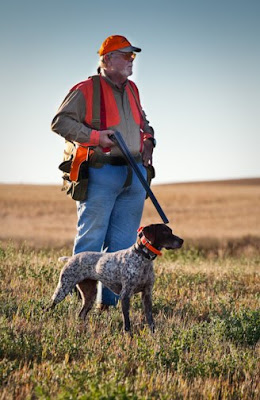
Use the form on the right to contact us. We should get back to you within 24 hours. If not, it means we are out chasing birds with dogs, shotguns and Canons. In that case we will get back to you as soon as we've finished the roasted Teal and Bordeaux . 


Form Block
This form needs a storage option. Double-click here to edit this form, and tell us where to save form submissions in the Storage tab. Learn more
         

123 Street Avenue, City Town, 99999

(123) 555-6789

email@address.com


You can set your address, phone number, email and site description in the settings tab.
Link to read me page with more information.

Pointing Dog Blog

The world of pointing dogs in words and images, moving and still.

Winter Blues

Craig Koshyk
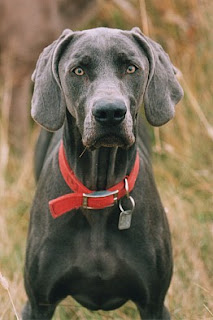

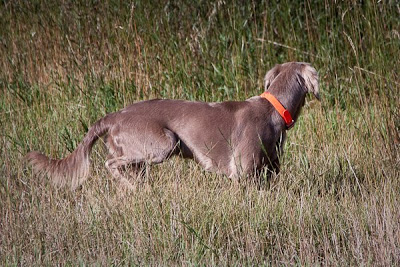
Ever heard of a Blue Weimaraner? Ya, blue. As in blackish. Sorta. 
Most people know the Weim for its grey coat. But other coat colors popped up in the breed years ago and continue to pop up from time to time even now. 
There are dogs I called "Whitemaraners" and I've seen ads on the net for 'fawn' and 'red' Weim pups. However, the most common "off" colour is a dilute black. It looks kinda blue. Cool eh? 
Well, it depends on who you ask. 
I once mentioned blue Weims to a Weim Club of America member and she went from being a friendly dog-show lady to Linda Blair in the Exorcist in less than a second! I soon found out that instead of saying 'hey look what nature gave us' a LOT of folks in the Weim world see the blue as one of the four horsemen of the apocalypse.

Anyway, I wrote something about the blues a while back on a forum and thought I would post it here.

What to Do About the Blues?

As an interested observer munching popcorn on the sidelines, I'd like to offer some perspective on the whole Blue Weim debate. First off, we need to understand that it is an old debate in the US, but relatively new in Europe. While the intensity had died down for a time in North America, it has increased greatly as of late because blues are now being bred on the other side of the ocean.

In addition, we should remember that debates surrounding accepted colour(s) are not new. They have made their way through a good number of breeds, including most of the continental pointing breeds at some point in their histories. In fact, this is actually the second time that a debate about colour has raged among Weim breeders. The first, which occurred around 1908, was not about blue coats but about yellow markings that sometimes occurred in certain lines. As result of the debate the word “silver-grey” was dropped from the name of the “The Club for the Pure Breeding of the Silver-Grey Weimaraner Pointer” due to the fact that yellow occasionally occurred in the coat and that, while it was not to be encouraged, dogs with yellow markings could be used for breeding if they were outstanding field performers.

But back to the blues: What are the options?

Option 1. Status Quo. Nothing changes, Blues remains in limbo. Back yard breeders of "rare" blues continue to make quick bucks and grey breeders either ignore them or continue to treat blues as if they were toxic lepers bred by members of Al Queda.

Unfortunately, this is the most likely scenario, simply because it is the easiest. It costs nothing to do nothing. It takes very little effort to belittle the blues. All you need is access to a computer and an axe to grind. And for some people - the ones who drink a lot of the "purebred" cool-aid -  hurling holy water at what they believe is the Devil’s blue spawn is just plain fun.

Option 2. The German club takes a decision similar to that which it took in 1908. They simply acknowledge that the blue exists, restrict the coat/color score to no more than “good” but allow blues to be bred into grey lines if they prove to be outstanding field workers. This is an eminently sensible thing to do, and could be based on the 1908 precedent. However, the chances of it ever happening are exactly zero.

The German club is a rigid monolith today and is struggling to keep the breed out of the hands of non-hunting breeders in Germany. The club has a hard enough time even allowing the breeding of long-haired to short-haired weims among the good breeders. Asking them to open the studbook to blues would be like asking them to open it to horny red foxes. And even if, by some miracle, they did allow blues into the club, finding an outstanding blue field performer is harder than locating a lawyer's heart. So finding a good blue, testing it in the German system and getting them to allow it to breed would be like hitting a golf ball to the moon and sinking a hole in one.... with a 9 iron.

Option 3. A new breed and breed club are founded. Again, this would not be something new. The Langhaar and  Large Munsterlander folks did it. The Picardy and Blue Picardy people did something similar.

So there is a tried and true formula for establishing a club and a new breed. But it is difficult. In fact, it is probably much more difficult to do nowadays than it was 100 years ago. There are big $$ involved and lots and lots of time required…probably on the order of 10-20 years. But the biggest difficulty would be to somehow develop a consensus among all the blue supporters. Unfortunately, like most of the folks that fancy the grey, supporters of blue Weims are for the most part non-hunters in love with the looks and personality of the breed, and pretty well convinced that the sun shines out their dogs’ ass. But other than that, they are as diverse a group as can be. Getting them all on the same page at the same time would be monumentally difficult...but probably the only way out of the current dilema.

Option 4. Go your own way. The main issue we are dealing with is trying to fit a square peg (blue weim) into a round hole (the existing purebred dog world structures). Why not dispense with it all? Forget the AKC, forget the FCI and go the way sled dogs have gone. Breed good hunting dogs. Period. Breed healthy hunting dogs. Period. Breed and exchange them with other hunters and HUNT WITH THEM.

Let the club folks continue the endless circle jerk of "improving" the breed. Go your own way, build a better Blue and see who shows up each morning in the hunting field ready to take on the day!

I am sure there are other scenarios and sub-scenarios to explore, but in a nutshell that is how I see it.

Of course, your mileage may vary.
Winter Blues

Craig Koshyk


Ever heard of a Blue Weimaraner? Ya, blue. As in blackish. Sorta. 
Most people know the Weim for its grey coat. But other coat colors popped up in the breed years ago and continue to pop up from time to time even now. 
There are dogs I called "Whitemaraners" and I've seen ads on the net for 'fawn' and 'red' Weim pups. However, the most common "off" colour is a dilute black. It looks kinda blue. Cool eh? 
Well, it depends on who you ask. 
I once mentioned blue Weims to a Weim Club of America member and she went from being a friendly dog-show lady to Linda Blair in the Exorcist in less than a second! I soon found out that instead of saying 'hey look what nature gave us' a LOT of folks in the Weim world see the blue as one of the four horsemen of the apocalypse.

Who knew?

Anyway, I wrote something about the blues a while back on a forum and thought I would post it here.

What to Do About the Blues?

As an interested observer munching popcorn on the sidelines, I'd like to offer some perspective on the whole Blue Weim debate. First off, we need to understand that it is an old debate in the US, but relatively new in Europe. While the intensity had died down for a time in North America, it has increased greatly as of late because blues are now being bred on the other side of the ocean.

In addition, we should remember that debates surrounding accepted colour(s) are not new. They have made their way through a good number of breeds, including most of the continental pointing breeds at some point in their histories. In fact, this is actually the second time that a debate about colour has raged among Weim breeders. The first, which occurred around 1908, was not about blue coats but about yellow markings that sometimes occurred in certain lines. As result of the debate the word “silver-grey” was dropped from the name of the “The Club for the Pure Breeding of the Silver-Grey Weimaraner Pointer” due to the fact that yellow occasionally occurred in the coat and that, while it was not to be encouraged, dogs with yellow markings could be used for breeding if they were outstanding field performers.

But back to the blues: What are the options?

Option 1. Status Quo. Nothing changes, Blues remains in limbo. Back yard breeders of "rare" blues continue to make quick bucks and grey breeders either ignore them or continue to treat blues as if they were toxic lepers bred by members of Al Queda.

Unfortunately, this is the most likely scenario, simply because it is the easiest. It costs nothing to do nothing. It takes very little effort to belittle the blues. All you need is access to a computer and an axe to grind. And for some people - the ones who drink a lot of the "purebred" cool-aid -  hurling holy water at what they believe is the Devil’s blue spawn is just plain fun.

Option 2. The German club takes a decision similar to that which it took in 1908. They simply acknowledge that the blue exists, restrict the coat/color score to no more than “good” but allow blues to be bred into grey lines if they prove to be outstanding field workers. This is an eminently sensible thing to do, and could be based on the 1908 precedent. However, the chances of it ever happening are exactly zero.

The German club is a rigid monolith today and is struggling to keep the breed out of the hands of non-hunting breeders in Germany. The club has a hard enough time even allowing the breeding of long-haired to short-haired weims among the good breeders. Asking them to open the studbook to blues would be like asking them to open it to horny red foxes. And even if, by some miracle, they did allow blues into the club, finding an outstanding blue field performer is harder than locating a lawyer's heart. So finding a good blue, testing it in the German system and getting them to allow it to breed would be like hitting a golf ball to the moon and sinking a hole in one.... with a 9 iron.

Option 3. A new breed and breed club are founded. Again, this would not be something new. The Langhaar and  Large Munsterlander folks did it. The Picardy and Blue Picardy people did something similar.

So there is a tried and true formula for establishing a club and a new breed. But it is difficult. In fact, it is probably much more difficult to do nowadays than it was 100 years ago. There are big $$ involved and lots and lots of time required…probably on the order of 10-20 years. But the biggest difficulty would be to somehow develop a consensus among all the blue supporters. Unfortunately, like most of the folks that fancy the grey, supporters of blue Weims are for the most part non-hunters in love with the looks and personality of the breed, and pretty well convinced that the sun shines out their dogs’ ass. But other than that, they are as diverse a group as can be. Getting them all on the same page at the same time would be monumentally difficult...but probably the only way out of the current dilema.

Option 4. Go your own way. The main issue we are dealing with is trying to fit a square peg (blue weim) into a round hole (the existing purebred dog world structures). Why not dispense with it all? Forget the AKC, forget the FCI and go the way sled dogs have gone. Breed good hunting dogs. Period. Breed healthy hunting dogs. Period. Breed and exchange them with other hunters and HUNT WITH THEM.

Let the club folks continue the endless circle jerk of "improving" the breed. Go your own way, build a better Blue and see who shows up each morning in the hunting field ready to take on the day!

I am sure there are other scenarios and sub-scenarios to explore, but in a nutshell that is how I see it.

Of course, your mileage may vary.
Photos!...finally

Craig Koshyk


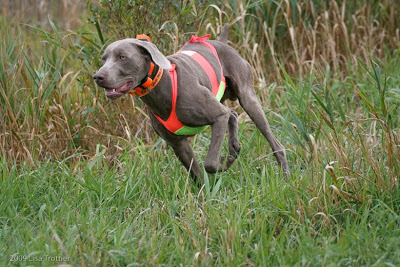
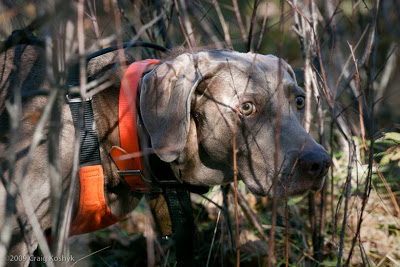
Well I finally sat down at the computer long enough to whip up a quick gallery of photos from the 09 season. They are in more or less chronological order and include a good number of photos taken by my wife Lisa. She's really been enjoying carrying the camera around and has managed to get some great shots of the dogs in action.

Her shots of me however are not quite as good. For some reason, she almost always takes the shot while I am walking away from her. That usually results in a decent shot of the dog running near me, but only highlights the fact that I have no ass.

Click on the photo above or this one below to see the shots of the 09 season...so far!

The Season So Far Part ll: Henri's Got A Hankerin for Venison

Craig Koshyk

I’ve had a number of requests for an update on Henri now that he is in his first real season (last year he was in gundog-kindergarten).

So I’ve drawn up a list of the good and bad:

First the bad:

  • Henri somehow got the idea that he is allowed to sleep ON the bed, UNDER the covers....just like Souris. Sorry H, not going to happen.
  • In the last three weeks, he's chewed up my cell phone, two credit cards and three pairs of glasses.
  • He's learned how to escape from his crate in the back of the truck (but not from the back of the truck...yet. The cap is pretty sturdy, but I think he is working on a solution).
  • He took off after deer the other day. When I saw him jump the doe, I figured "Great! now I can give him some e-collar juice and nip this in the bud". Unfortunately, the batteries in my transmitter were dead! He eventually came right back to the truck on his own after leaving me there for nealy an hour to bite my nails and get even more grey hair.
  • A week later, he did it again!!!! And I was once again too slow to get on the "light him up like the Las Vegas strip" button and missed my chance to convince him that deer emit lightning bolts and should be avoided. Grrrrrr. Serious deer breaking lessons start tomorrow.

Now the good

  • He can run. My GOD can he run! He is the smoothest running, highest headed, floating-over-the-ground Weim I have ever seen. I could watch him for hours just covering a field.
  • He is all hunt, all the time. Put him on the ground and zooom, he's in hunt mode until you call it a day.
  • His points are super stylish and intense (but usually a bit short...he still wants to pounce in)
  • He handles well (...if there are no deer about...) and hunts for me, turns when I turn, usually without any command or whistle.
  • He has a nice medium gundog range. He is not (yet?) a super big runner. In the open he's generally 75 to 200 yards out. He will make bigger casts out to 300+ yards but not that often. In tighter cover, he does shorten up a bit but needs to come in a bit more. 100 yards out in the thick grouse/woodcock stuff is a bit much for me. I prefer 40 to 60.
  • His duck search is great! With almost no training, he hits the water and just flat out searches till he finds something.
  • He's a horny son of a gun. If/when I ever decide to breed him it will NOT take any sweet talk or K9 Viagra. He would hump the crack of dawn if he could. And his girlfriend Maizie is more than willing (but waaaaay too young!)

Stay tuned for Part ll Uma and Souris, the dynamic duo and Part lll Zeiss and Vinnie, the boyz from the hood.


The 09 Season PART 1

Craig Koshyk


The above photo features Maizie pointing her first covey of Hungarian Partridges. Many people believe that the classic pointing position is with a raised front paw. However, most pointing dogs never raise any paw while on point. They keep all four feet on the ground. In this shot, Maizie is actually raising her rear paw which some dogs do from time to time.

Two weeks later, that same leg was nearly run through with a stick! Read on to find out how...

Two words best describe the 2009 hunting season so far:

Roller Coaster.

There have been plenty of ups and downs since opening day way back in September. One day we’d see plenty of birds, the next day, none. Then suddenly we’d find a bunch more a day or two later!

And it’s been that way for grouse, partridges, geese, ducks and snipe all season long.

The weather has also been highly variable. In Saskatchewan we had to deal with +30 degree temps while back in Manitoba, only a week or two later, we were hunting sharptails at -5 as the snow fell sideways.

The fact that my shooting has been hit and (mainly) miss is par for the course, but even the dogs have had their share of good and bad. Lovely Miss Maizie (Uttara vom Fenriswolf) injured herself on what must have been a fallen tree branch. She was hunting a thick piece of cover for grouse when I heard a yelp. She came back to me limping, and I noticed a puncture wound on her inner thigh near the groin. It did not bleed very much but it looked rather deep. Upon further inspection at the clinic (Maizie’s owner, Dr. Skavinsky is a very talented vet ) it was discovered that whatever poked her, went waaaay in there...almost exiting the other side! Even more shocking was that it only missed the femoral artery by about a quarter of an inch!!

Ten days later, I’m happy to say that the wound has healed over quite nicely. Maizie is now 100% fit to resume the hunt. The only difference is that she’ll be wearing a skid plate in the woods from now on. Oh, and I have vowed never to return to the scene of the accident which coincidentally is exactly where Uma’s mother “Rage” received a similar injury several years ago.

Next up: Part ll Henri's Hankerin for Venison Lands Him in Hot Water!

Rare Birds Sighted in Saskatchewan

Craig Koshyk

Ah yes, Saskatchewan.
It's where God hunts when he gets a day off.

To kick off the 2009 hunting season, I headed west. My destination was a small town in an area that is fast becoming a mecca for Hun hunters. It is in Saskatchewan near *******, just past ####### and a few mile before ^^^^^

Note: if the names of the towns above do not appear in plain text on your computer it is because you lack the proper security clearance for such highly sensitive hunting information. If you would like to learn the secret handshake and decode the names please send two bottles of single malt whiskey to my home address.

I was after Huns and Sharptail grouse with a K9 crew consisting of Souris, Uma, Henri and Maizie. Now most hunters know that Hungarian Partridges are not native to North America. Nor are pheasants. Both birds were introduced to the US and Canada in the late 1800's. Sharptails of course are native birds and we managed to see quite a few of them and their foreign cousins during the hunt.

Surprisingly, we also came across two other species of bird that are considered extremely rare. One, like the pheasant, is originally from China, but has learned to thrive in the harsh Canadian climate. Its Latin name is Benihong Maximus and it looks like this:


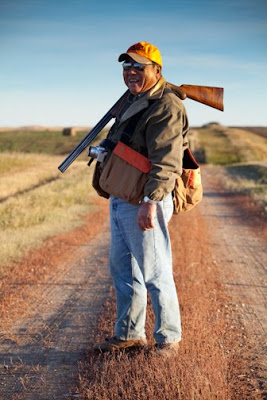
Note the regal bearing and colourful plummage. Commonly referred to as the Ben Hong, this Asian raptor is a clever bird, always on the lookout for its main quarry: fresh brewed coffee and tobacco. It is quite a vocal species, fluent in at least three languages with a lovely sing-song way of telling fascinating tales and memorable anecdotes.

The other rare bird we came across was the Donisteese Americana. It looks like this:


Known for forming a unique symbiotic relationship with certain types of canines, many Don Steese birds prefer dogs of German origin. This may be due to the fact that despite Americana being part of its latin name, the species originated in Europe and made its way to this side of the Atlantic on the Mayflower. The Don Steese is known for a beautiful baritone call which it keeps in tip top shape by gargling regularly with fine Bourbon.

I should probably mention that Saskatchewan is one of only a handful of jurisdictions in the world that has an open season on both the Benihong Maximus and the Donisteese Americana. The limit is 1 each per hunter per season. Despite the fact that both birds were well within range when I spotted them, I passed on the opportunity. Seeing them thriving happily in their natural environment was enough for me.

And besides, I hear they taste like liver.